

| Kyung Hyun Kim | 1 Article |
Purpose
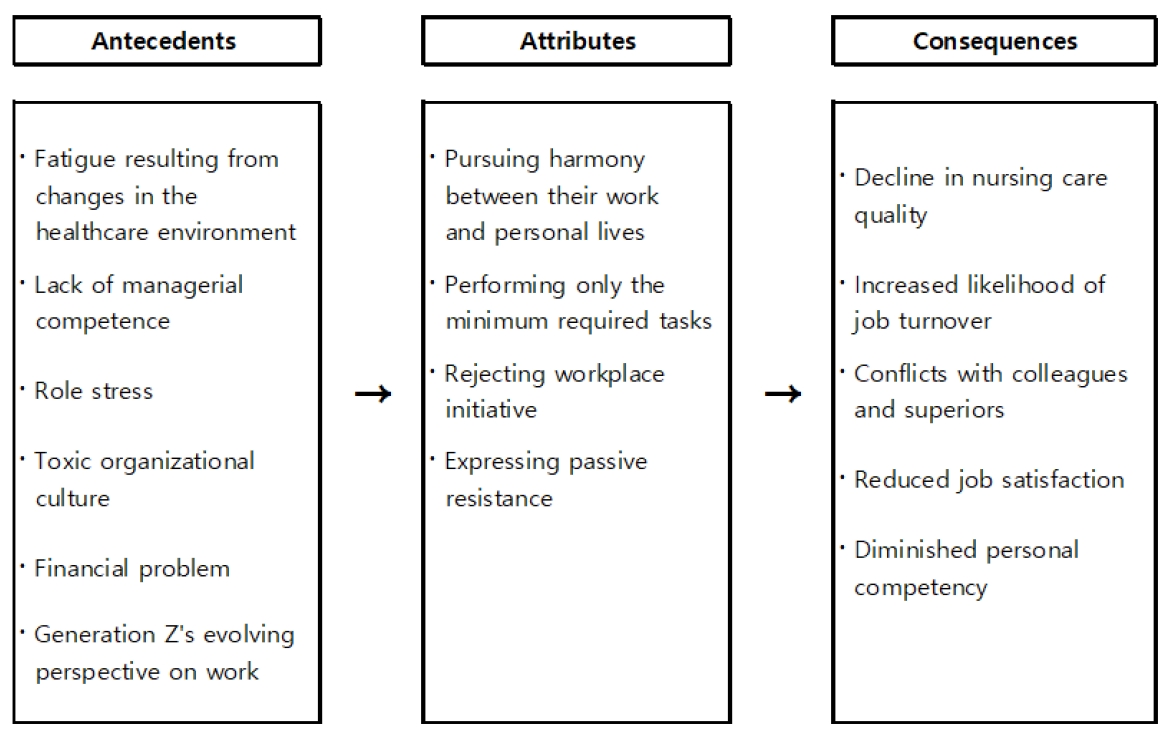
This concept analysis aimed to deepen the understanding of Quiet Quitting among nurses by identifying its antecedents, defining attributes, and consequences. Methods This study employed Walker and Avant’s conceptual analysis framework. Results Quiet Quitting among nurses is defined as “a state in which individuals pursue harmony between their work and personal lives by performing only the minimum required tasks, rejecting workplace initiatives, and expressing passive resistance to organizational and job dissatisfaction.” Key antecedents include “fatigue resulting from changes in the healthcare environment”, “lack of managerial competence”, “role stress”, “toxic organizational culture”, “financial problem” and “Generation Z’s evolving perspective on work”. The analysis highlight five primary concerns: a decline in nursing care quality, increased likelihood of job turnover, conflicts with colleagues and supervisors, reduced job satisfaction, and a diminished personal competency. Conclusion This study provides a clear definition of Quiet Quitting among nurses and establishes a theoretical basis for addressing the issue. Additionally, it underscores the need for further research, including the development of measurement tools, to better understand and mitigate this phenomenon. Citations Citations to this article as recorded by

|
|