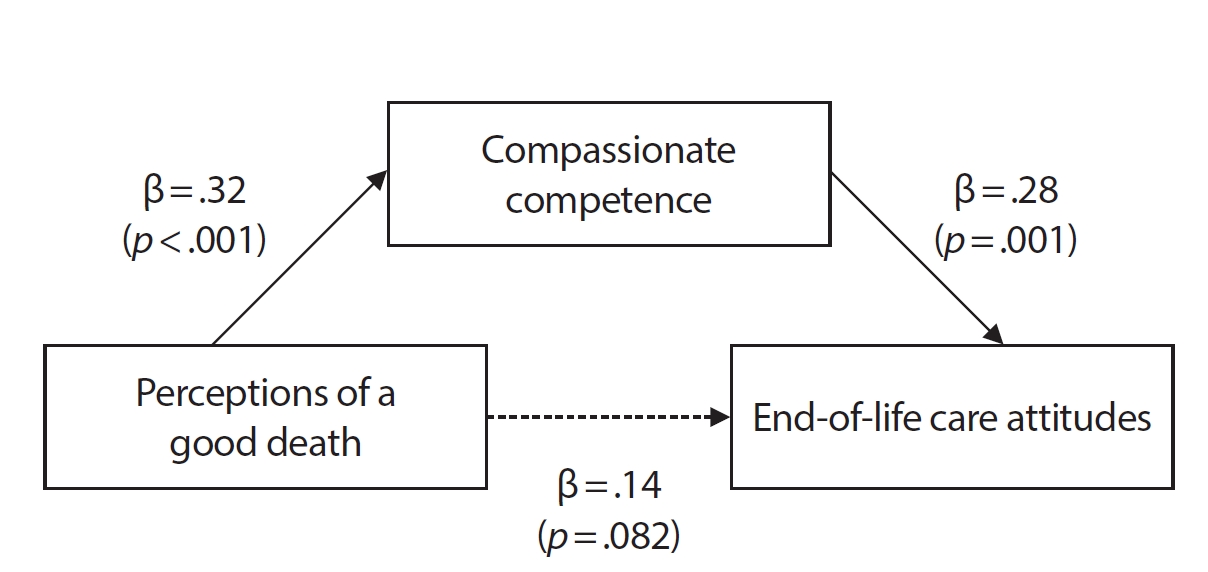
Purpose This study aimed to confirm the mediating effect of compassionate competence in the relationship between perceptions of a good death and end-of-life care attitudes among ward nurses in younger generations. Methods: A total of 175 nurses in their 20s and early 30s who were working in general wards of a public hospital in Seoul were recruited. Data were collected using a self-report questionnaire from February 20 to March 20, 2023, and were analyzed using the IBM 29.0 program. Results: Participants’ end-of-life care attitudes were positively correlated with perceptions of a good death (r=.22, p=.004) and compassionate competence (r=.32, p<.001), and compassionate competence was positively correlated with perceptions of a good death (r=.32, p<.001). Nurses’ compassionate competence was identified as a significant predictor of end-of-life care attitudes. As a result of the mediation analysis, a complete mediating effect of compassionate competence was confirmed in the relationship between perceptions of a good death and end-of-life care attitudes. Conclusion: To improve positive end-of-life care attitudes among young generation ward nurses, educational initiatives that emphasize compassionate competence, as well as understanding of a good death, are needed in both nursing education and clinical practice.


 First
First Prev
Prev