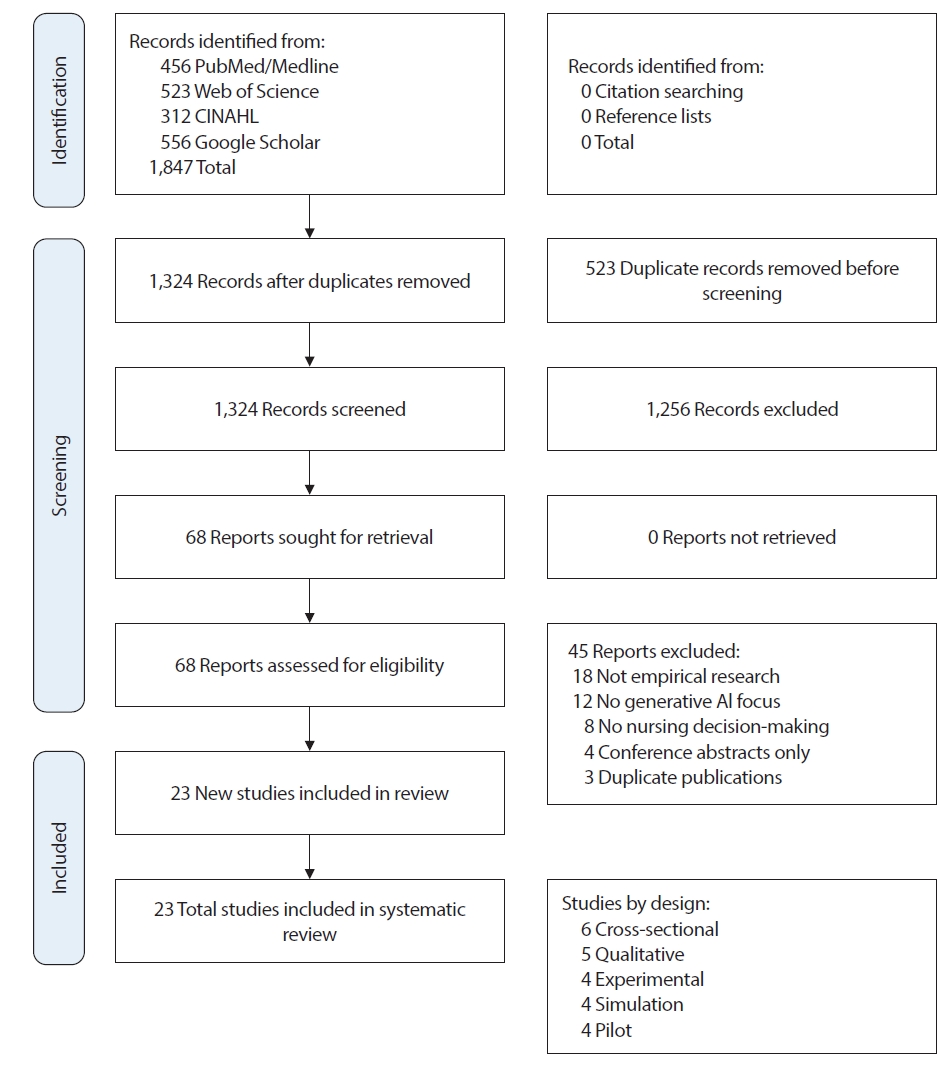
Purpose This systematic review examined the impact of generative artificial intelligence (AI) on nurses' clinical decision-making. Methods: Following PRISMA guidelines, we searched four databases for empirical studies (2000-2025) examining generative AI in nursing decision-making. Two reviewers independently conducted study selection and quality assessment. Results: Twenty-three studies were included (simulation studies n=7, cross-sectional n=4, qualitative n=3, implementation n=3, retrospective evaluation n=3, observational comparison n=3, experimental n=2). Large language models, particularly ChatGPT and GPT-4, were most commonly examined. Benefits included 11.3-fold faster response times, high diagnostic appropriateness (94-98%) in neonatal intensive care, improved emergency triage agreement (Cohen's κ 0.899-0.902), and documentation time reductions (35% to >99%). Challenges included limitations in therapeutic reliability, hallucinations in vital sign processing, demographic biases, and over-reliance risks (only 34% high trust reported). Conclusion: Generative AI shows promise for augmenting nursing decision-making with appropriate oversight, though evidence is limited by predominance of simulation studies and insufficient patient-level outcome data. AI literacy integration in nursing education and robust institutional governance is essential before routine deployment. Large-scale randomized controlled trials are needed.

 First
First Prev
Prev