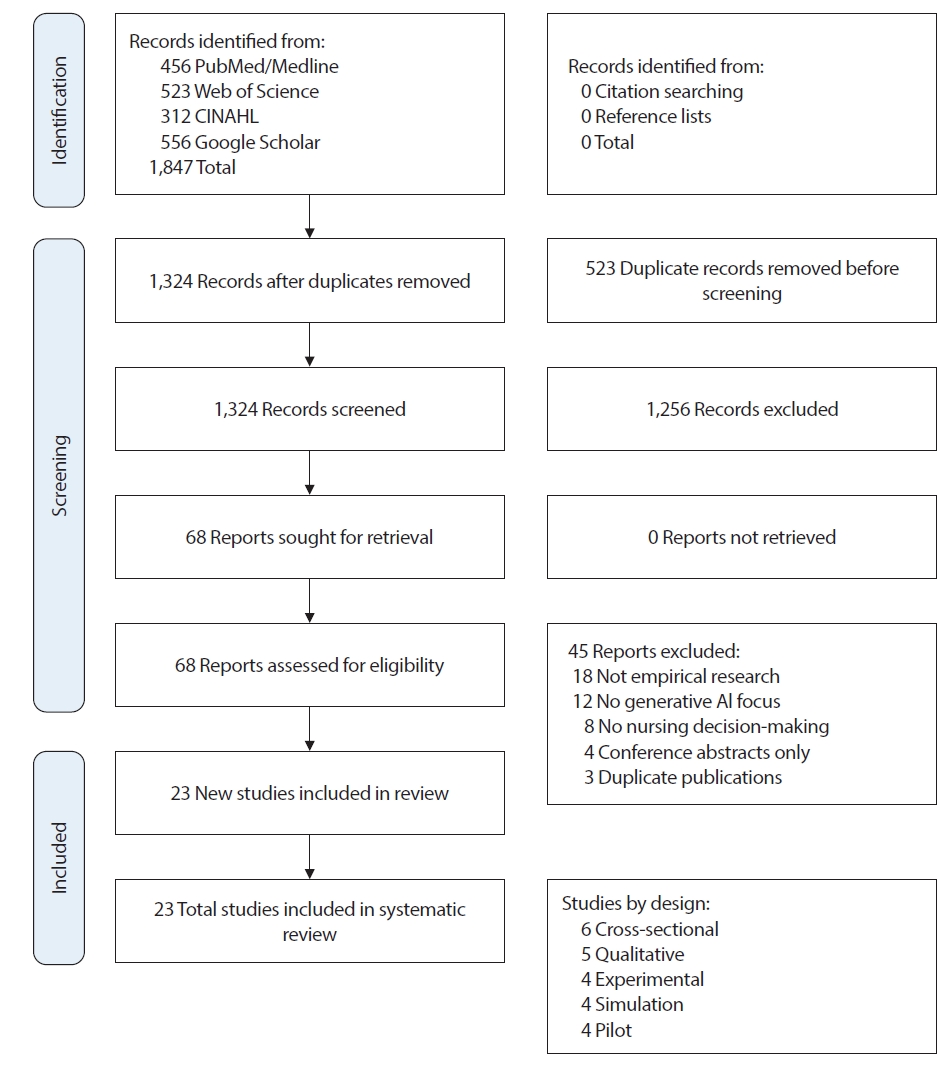
Purpose This systematic review examined the impact of generative artificial intelligence (AI) on nurses' clinical decision-making. Methods: Following PRISMA guidelines, we searched four databases for empirical studies (2000-2025) examining generative AI in nursing decision-making. Two reviewers independently conducted study selection and quality assessment. Results: Twenty-three studies were included (simulation studies n=7, cross-sectional n=4, qualitative n=3, implementation n=3, retrospective evaluation n=3, observational comparison n=3, experimental n=2). Large language models, particularly ChatGPT and GPT-4, were most commonly examined. Benefits included 11.3-fold faster response times, high diagnostic appropriateness (94-98%) in neonatal intensive care, improved emergency triage agreement (Cohen's κ 0.899-0.902), and documentation time reductions (35% to >99%). Challenges included limitations in therapeutic reliability, hallucinations in vital sign processing, demographic biases, and over-reliance risks (only 34% high trust reported). Conclusion: Generative AI shows promise for augmenting nursing decision-making with appropriate oversight, though evidence is limited by predominance of simulation studies and insufficient patient-level outcome data. AI literacy integration in nursing education and robust institutional governance is essential before routine deployment. Large-scale randomized controlled trials are needed.
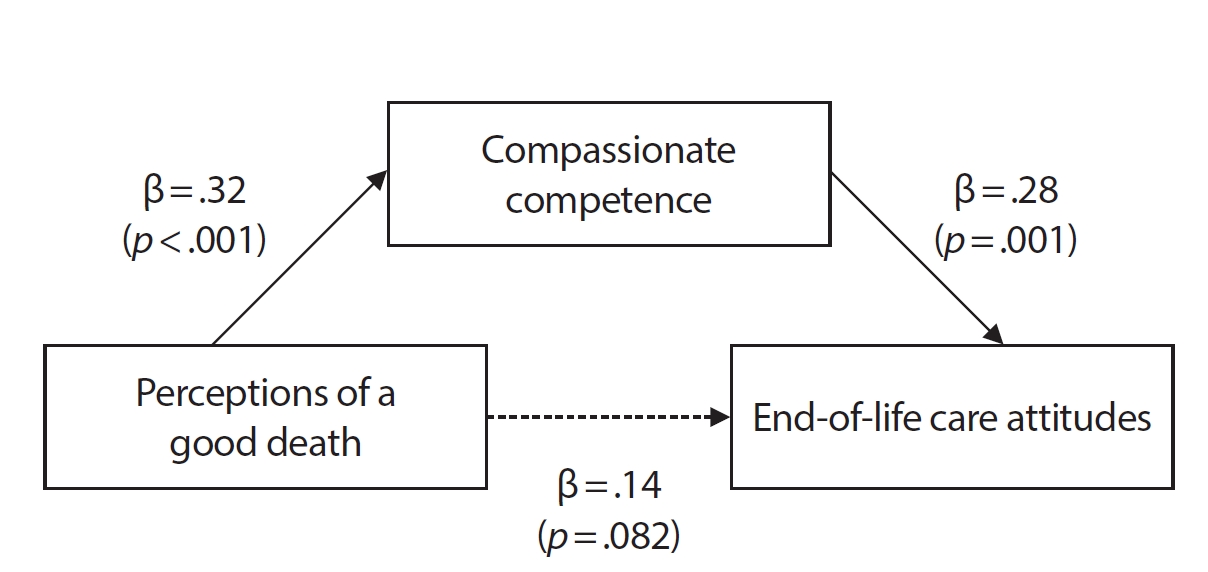
Purpose This study aimed to confirm the mediating effect of compassionate competence in the relationship between perceptions of a good death and end-of-life care attitudes among ward nurses in younger generations. Methods: A total of 175 nurses in their 20s and early 30s who were working in general wards of a public hospital in Seoul were recruited. Data were collected using a self-report questionnaire from February 20 to March 20, 2023, and were analyzed using the IBM 29.0 program. Results: Participants’ end-of-life care attitudes were positively correlated with perceptions of a good death (r=.22, p=.004) and compassionate competence (r=.32, p<.001), and compassionate competence was positively correlated with perceptions of a good death (r=.32, p<.001). Nurses’ compassionate competence was identified as a significant predictor of end-of-life care attitudes. As a result of the mediation analysis, a complete mediating effect of compassionate competence was confirmed in the relationship between perceptions of a good death and end-of-life care attitudes. Conclusion: To improve positive end-of-life care attitudes among young generation ward nurses, educational initiatives that emphasize compassionate competence, as well as understanding of a good death, are needed in both nursing education and clinical practice.
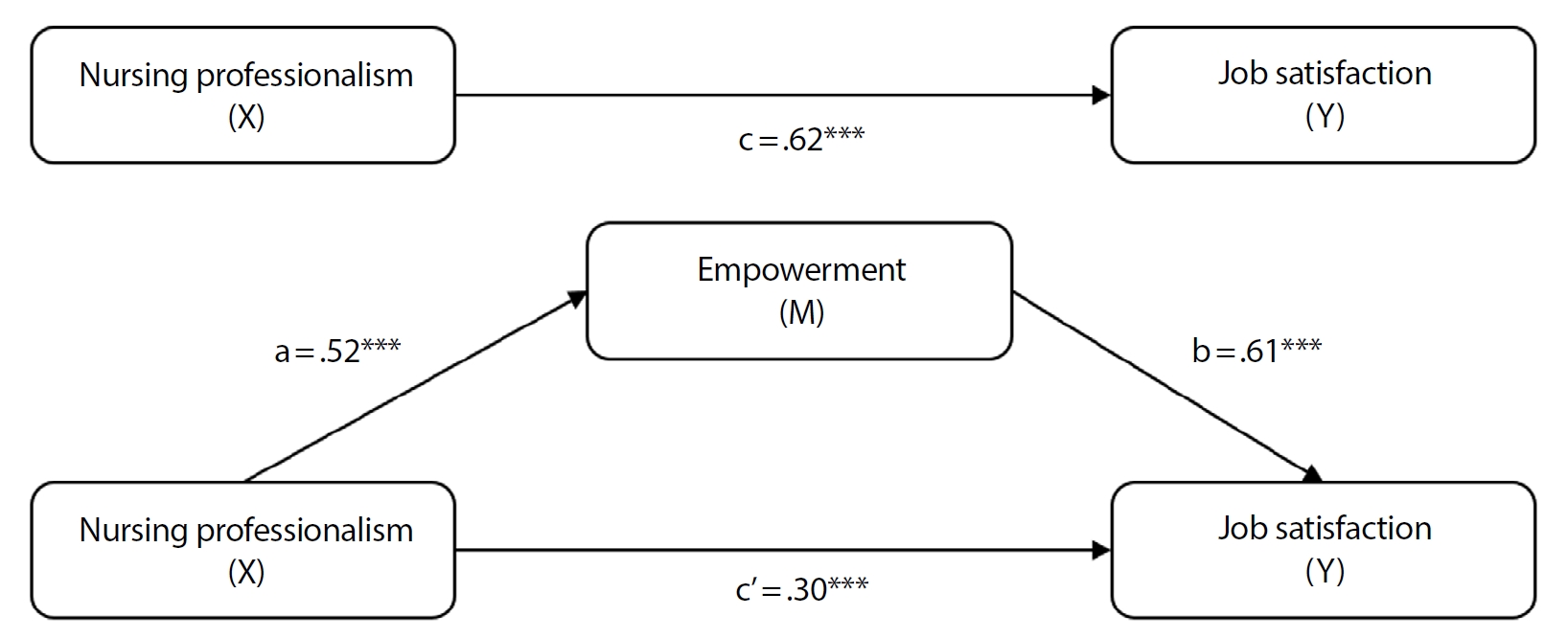
Purpose This study examined the mediating effect of empowerment on the relationship between nursing professionalism and job satisfaction, with the goal of informing strategies to enhance job satisfaction among insurance review nurses. Methods: A total of 165 insurance review nurses with more than 1 year of work experience in 12 general hospitals (≥500 beds) participated in this study. Data were analyzed using descriptive statistics, t-tests, analysis of variance, Pearson correlation analysis, and multiple regression analysis. The mediating effect was tested using the PROCESS Macro (model 4) in SPSS version 26.0 with 10,000bootstrap samples. Results: The mean scores for nursing professionalism, empowerment, and job satisfaction were 100.37 (standard deviation [SD], 17.03), 86.24 (SD, 17.70), and 45.44 (SD, 9.17), respectively. Significant positive correlations were observed between nursing professionalism and job satisfaction (r=.64, p<.001), empowerment and job satisfaction (r=.77, p<.001), and nursing professionalism and empowerment. Empowerment was found to partially mediate the relationship between nursing professionalism and job satisfaction (95% CI, .20–.44). Conclusion: Enhancing empowerment and strengthening nursing professionalism are essential for improving job satisfaction among insurance review nurses. Institutional interventions that promote professional identity and provide structural empowerment may increase job satisfaction and support retention within this specialized nursing workforce.
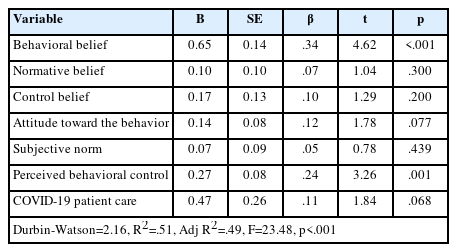
Purpose The coronavirus disease 2019 (COVID-19) pandemic has substantially influenced nursing environments and has underscored the importance of active patient care. Nursing intention plays a critical role in the provision of care for patients with COVID-19; however, limited evidence exists regarding the factors that influence nurses’ intention to provide patient care specific to COVID-19. This study aimed to examine factors associated with nursing intention for COVID-19 patient care, guided by the Theory of Planned Behavior. Methods: This study employed a cross-sectional descriptive design. Data were collected from August 30 to October 1, 2020, using structured questionnaires completed by 169 clinical nurses working in hospitals with more than 600 beds in Seoul, Korea. The collected data were analyzed using multiple regression analysis. Results: Behavioral beliefs (β=.34, p<.001) and perceived behavioral control (β=.24, p<.001) were significantly associated with nursing intention for COVID-19 patient care. Conclusion: There is a need to develop specific strategies and educational programs to enhance nursing intention for COVID-19 patient care in the context of emerging infectious diseases by strengthening behavioral beliefs and perceived behavioral control. Providing up-to-date care protocols or simulation-based education may help increase nurses’ behavioral beliefs and perceived behavioral control.
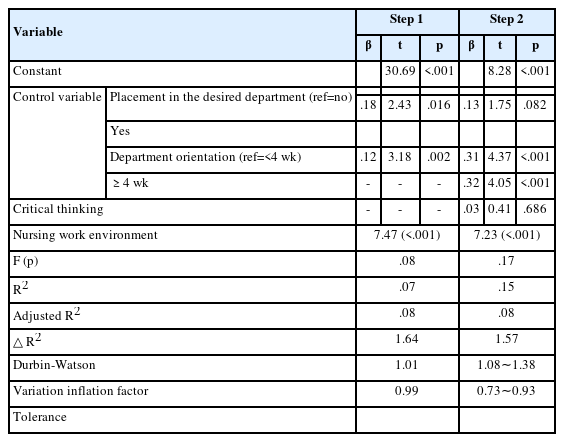
Purpose This study aimed to identify the influences of fatigue, critical thinking, and nursing work environment on patient safety nursing behaviors among new graduate nurses. Methods: The participants were 180 new graduate nurses who had been working for less than 12 months in hospitals. Data were collected using a structured, self-administered survey from December 15 to 30, 2023. The SPSS version 29.0 program was used for data analysis, which included descriptive analysis, the t-test, one-way analysis of variance (ANOVA), Pearson correlation coefficients, and hierarchical regression analysis. Results: Hierarchical regression analysis showed that critical thinking (β=.32, p<.001) and department orientation (β=.31, p<.001) were significant factors influencing patient safety nursing behavior. Conclusion: These results suggest that providing sufficient departmental orientation for new graduate nurses is necessary to support accurate and safe patient safety nursing practices. In addition, it is important to foster critical thinking and to develop and implement educational programs that enhance patient safety nursing behaviors, and to establish comprehensive support systems.
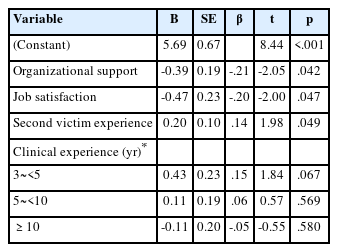
Purpose This study aimed to identify the relationships among clinical nurses’ second victim experience following patient safety incidents, individual and organizational support, job satisfaction, and turnover intention, and to examine the factors influencing turnover intention. Methods: A cross-sectional survey was conducted using a convenience sample of 187 clinical nurses from a general hospital who had been employed for more than 6 months and had either directly or indirectly experienced patient safety incidents. Data were collected using a self-report questionnaire. The collected data were analyzed using descriptive statistics, independent t-tests, one-way analysis of variance, the Scheffé test, Pearson correlation coefficients, and multiple regression analysis. Results: The mean scores for second victim experience, individual support, organizational support, job satisfaction, and turnover intention were 3.12, 3.94, 2.79, 3.05, and 3.87, respectively. The factors influencing turnover intention were organizational support (β=-.21, p=.042), job satisfaction (β=-.20, p=.047), and second victim experience (β=.14, p=.049). Conclusion: To alleviate clinical nurses’ turnover intention, it is necessary to implement strategies that reduce second victim experience and enhance organizational support and job satisfaction. In particular, hospital managers should recognize nurses’ second victim experience and make efforts to strengthen emotional care and establish organizational support systems for nurses following patient safety incidents.
Citations
Citations to this article as recorded by
Leadership and Organizational Responses After Patient Safety Incidents: A Systematic Review of Second-Victim Outcomes and Evidence Gaps in Safety Behaviors Georgia Kyriakeli, Iro Tsara, Eleni Lazaridou, Agapi Symeonidou, Zoi Tsimtsiou, Vasilios Kotsis Healthcare.2026; 14(18): 3002. CrossRef




 First
First Prev
Prev