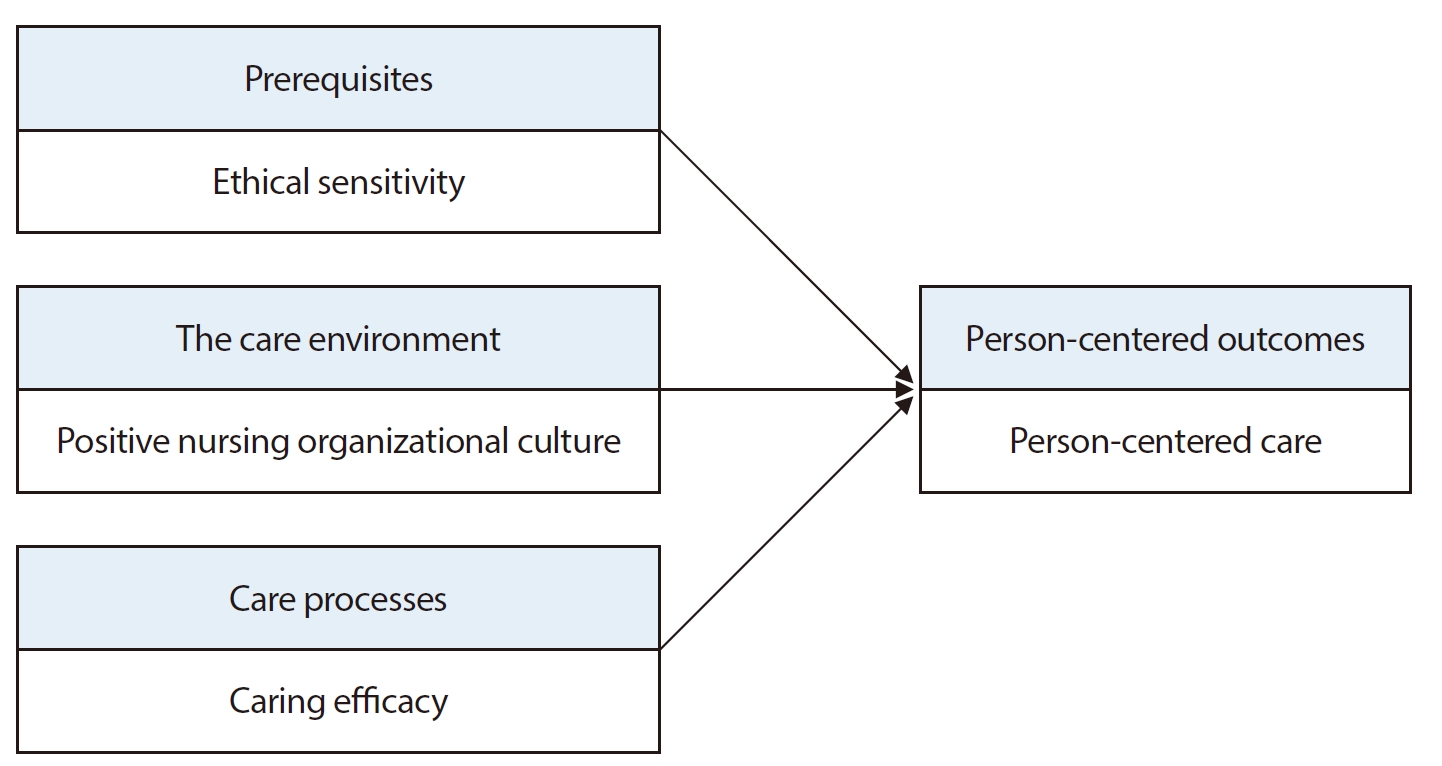
Purpose This study aimed to identify the influence of ethical sensitivity, positive nursing organizational culture, and caring efficacy on person-centered care among clinical nurses in general hospitals. Methods: The participants were 181 clinical nurses working in general hospitals located in Jinju and Changwon cities, Gyeongnam Province, South Korea. Data were collected from December 17, 2024, to January 25, 2025. Data analysis was performed using SPSS Statistics 27.0 and included descriptive statistics, the independent t-test, one-way analysis of variance, Pearson correlation analysis, and multiple regression analysis. Results: The participants’ mean scores were 4.16±0.42 for ethical sensitivity, 3.76±0.64 for positive nursing organizational culture, 4.23±0.67 for caring efficacy, and 3.90±0.50 for person-centered care. Person-centered care showed a significant positive correlation with ethical sensitivity (r=.49, p<.001), positive nursing organizational culture (r=.54, p<.001), and caring efficacy (r=.58, p<.001). Caring efficacy had the most significant effect on person-centered care (β=.41, p<.001), followed by positive nursing organizational culture (β=.30, p<.001) and ethical sensitivity (β=.19, p=.005). These variables accounted for 47.8% of the variance in person-centered care. Conclusion: To improve person-centered care, educational programs aimed at improving ethical sensitivity and caring efficacy, along with the establishment of a nursing organizational culture based on trust and respect, should be implemented.


 First
First Prev
Prev