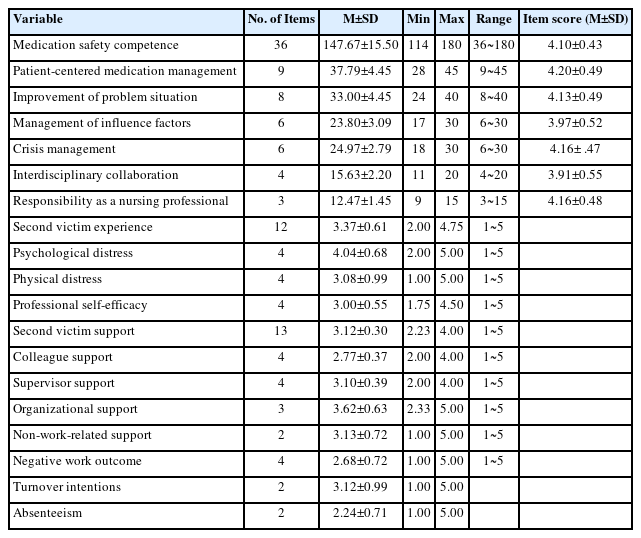
Purpose This study aimed to identify clinical nurses’levels of medication safety competence, second victim experience, second victim support, and negative work outcomes, and to examine the interrelationships among these variables. Methods: A cross-sectional study was conducted with 142 nurses working in university or general hospitals in Gyeonggi-do, South Korea, using self-administered questionnaires collected between June 10 and July 5, 2024. Data were analyzed with IBM SPSS statistics 29.0 using descriptive statistics and Pearson correlation analysis. Results: The mean scores were as follows: medication safety competence (4.10±0.43), second victim experience (3.37±0.61), second victim support (3.12±0.30), and negative work outcomes (2.68±0.72). Medication safety competence was negatively correlated with negative work outcomes (r=-.17, p=.047) and positively correlated with psychological distress, a subdomain of second victim experience (r=.21, p=.013). Second victim experience was positively correlated with both second victim support (r=.53, p<.001) and negative work outcomes (r=.56, p<.001). Conclusion: This study demonstrated that nurses with greater medication safety competence experienced fewer negative work-related outcomes but higher levels of psychological distress. Strengthening medication safety competence may improve patient safety and occupational performance; however, the associated psychological burden must not be overlooked. Initiatives to enhance competence should therefore be accompanied by strategies designed to mitigate psychological distress.

 First
First Prev
Prev