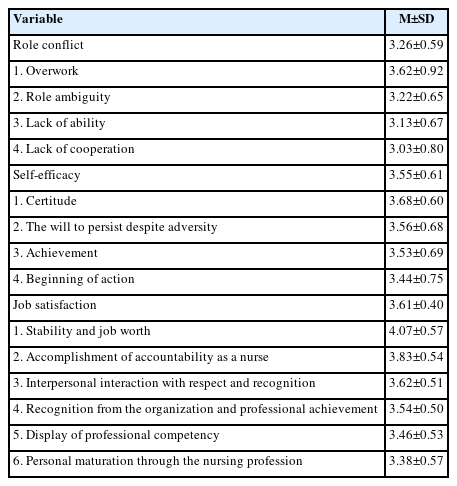
Purpose This study examined factors associated with job satisfaction among physician assistant nurses working across diverse tasks and clinical settings. Methods: From March 18 to April 2, 2025, we surveyed physician assistant nurses at a tertiary hospital in Daegu and data from 141 participants were analyzed. Analyses included descriptive statistics, the independent t-test, one-way analysis of variance, Pearson correlation coefficients, and hierarchical multiple regression. Results: Self-efficacy (β=.47, p<.001) and role conflict (β=-.19, p=.008) were significantly associated with job satisfaction, and the final model explained 32.2% of the variance. Conclusion: Strategies to improve job satisfaction should reduce role conflict and strengthen self-efficacy through education and competency-development programs. Clearer work regulations and legal and institutional safeguards may also support physician assistant nurses.
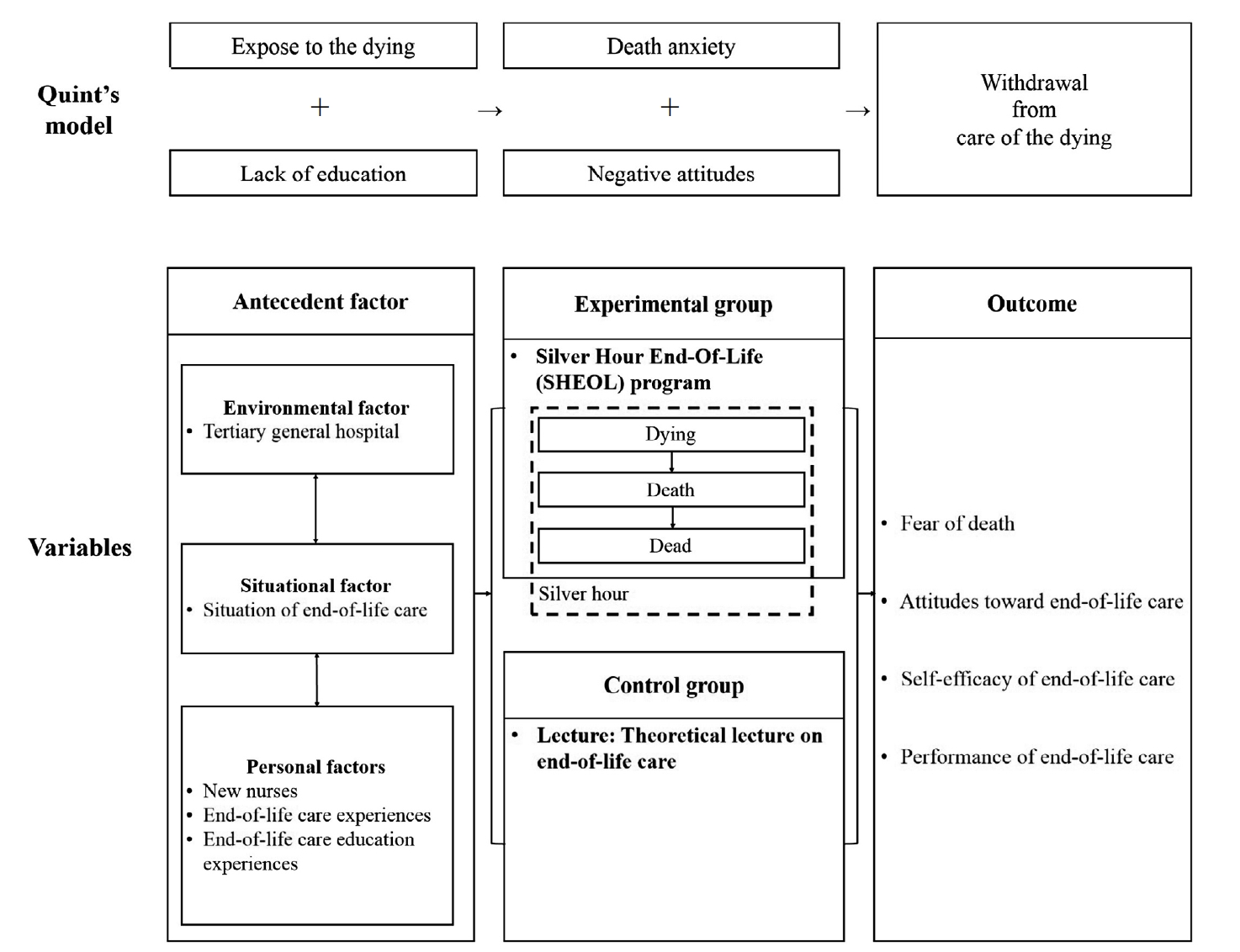
Purpose To evaluate the effectiveness of a Silver Hour End-Of-Life (SHEOL) program in enhancing end-of-life care performance among new nurses. Methods: A nonequivalent control group pre-post test design was adopted. A total of 34 new nurses working at a tertiary general hospital participated in the study. The experimental group (n=17) participated in the SHEOL program, which was delivered through hybrid simulation (180 minutes), while the control group (n=17) received a theoretical lecture on end-of-life care (90 minutes). The intervention and data collection were conducted from August 8 to September 30, 2024. Results: Compared to the control group, the experimental group showed a significant reduction in fear of death (χ2=11.69, p=.003) and significant improvements in attitudes toward end-of-life care (χ2=6.99, p=.030), self-efficacy of end-of-life care (χ2=6.51, p=.039), and performance of end-of-life care (χ2=20.07, p<.001) both immediately and 4 weeks after the intervention. Conclusion: These findings suggest that the SHEOL program can be effectively used to alleviate fear of death, improve attitudes and self-efficacy regarding end-of-life care, and enhance end-of-life care performance among new nurses.


 First
 Prev