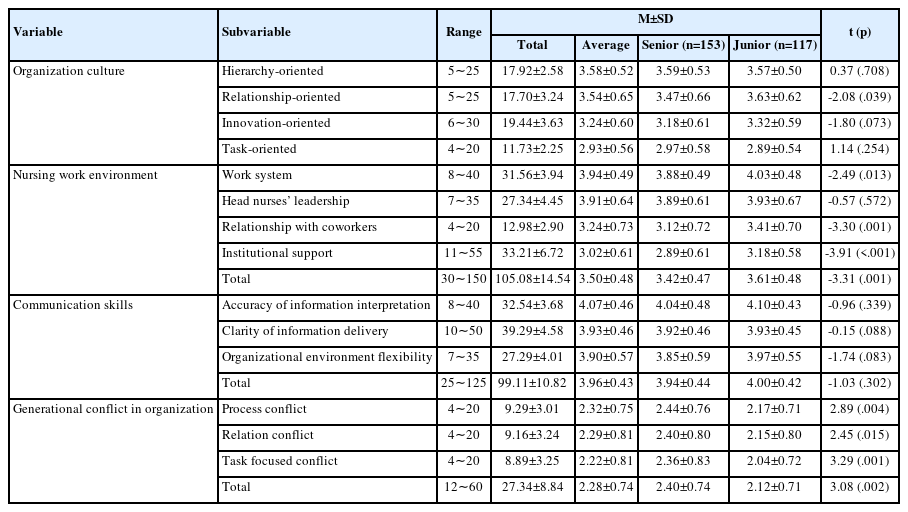
Purpose This study aimed to identify structural factors associated with intergenerational conflict among nurses and to explore how these conflicts manifest in clinical settings. Methods: An explanatory sequential mixed-methods design was used. Quantitative data were collected from 270 nurses using structured questionnaires that measured organizational culture, work environment, communication skills, and intergenerational conflict. Key influencing factors were identified using multiple regression analysis. Qualitative data were collected through in-depth interviews with 10 nurses and analyzed using Colaizzi’s phenomenological method. Results: Hierarchy-oriented culture, task-oriented culture, work systems, and organizational-environment flexibility significantly influenced intergenerational conflict (F=6.25, p<.001). The adjusted explanatory power of the regression model was 24.9% (adjusted R²=.249). Among these variables, work systems emerged as the strongest predictor of intergenerational conflict. The qualitative findings indicated that anonymous suggestion systems, differences in work approaches, and differences in emotional interpretation intensified conflict. Conclusion: Intergenerational conflict among nurses appears to stem from procedural ambiguity, emotional misunderstandings, and value incongruence. Organizations should redesign suggestion systems to ensure procedural fairness, strengthen evidence-based practice education, implement communication training focused on emotional awareness, and develop institutional strategies that support generational integration.

 First
First Prev
Prev