Mi Ha Chung, Yongah Kim, Na Yeong Kim, Min Ju Kim, Hyeon Jin Kim, Ju Hee Park, Ji In Park, Su Yeon Bae, Heajin Bae, Eunjeong Lee, Min Young Jeon, Suyoung Choi
J Korean Acad Nurs Adm 2025;31(4):405-420. Published online September 30, 2025
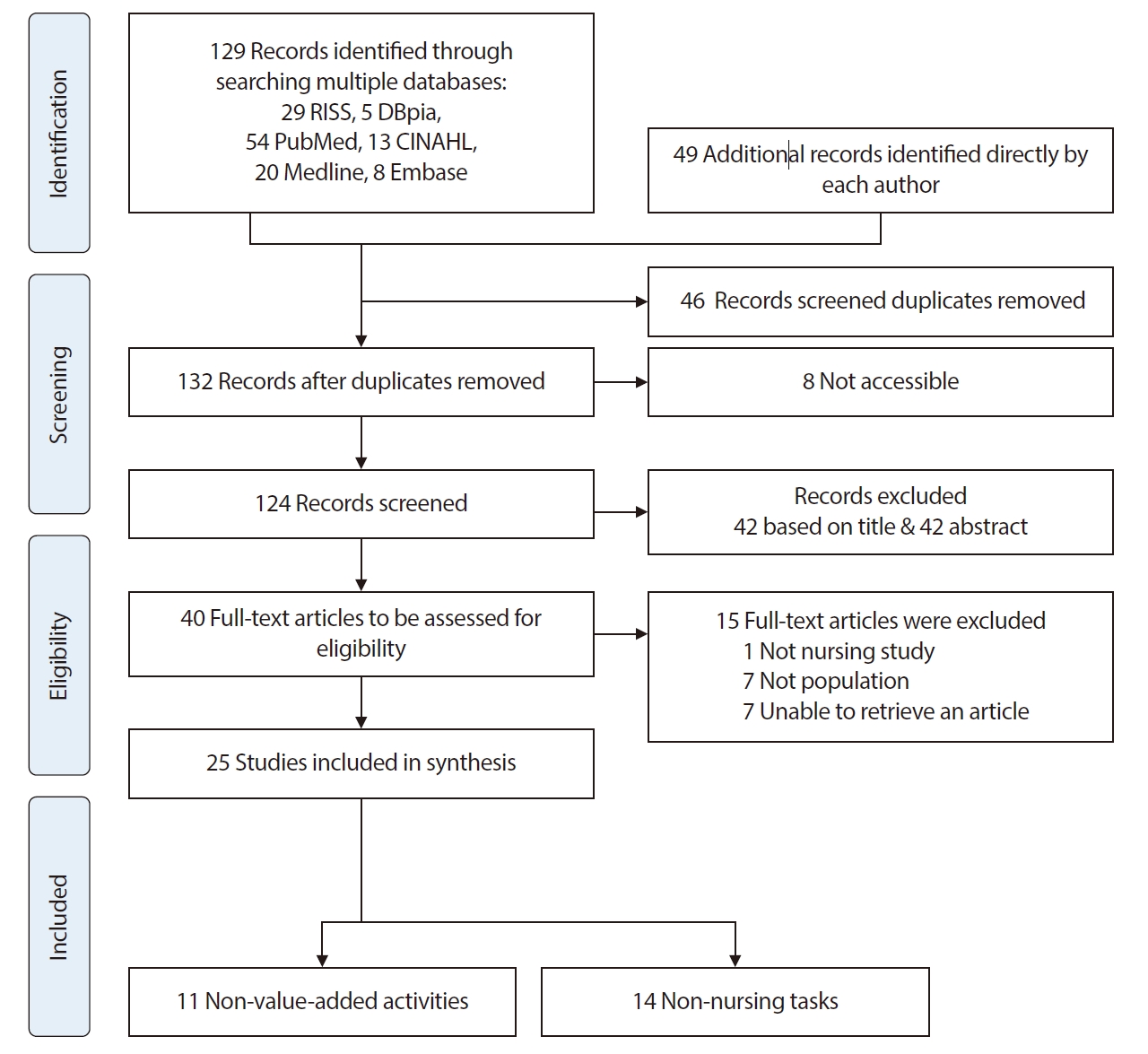
Purpose This study explored the literature on non-value-added (NVA) activities and non-nursing tasks (NNT). We analyzed domestic and international research trends and examined the types and characteristics of nursing tasks to improve efficiency. Methods: A comprehensive literature search was conducted using RISS, DBpia, PubMed, CINAHL, Medline, and Embase. Relevant studies published up to 2024 were identified using keywords such as “non-value-added activity,” “non-value-added nursing activity,” “non-nursing tasks,” and “nursing.” Results: Analysis of 25 studies revealed that 11 studies focused on NVA activity and 14 on NNT. Direct nursing tasks were classified into eight categories; indirect tasks were classified into seven categories. NVA activities were grouped into five main categories: “personal,” “waste,” “documentation,” “necessary activities,” and “unit-related,” with overlapping subcategories such as “interruption” and “duplicating.” Similarly, NNT were categorized into eight types, including “admission,” “equipment,” and “administrative activities.” Although conceptually distinct, NVA activities and NNT often overlap. Reducing tasks unrelated to essential nursing care significantly improves job satisfaction, patient outcomes, and work efficiency. These findings provide valuable insights for optimizing nursing workflows and enhancing the quality of care. Conclusion: Identifying and reducing NVA activities and NNT enhance nursing efficiency and provide foundational data for improving clinical practice and patient safety.
Citations
Citations to this article as recorded by
Educational Innovation in Nursing Management after Reforms in the National Nurse Licensure Examination: A Narrative Review Yoomi Jung Journal of Korean Academy of Nursing Administration.2026; 32(3): 137. CrossRef
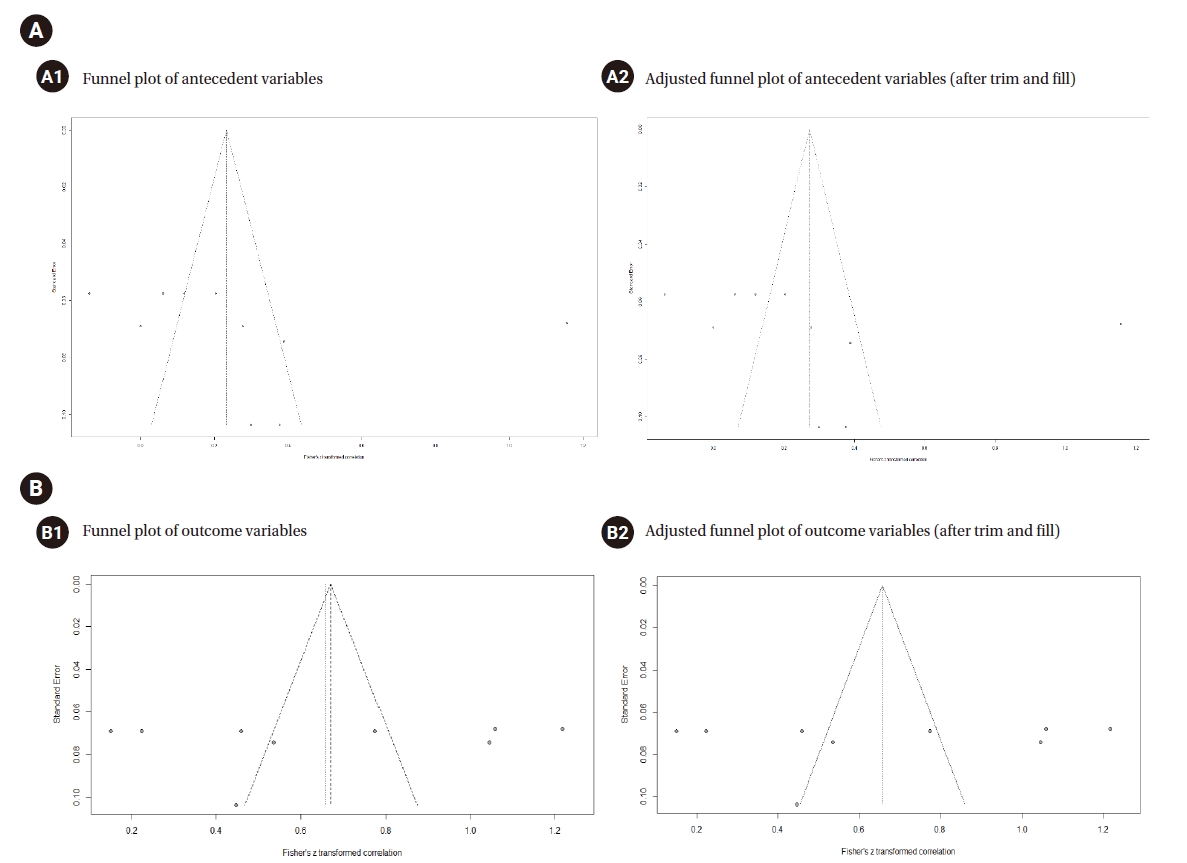
Purpose This study aimed to conduct a systematic review to explore leadership-related variables among nurses in the novice and advanced beginner stages, identify research trends, and analyze effect sizes to provide evidence for developing a nursing leadership program. Methods: A systematic review and meta-analysis were conducted according to PRISMA(Preferred Reporting Items for Systematic Reviews and Meta-Analyses) and NECA (National Evidence based Healthcare Collaborating Agency) guidelines. Literature was searched from February 26 to April 26, 2024 using databases including KISS, KMbase, RISS, KoreaMed, Science ON, CINAHL, CENTRAL, Embase, PubMed, Web of Science, and Korean nursing journals. Meta-analysis was performed using R version 3.6.2. Results: From 589 articles, five studies were selected. Self-leadership was most frequently studied topic (80.0%). Leadership antecedents with k≥2 included preceptor’s clinical teaching behavior (correlation effect size [ESr], 0.34). For leadership outcomes, effect size analyses for cases with k≥2 indicated resilience (ESr, 0.72), nursing performance (ESr, 0.69), and organizational socialization (ESr, 0.31), with resilience demonstrating the largest effect. Conclusion: Preceptor’s clinical teaching behavior, resilience, nursing performance, and organizational socialization were identified as critical factors in leadership of the nurses at novice and advanced beginner stage. Enhancing leadership requires preceptor support, which can improve resilience and help early-career nurses overcome challenges. Therefore, strategies for leadership development must include specific measures to ensure preceptor support.



 First
First Prev
Prev