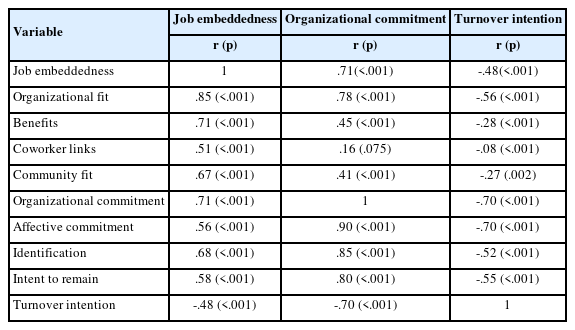
Purpose This study examined the effects of dispatch work experience on job embeddedness, organizational commitment, and turnover intention among nurses. Methods: A cross-sectional survey was conducted among 130 nurses working at a tertiary hospital in Seoul. Data were analyzed using IBM SPSS version 28.0 with descriptive statistics, the independent t-test, one-way analysis of variance, Pearson correlation coefficients, and multiple linear regression. Results: Overall, 62.3% of participants reported improved competency following dispatch work experience, whereas 80.7% perceived pre-training as insufficient. Nurses with prior interaction with dispatch unit staff demonstrated significantly higher job embeddedness (F=10.37, p=.002) and organizational commitment (F=5.87, p=.017), along with significantly lower turnover intention (F=4.98, p=.027). Multiple regression analysis showed that job embeddedness was positively associated with prior interaction with dispatch unit staff (β=.170, p=.031) and perceiving dispatch operations as appropriate (β=.297, p<.001). Organizational commitment was significantly influenced by the perception of dispatch operations as appropriate (β=.209, p=.013). No dispatch-related factors were significantly associated with turnover intention. Conclusion: Positive perceptions of dispatch work and prior interaction with dispatch unit staff contribute to job embeddedness and organizational commitment. Improvements such as enhanced pre-interaction opportunities, practice-based training, and consideration of dispatch preferences are needed to optimize dispatch work experiences.
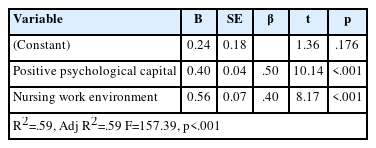
Purpose This study aimed to investigate the factors influencing job embeddedness among advanced beginner nurses, with particular emphasis on the roles of positive psychological capital and the nursing work environment. Methods: This cross-sectional study included 216 advanced beginner nurses from two university-affiliated hospitals. Data were obtained using standardized questionnaires and analyzed with descriptive statistics, the independent t-test, one-way analysis of variance, Pearson correlation coefficients, and multiple regression analysis. Results: The average score for job embeddedness was 3.34±0.54, for positive psychological capital was 4.00±0.67, and for the nursing work environment was 2.67±0.39. Multiple regression analysis showed that positive psychological capital and the nursing work environment significantly predicted job embeddedness, accounting for 59.3% of its variance. Conclusion: The findings suggest that enhancing positive psychological capital and improving the nursing work environment are essential for promoting job embeddedness among advanced beginner nurses. These results provide empirical support for the development of targeted interventions that facilitate their transition toward becoming competent nurses.


 First
First Prev
Prev