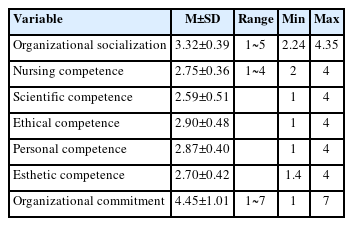
Purpose This study examined the effects of organizational socialization and nursing competence on organizational commitment among clinical nurses. Methods: Data were collected from August 12 to August 31, 2024, from 207 nurses with more than 6 months of clinical experience at five general hospitals in a metropolitan area. Data were analyzed using descriptive statistics, the independent t-test, one-way analysis of variance, Pearson correlation coefficients, and multiple regression in IBM SPSS version 27.0. Results: Organizational commitment was positively correlated with organizational socialization and with scientific, ethical, personal, and aesthetic competence. Multiple regression identified organizational socialization (β=.59, p<.001), aesthetic competence (β=.18, p=.012), ethical competence (β=.15, p=.023), and married status (β=.16, p=.010) as significant factors associated with organizational commitment. These variables explained 57.0% of the variance, and the regression model was significant (F=12.65, p<.001). Conclusion: Healthcare institutions should strengthen organizational socialization and nursing competence through structured education and institutional support to enhance nurses’ organizational commitment.
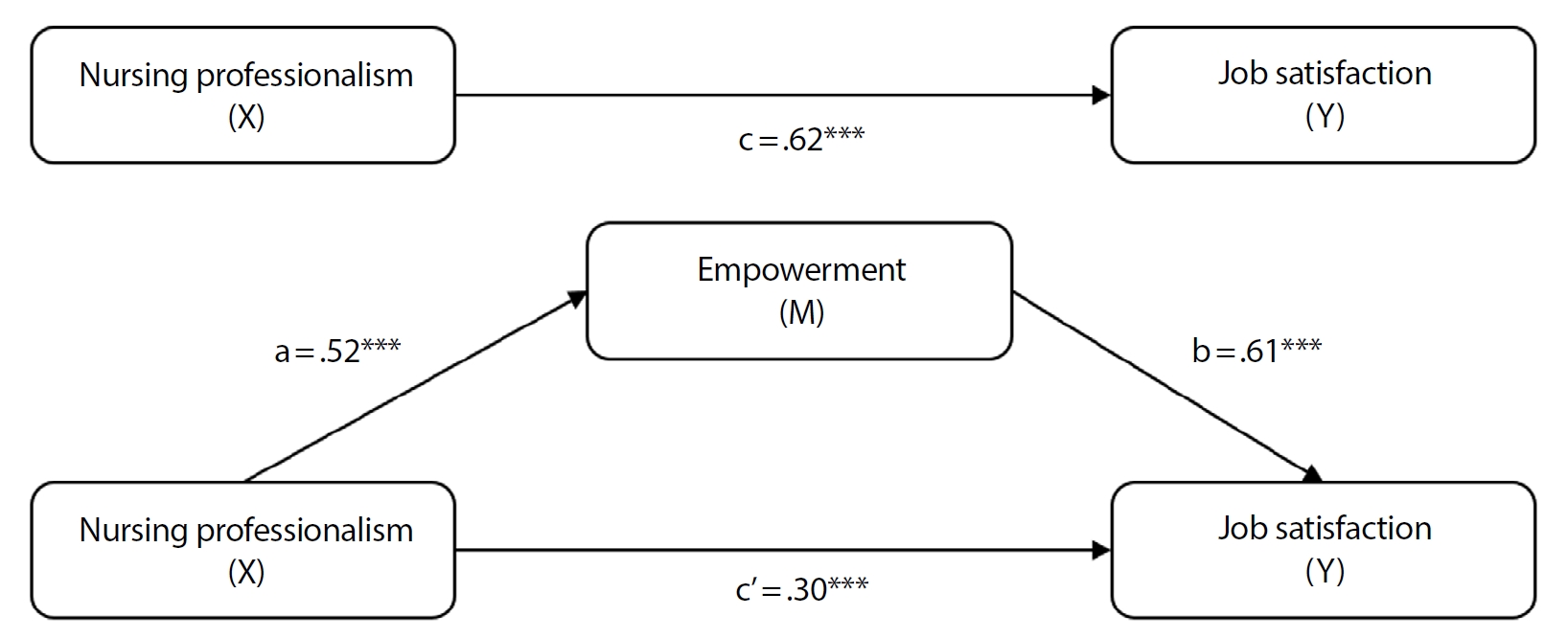
Purpose This study examined the mediating effect of empowerment on the relationship between nursing professionalism and job satisfaction, with the goal of informing strategies to enhance job satisfaction among insurance review nurses. Methods: A total of 165 insurance review nurses with more than 1 year of work experience in 12 general hospitals (≥500 beds) participated in this study. Data were analyzed using descriptive statistics, t-tests, analysis of variance, Pearson correlation analysis, and multiple regression analysis. The mediating effect was tested using the PROCESS Macro (model 4) in SPSS version 26.0 with 10,000bootstrap samples. Results: The mean scores for nursing professionalism, empowerment, and job satisfaction were 100.37 (standard deviation [SD], 17.03), 86.24 (SD, 17.70), and 45.44 (SD, 9.17), respectively. Significant positive correlations were observed between nursing professionalism and job satisfaction (r=.64, p<.001), empowerment and job satisfaction (r=.77, p<.001), and nursing professionalism and empowerment. Empowerment was found to partially mediate the relationship between nursing professionalism and job satisfaction (95% CI, .20–.44). Conclusion: Enhancing empowerment and strengthening nursing professionalism are essential for improving job satisfaction among insurance review nurses. Institutional interventions that promote professional identity and provide structural empowerment may increase job satisfaction and support retention within this specialized nursing workforce.
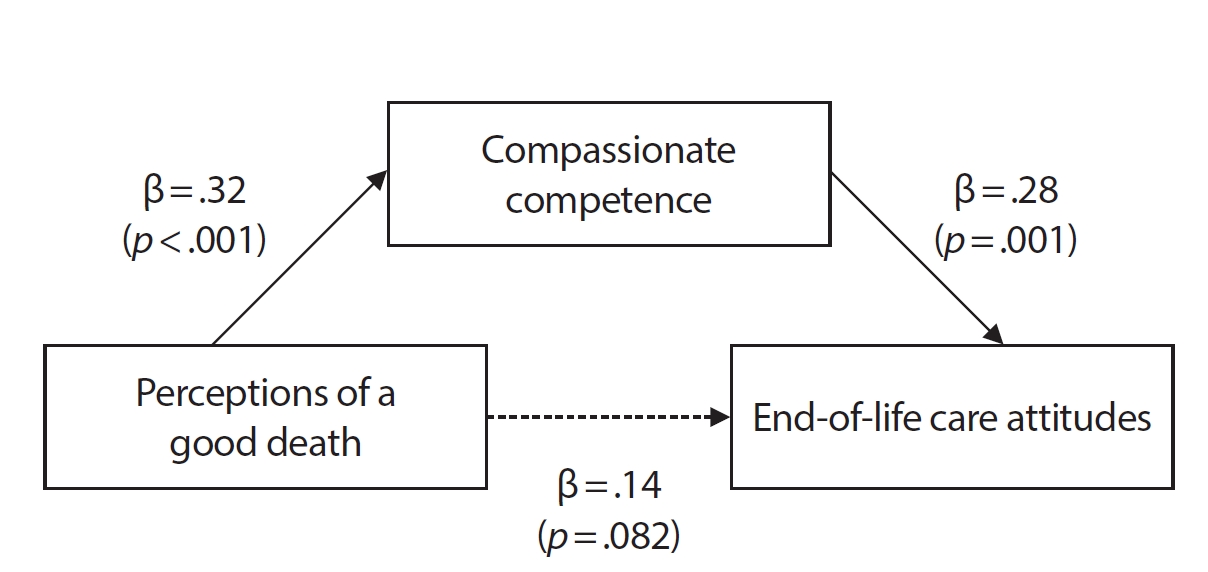
Purpose This study aimed to confirm the mediating effect of compassionate competence in the relationship between perceptions of a good death and end-of-life care attitudes among ward nurses in younger generations. Methods: A total of 175 nurses in their 20s and early 30s who were working in general wards of a public hospital in Seoul were recruited. Data were collected using a self-report questionnaire from February 20 to March 20, 2023, and were analyzed using the IBM 29.0 program. Results: Participants’ end-of-life care attitudes were positively correlated with perceptions of a good death (r=.22, p=.004) and compassionate competence (r=.32, p<.001), and compassionate competence was positively correlated with perceptions of a good death (r=.32, p<.001). Nurses’ compassionate competence was identified as a significant predictor of end-of-life care attitudes. As a result of the mediation analysis, a complete mediating effect of compassionate competence was confirmed in the relationship between perceptions of a good death and end-of-life care attitudes. Conclusion: To improve positive end-of-life care attitudes among young generation ward nurses, educational initiatives that emphasize compassionate competence, as well as understanding of a good death, are needed in both nursing education and clinical practice.
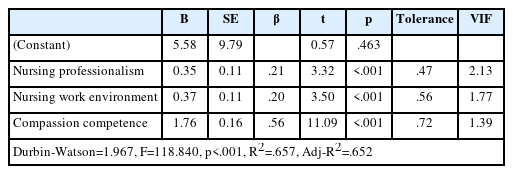
Purpose This study aimed to identify the influence of nursing professionalism, the nursing work environment, and compassion competence on person-centered care among nurses working in comprehensive nursing care units. Methods: An online survey using structured self-report questionnaires was administered to 190 nurses in comprehensive nursing care units at three tertiary general hospitals. The collected data were analyzed using descriptive statistics, the independent t-test, the Mann-Whitney U-test, one-way analysis of variance, Pearson’s correlation coefficient, and multiple linear regression using SPSS version 29.0 program. Results: The average score for person-centered care was 3.70±0.49, nursing professionalism was 3.56±0.51, the nursing work environment was 2.53±0.46, and compassion competence was 4.01±0.47. Person-centered care demonstrated significant positive correlations with nursing professionalism (r=.636, p<.001), the nursing work environment (r=.542, p<.001), and compassion competence (r=.743, p<.001). Factors influencing person-centered care included compassion competence (β=.56, p<.001), nursing professionalism (β=.21, p<.001), and the nursing work environment (β=.20, p<.001), with an explanatory power of 65.2% (F=118.84, p<.001). Conclusion: To improve person-centered care among nurses in comprehensive nursing care units, it is necessary to strengthen nurses’ compassion competence and professionalism, as well as enhance the nursing work environment. The findings of this study may be used as foundational evidence for developing programs to promote person-centered care in comprehensive nursing care units.
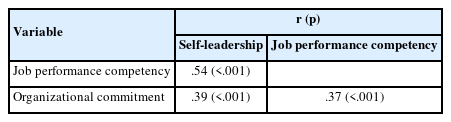
Purpose This study aimed to determine the effects of self-leadership on job performance competency and organizational commitment among insurance review nurses. Methods: A nationwide online survey was conducted using structured questionnaires. Participants included 189 insurance review nurses working in advanced general hospitals and general hospitals in South Korea. Data were collected through self-administered questionnaires between August 19 and September 17, 2021. Data analysis was performed using descriptive statistics, independent t-tests, one-way analysis of variance, Pearson’s correlation coefficients, and hierarchical multiple regression with IBM SPSS version 23.0. Results: The mean score for self-leadership was 3.64±0.43 out of 5, for job performance competency was 3.10±0.68 out of 5, and for organizational commitment was 4.38±1.09 out of 7. Statistically significant positive correlations were observed among self-leadership, job performance competency, and organizational commitment in insurance review nurses. Hierarchical multiple regression analysis showed that self-leadership explained an additional 13.9 percentage points of variance in job performance competency and an additional 5.3 percentage points in organizational commitment. Self-leadership emerged as a statistically significant predictor of both job performance competency and organizational commitment. Conclusion: This study empirically demonstrates that self-leadership has significant effects on job performance competency and organizational commitment among insurance review nurses. These findings provide empirical evidence relevant to human resource management strategies for insurance review nurses.
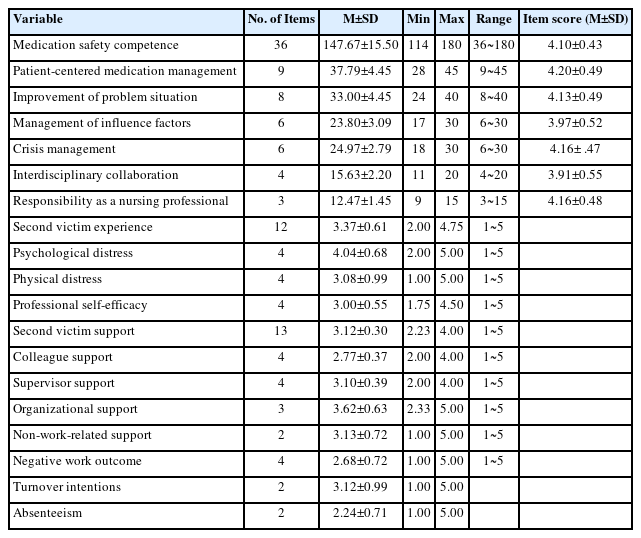
Purpose This study aimed to identify clinical nurses’levels of medication safety competence, second victim experience, second victim support, and negative work outcomes, and to examine the interrelationships among these variables. Methods: A cross-sectional study was conducted with 142 nurses working in university or general hospitals in Gyeonggi-do, South Korea, using self-administered questionnaires collected between June 10 and July 5, 2024. Data were analyzed with IBM SPSS statistics 29.0 using descriptive statistics and Pearson correlation analysis. Results: The mean scores were as follows: medication safety competence (4.10±0.43), second victim experience (3.37±0.61), second victim support (3.12±0.30), and negative work outcomes (2.68±0.72). Medication safety competence was negatively correlated with negative work outcomes (r=-.17, p=.047) and positively correlated with psychological distress, a subdomain of second victim experience (r=.21, p=.013). Second victim experience was positively correlated with both second victim support (r=.53, p<.001) and negative work outcomes (r=.56, p<.001). Conclusion: This study demonstrated that nurses with greater medication safety competence experienced fewer negative work-related outcomes but higher levels of psychological distress. Strengthening medication safety competence may improve patient safety and occupational performance; however, the associated psychological burden must not be overlooked. Initiatives to enhance competence should therefore be accompanied by strategies designed to mitigate psychological distress.
Citations
Citations to this article as recorded by
Knowledge of Medication Management and Therapeutic Care Practices Among Nurses Caring for Older Adults: A Cross-Sectional Study Naila Anjum, Sadia Mukarram, Nimra Rehman Al-Najam Journal of Medical and Life Sciences.2026; 1(2): 19. CrossRef
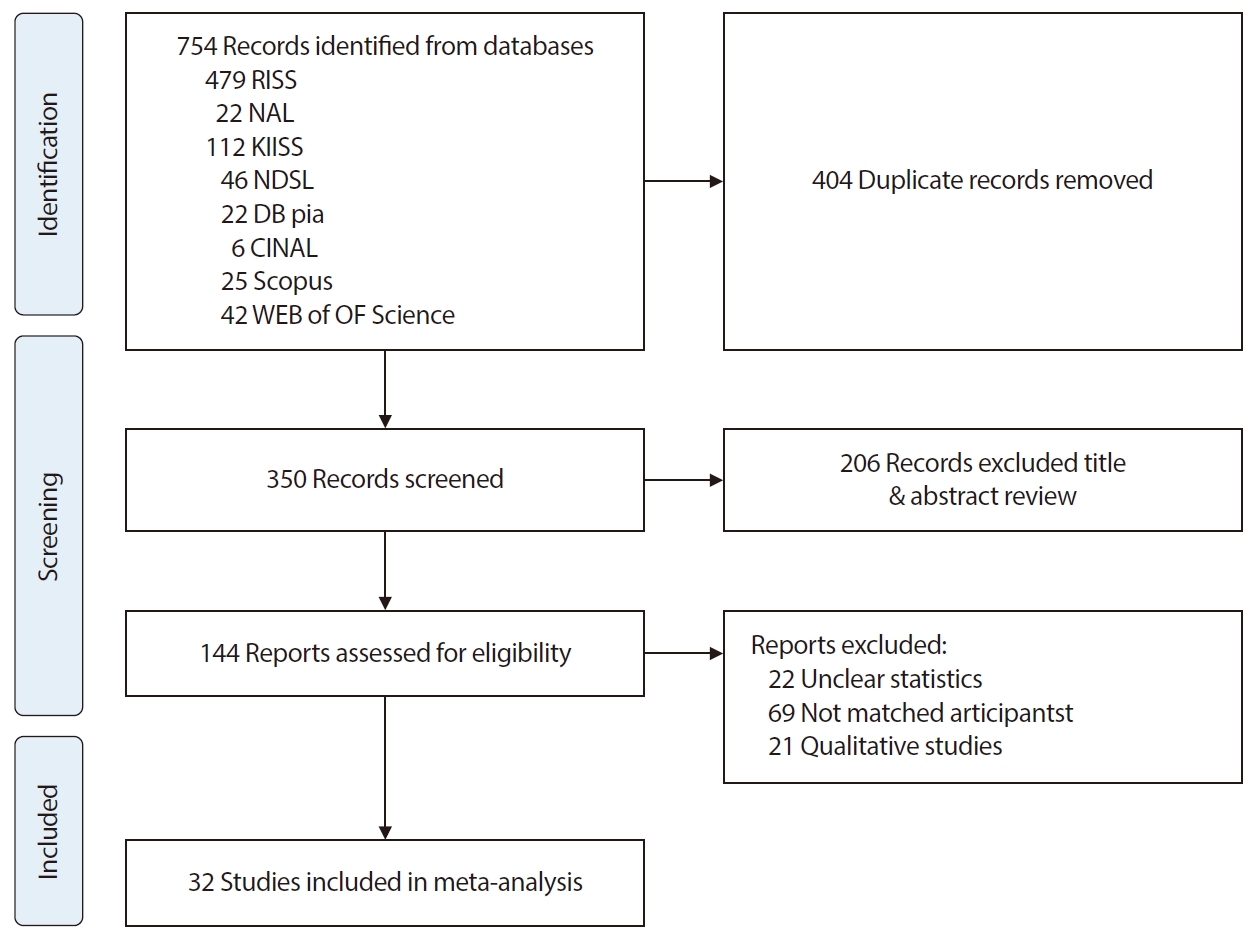
Purpose The purpose of this study is to provide academic basic data by quantitatively integrating variables related to information literacy competence of Korean nursing students. Methods: This study is a meta-analysis study to systematically review the research on information literacy competence of Korean nursing students and related variables to identify the effectiveness of each variable group. The selection criteria for the analysis subjects were determined using the PICOS framework in accordance with the PRISMA (Preferred Reporting Items for Systematic Reviews and Meta-Analyses) systematic review reporting guidelines. Theses and journal articles published from September 1, 2024, to September 30, 2024, were searched. Results: The effect sizes of the sub-variables of each variable group showed that the personal thinking competence group showed the largest effect size in the order of problem-solving ability (Fisher’s Z=.90) and critical thinking ability (Fisher’s Z=.57); the professional competence group showed evidence-based practice (Fisher’s Z=.84), clinical performance (Fisher’s Z=.65), learning engagement (Fisher’s Z=.51), communication ability (Fisher’s Z=.49), and academic achievement (Fisher’s Z=.45); and the professional competence group showed privacy awareness (Fisher’s Z=.51), professionalism (Fisher’s Z=.42), and ethical awareness (Fisher’s Z=.41). Conclusion: Based on the results of this study, it is necessary to develop a program to strengthen the information literacy competence of nursing students. Furthermore, there is a need to develop curricula and teaching-learning strategies to enhance information utilization capabilities, along with sustained attention to practice-based educational models tailored to AI and digital environments.
Citations
Citations to this article as recorded by
The mediating effect of nursing informatics competency on the relationship between digital literacy and the problem-solving process among Korean nursing students: a cross-sectional study Chang Seung Park, Yeong Ju Ko Journal of Korean Biological Nursing Science.2026; 28(3): 481. CrossRef
Purpose This study aimed to investigate the effects of job characteristics and professional self-concept on competency in forensic nursing among operating room nurses at university hospitals. Methods: Data were collected from 164 operating room nurses employed at university hospitals. The collected data were analyzed in SPSS 23.0, using the mean, standard deviation, independent t-test, one-way analysis of variance, Scheffé post-hoc test, Pearson correlation coefficients, and multiple regression analysis. Results: Professional self-concept showed a statistically significant positive correlation with forensic nursing competency (r=.60, p<.001). The following factors significantly influenced forensic nursing competency among operating room nurses: professional self-concept (β=.69, p<.001), total career lengths of <5 years (β=.21, p=.006) and 5-9 years (β=.20, p=.011), and job characteristics (β=.19, p=.007). A three-step regression model was statistically significant (F=29.74, p<.001) and the total explanatory power of the regression model was 41.4%. Conclusion: This study identified that professional self-concept, total career years, and job characteristics as the most significant factors influencing operating room nurses' forensic nursing competency. Therefore, it will be necessary to develop educational programs to improve professional self-concept and job characteristics.
Citations
Citations to this article as recorded by
Knowledge and Attitude Scale Toward Forensic Cases: A Scale Development Study Şeyda Öztuna, Nermin Gürhan, Bahadır Geniş, Aila Gareayaghi Turkish Journal of Forensic Medicine.2026; 40(1): 51. CrossRef



 First
First Prev
Prev