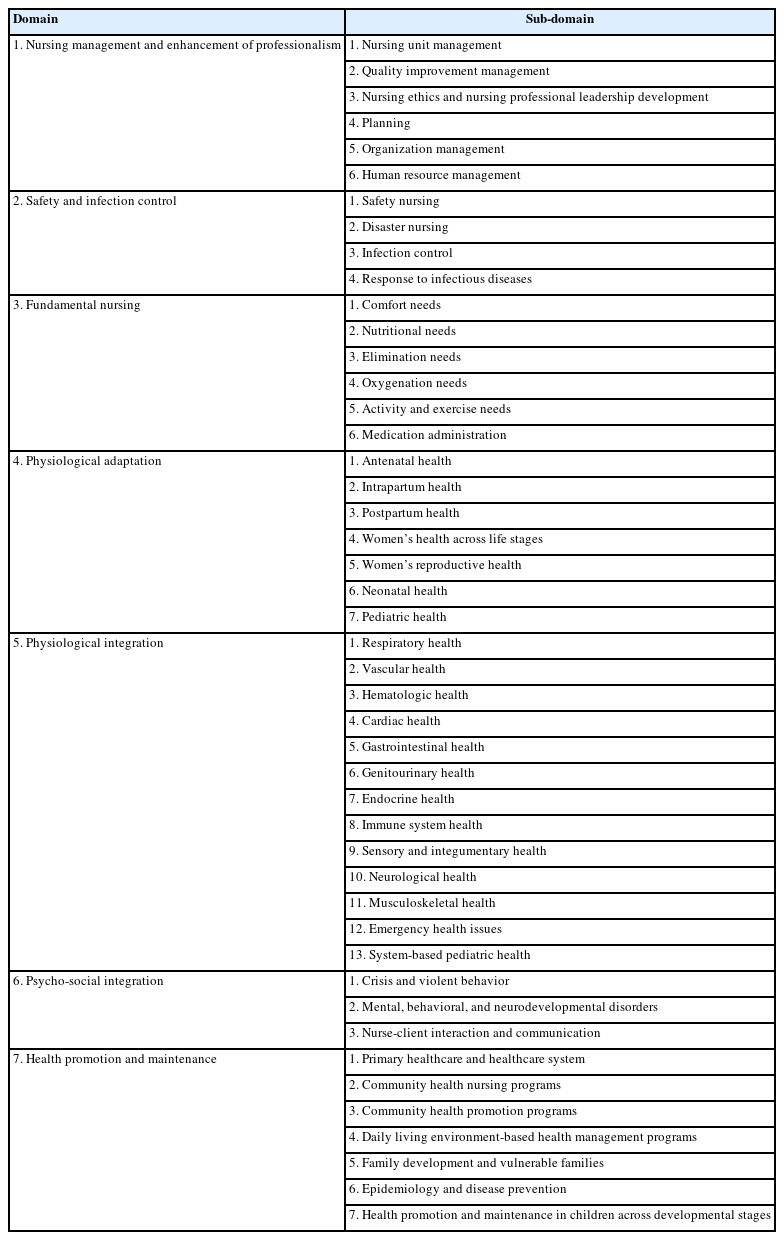
Purpose This study aimed to propose directions for innovation in nursing management education by reviewing reforms to the Nurse Licensure Examination, analyzing the relevance of Nursing Management to the job roles of newly graduated nurses, and examining perceptions of Nursing Management courses. Methods: A narrative review was conducted using research reports, policy reports, laws and regulations, and press releases from the government and the Korea Health Personnel Licensing Examination Institute. Peer-reviewed articles were also reviewed using keywords related to “newly graduated nurses,” “nursing job,” and “managerial or administrative competency.” Results: The Nurse Licensure Examination is expected to shift from knowledge-based assessment to job-based assessment by integrating the existing eight subjects into General Nursing and Health-Related Laws and Regulations. Nursing Management is included in the domain of “nursing management and professional development,” which comprises seven subdomains. The subject is relevant to newly graduated nurses’ job roles in multiple areas. However, managerial and administrative competencies are often perceived as competencies required only by managers, despite being essential for all nurses to strengthen professionalism. This perception affects both students’ understanding of nursing management and policies related to the Nurse Licensure Examination. Conclusion: Nursing management education should be prepared for future changes by reframing perceptions of the field and improving its alignment with the job roles of newly graduated nurses.
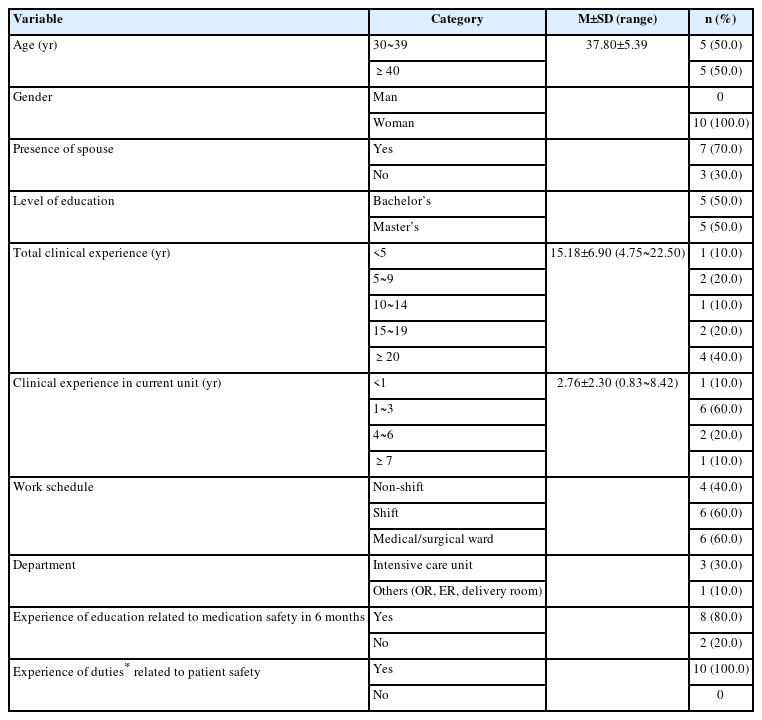
Purpose This qualitative study aimed to explore clinical nurses’ experiences in managing high-alert medications (HAMs) and their educational needs. Methods: Two focus group interviews were conducted with 10 hospital nurses at the proficient level or higher who had experience administering HAMs and managing or encountering related medication errors. Data were analyzed using Graneheim and Lundman’s qualitative content analysis approach. Results: The analysis generated four themes: strengthening competency in HAM management; developing a multilayered education system for HAMs; fostering a supportive patient safety culture; and strengthening system- and organization-based HAM management. Conclusion: HAM safety cannot rely solely on individual vigilance or one-time didactic training. Competency-based nursing education, combined with team-based training and robust organizational safety systems, is needed to reduce medication errors involving HAMs and enhance patient safety in acute care settings.
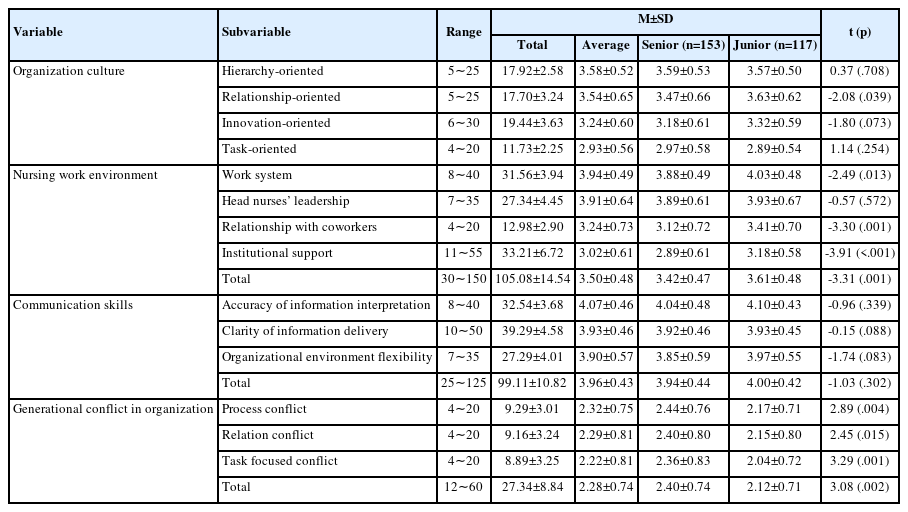
Purpose This study aimed to identify structural factors associated with intergenerational conflict among nurses and to explore how these conflicts manifest in clinical settings. Methods: An explanatory sequential mixed-methods design was used. Quantitative data were collected from 270 nurses using structured questionnaires that measured organizational culture, work environment, communication skills, and intergenerational conflict. Key influencing factors were identified using multiple regression analysis. Qualitative data were collected through in-depth interviews with 10 nurses and analyzed using Colaizzi’s phenomenological method. Results: Hierarchy-oriented culture, task-oriented culture, work systems, and organizational-environment flexibility significantly influenced intergenerational conflict (F=6.25, p<.001). The adjusted explanatory power of the regression model was 24.9% (adjusted R²=.249). Among these variables, work systems emerged as the strongest predictor of intergenerational conflict. The qualitative findings indicated that anonymous suggestion systems, differences in work approaches, and differences in emotional interpretation intensified conflict. Conclusion: Intergenerational conflict among nurses appears to stem from procedural ambiguity, emotional misunderstandings, and value incongruence. Organizations should redesign suggestion systems to ensure procedural fairness, strengthen evidence-based practice education, implement communication training focused on emotional awareness, and develop institutional strategies that support generational integration.
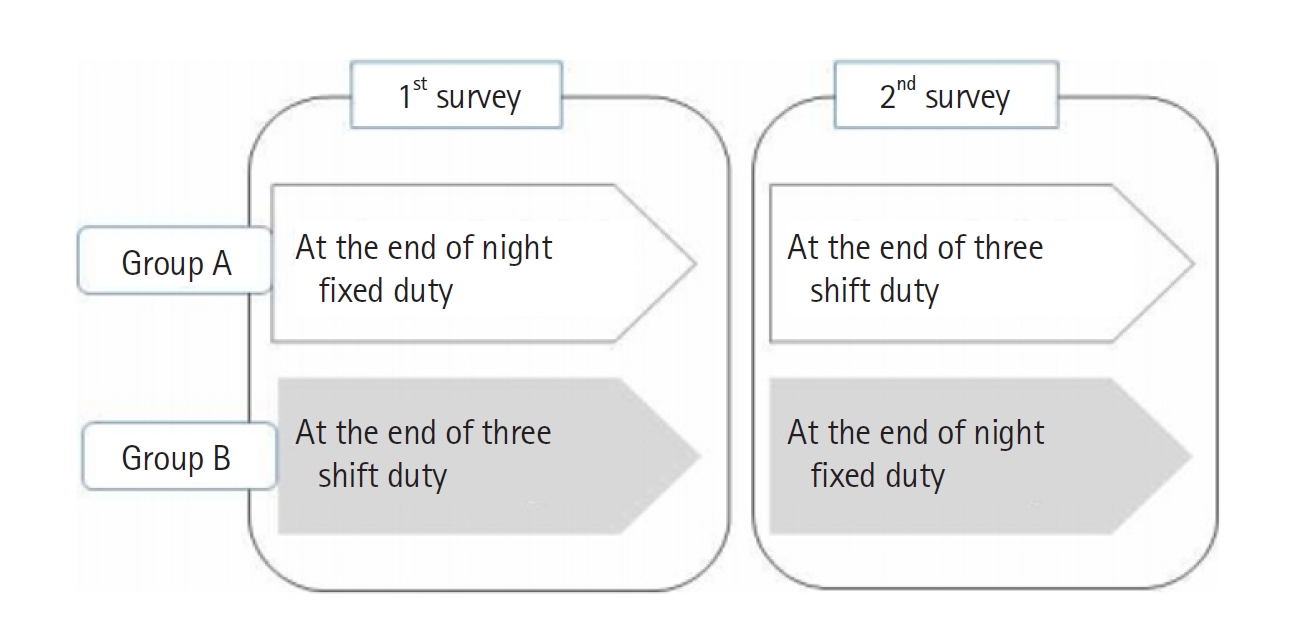
Purpose This study aimed to compare fatigue, adaptation to night shifts, and resilience among nurses who had experience with both fixed night duty and three-shift duty. Methods: This repeated-measures comparative study included 41 nurses at a university hospital in Incheon who had experienced both fixed night duty and three-shift duty. The measured variables were general characteristics, fatigue, adaptation to night shifts, and resilience. Data were analyzed using descriptive statistics, including frequencies, percentages, means, and standard deviations, as well as the paired t-test. Results: No statistically significant differences were found in fatigue or resilience between periods of fixed night duty and three-shift duty. However, adaptation to night shifts was significantly higher during fixed night duty. Conclusion: Because adaptation to night shifts was significantly higher during fixed night duty, fixed night duty may be considered an alternative work arrangement that broadens nurses’ scheduling options. Because fixed night duty is based on voluntary participation, its potential benefits should be clearly communicated to nurses.
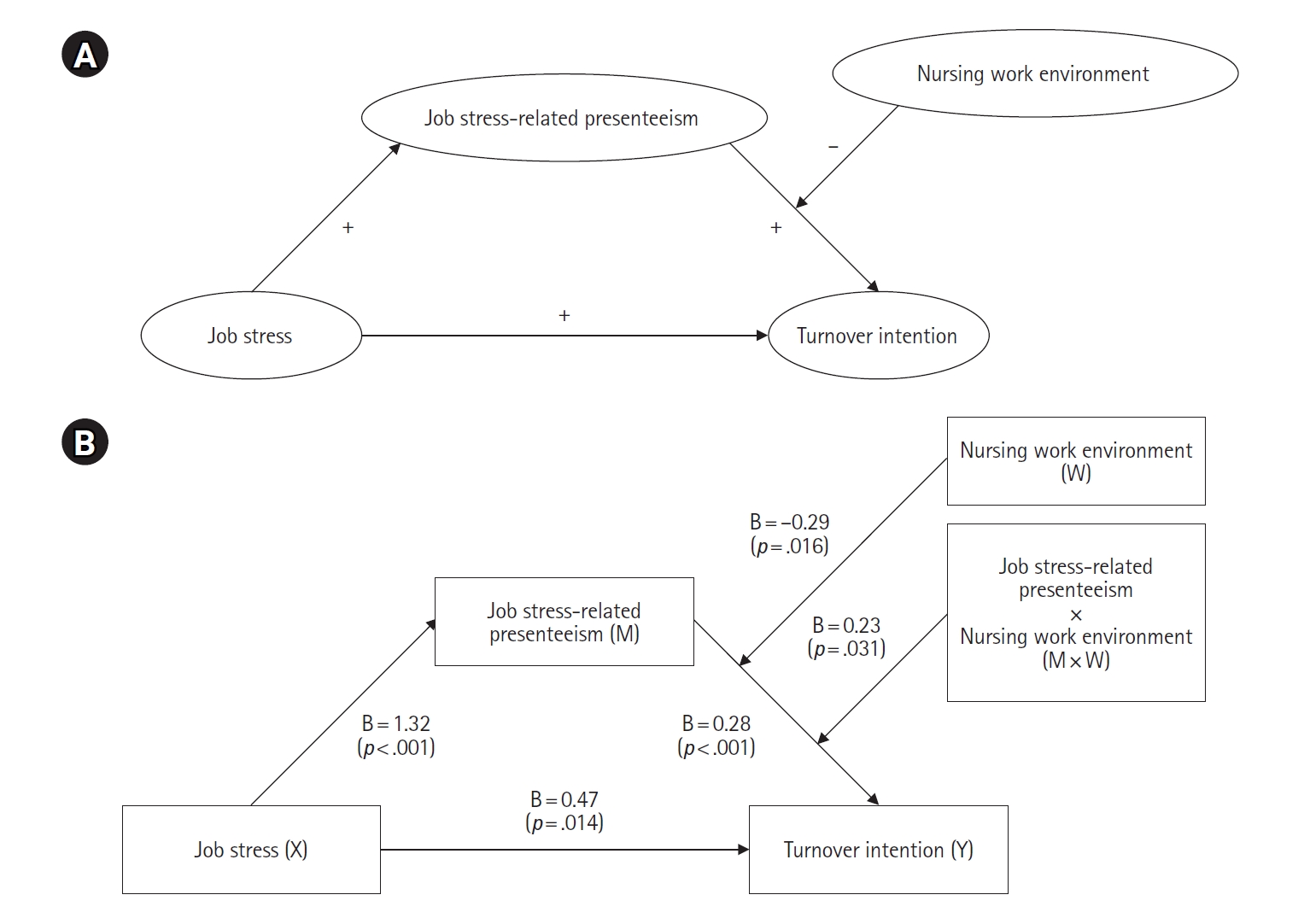
Purpose This study examined the mediating effect of job stress-related presenteeism and the moderated mediating effect of the nursing work environment on the relationship between job stress and nurses’ turnover intention. Methods: A predictive correlational research design was employed from September 8 to September 26, 2023, involving 176 nurses working in general and tertiary hospitals nationwide. Data were analyzed using IBM SPSS Statistics version 25.0, the PROCESS macro version 4.2, and the EasyFlow Statistics macro version 1.8. Results: The mean scores were 2.76±0.38 for job stress, 3.11±0.81 for job stress-related presenteeism, 2.47±0.50 for nursing work environment, and 3.57±0.75 for turnover intention. Job stress was positively associated with turnover intention through job stress-related presenteeism (B=1.32, p<.001), and the nursing work environment significantly moderated this partial mediating effect (B=0.31; 95% CI, 0.04~0.53). Conclusion: These findings may inform the development of strategies and policies aimed at reducing nurses’ turnover intention and improving human resource management in clinical settings. In addition, this study contributes to the growing body of research on job stress, job stress-related presenteeism, nursing work environment, and turnover intention among nurses.
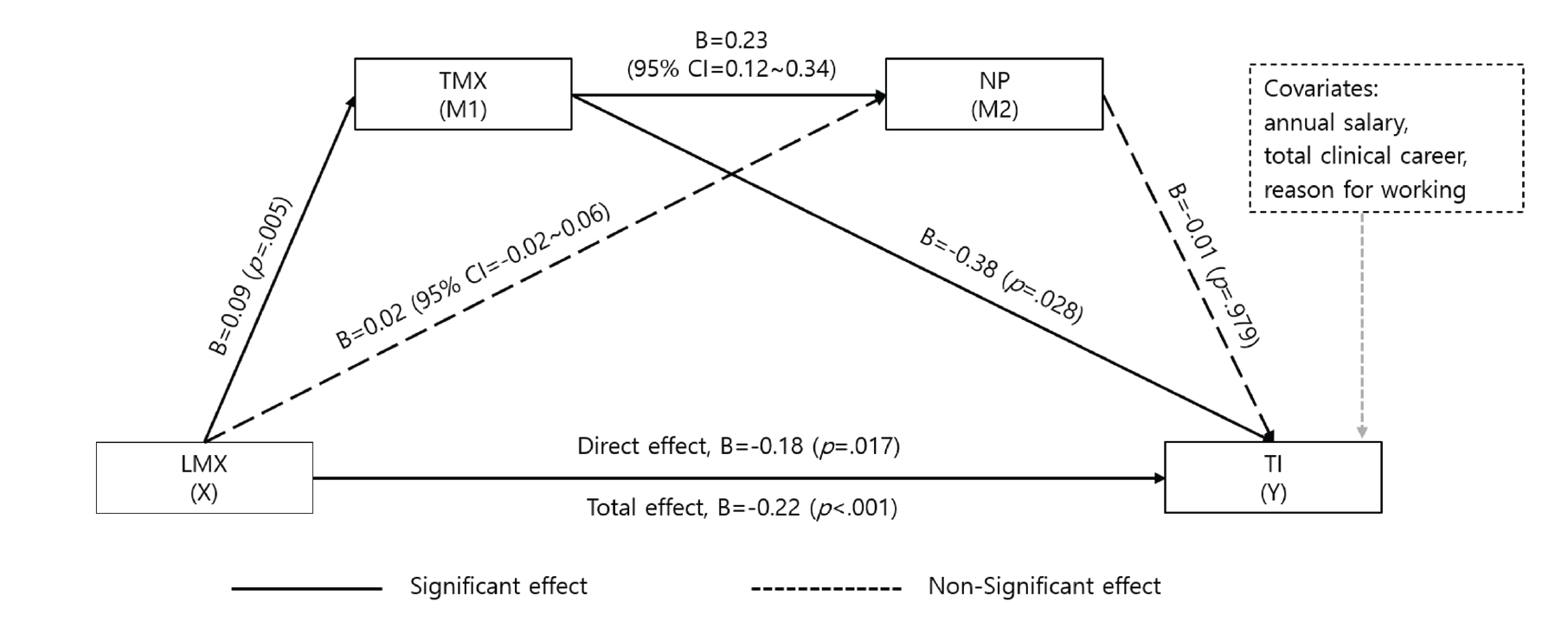
Purpose This study aimed to examine the mediating pathways of team-member exchange and nursing performance in the relationship between leader-member exchange and turnover intention among competent-stage nurses. Methods: Participants were 214 clinical nurses with 3–6 years of experience working in tertiary hospitals in South Korea. Data were collected using self-reported questionnaires on general characteristics, leader-member exchange, team-member exchange, nursing performance, and turnover intention between September 30 and November 4, 2024. Data were analyzed using IBM SPSS version 29.0 and PROCESS macro version 4.2. Results: Leader-member exchange had a significant positive effect on team-member exchange and a significant negative effect on turnover intention. Team-member exchange significantly mediated the relationship between leader-member exchange and turnover intention. In contrast, nursing performance did not mediate this relationship, and the sequential mediating effect of team-member exchange and nursing performance was not statistically significant. Conclusion: Further research focused on competent-stage nurses is needed to identify targeted interventions for reducing turnover intention. These findings suggest that hospital organizations should develop and implement programs that strengthen leader-member exchange between nurses and nursing leaders and team-member exchange among colleagues, which may help reduce turnover intention among competent-stage nurses.
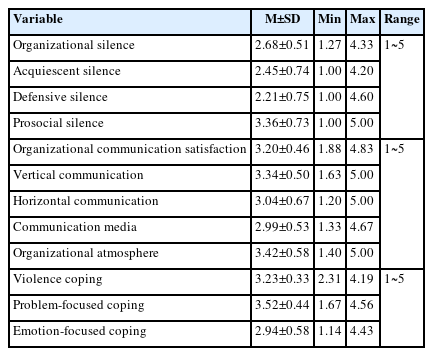
Purpose This descriptive survey study examined the influence of organizational silence and organizational communication satisfaction on violence coping among emergency department nurses. Methods: Data were collected from February 15, 2023, to February 29, 2024, using a structured self-report questionnaire administered to 187 nurses with at least 6 months of experience in the emergency departments of 10 tertiary and general hospitals in Gangwon Province. The data were analyzed using IBM SPSS 26.0. Descriptive statistics, the independent t-test, one-way analysis of variance, Scheffé’s post hoc test, Pearson’s correlation coefficients, and multiple regression analysis were used. Results: Organizational silence (β=0.19, p=.014) and organizational communication satisfaction (β=0.17, p=.034) were identified as significant predictors of violence coping among emergency department nurses, although the explanatory power of the model was relatively low (R²=.051). Conclusion: These findings suggest the need for strategies to improve organizational communication satisfaction, address organizational silence, and implement ongoing interventions to strengthen emergency department nurses’ ability to cope with violence.




 First
First Prev
Prev