
• KANAD
  • Contact us
  • E-Submission
ABOUT
BROWSE ARTICLES
EDITORIAL POLICY
FOR CONTRIBUTORS

Page Path

108
results for

"Work"

Filter

Article category

Keywords

Publication year

Authors

Funded articles

"Work"

Original Articles
Non-Value-Added Activities and Non-Nursing Tasks Affecting Nursing Task Efficiency: A Scoping Review
Mi Ha Chung, Yongah Kim, Na Yeong Kim, Min Ju Kim, Hyeon Jin Kim, Ju Hee Park, Ji In Park, Su Yeon Bae, Heajin Bae, Eunjeong Lee, Min Young Jeon, Suyoung Choi
J Korean Acad Nurs Adm 2025;31(4):405-420.   Published online September 30, 2025
DOI: https://doi.org/10.11111/jkana.2025.0006
Purpose
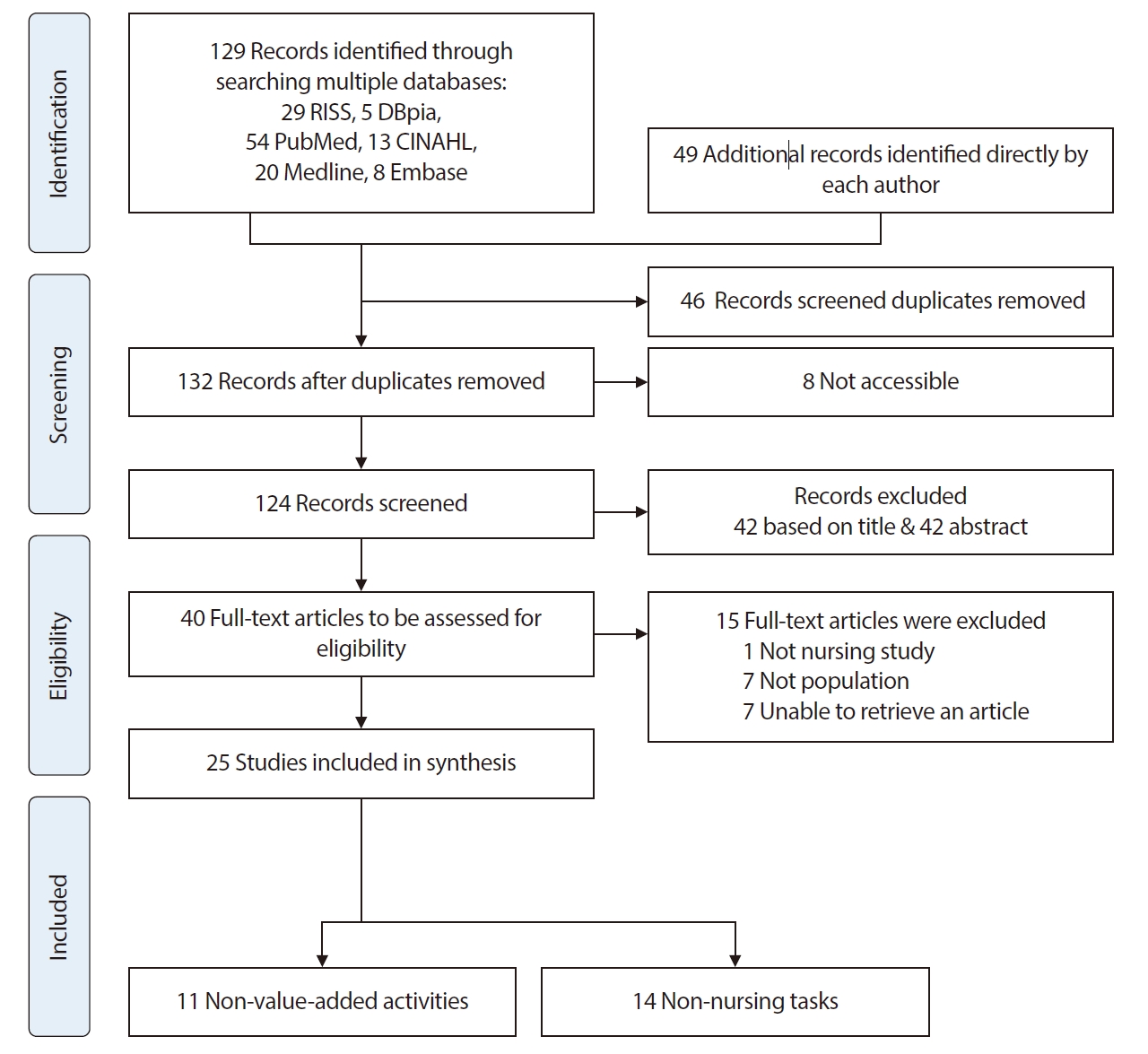
This study explored the literature on non-value-added (NVA) activities and non-nursing tasks (NNT). We analyzed domestic and international research trends and examined the types and characteristics of nursing tasks to improve efficiency. Methods: A comprehensive literature search was conducted using RISS, DBpia, PubMed, CINAHL, Medline, and Embase. Relevant studies published up to 2024 were identified using keywords such as “non-value-added activity,” “non-value-added nursing activity,” “non-nursing tasks,” and “nursing.” Results: Analysis of 25 studies revealed that 11 studies focused on NVA activity and 14 on NNT. Direct nursing tasks were classified into eight categories; indirect tasks were classified into seven categories. NVA activities were grouped into five main categories: “personal,” “waste,” “documentation,” “necessary activities,” and “unit-related,” with overlapping subcategories such as “interruption” and “duplicating.” Similarly, NNT were categorized into eight types, including “admission,” “equipment,” and “administrative activities.” Although conceptually distinct, NVA activities and NNT often overlap. Reducing tasks unrelated to essential nursing care significantly improves job satisfaction, patient outcomes, and work efficiency. These findings provide valuable insights for optimizing nursing workflows and enhancing the quality of care. Conclusion: Identifying and reducing NVA activities and NNT enhance nursing efficiency and provide foundational data for improving clinical practice and patient safety.
  • 1,113 View
  • 49 Download
Purpose
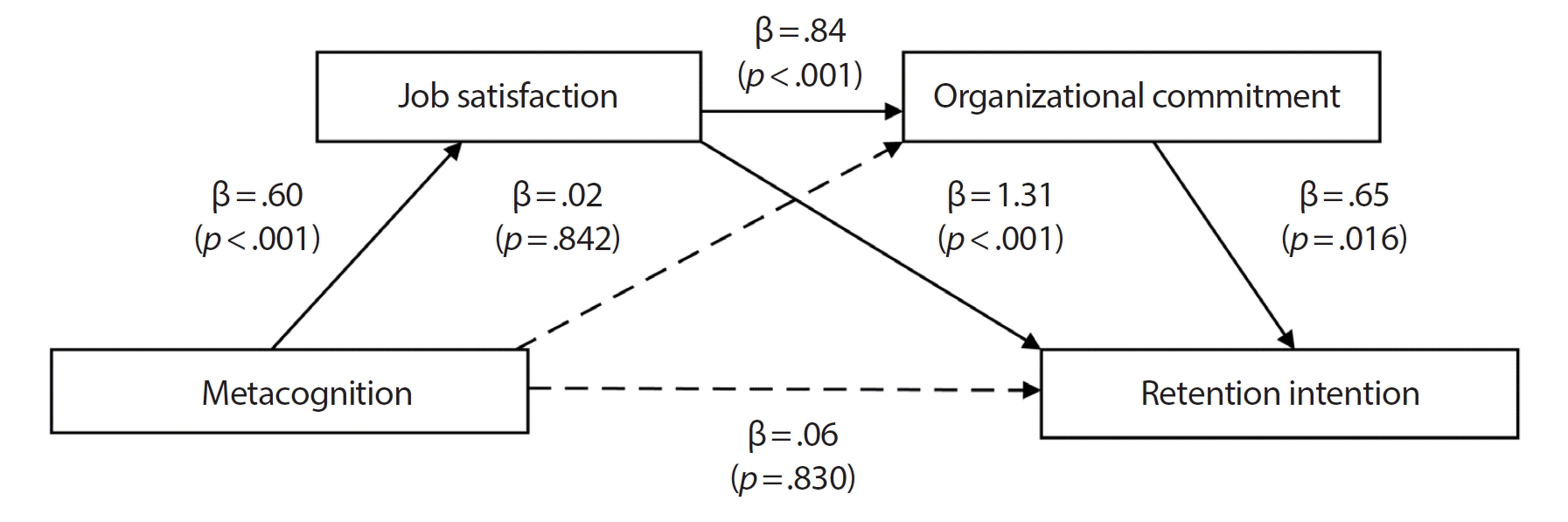
This study investigated the effect of new nurses' metacognition on their retention intention and the dual mediating effect of job satisfaction and organizational commitment in the relationship between those two variables. Methods: Participants included 154 new nurses with 12 months or less of clinical experience working in general hospitals in Seoul. Using a structured questionnaire, data were collected from September 30 to October 29, 2024 and analyzed using IBM SPSS version 29.0 and the Process Macro 4.2 program. Results: Metacognition had a positive effect on job satisfaction (B=0.60, p<.001). Job satisfaction had significant positive effects on organizational commitment (B=0.84, p<.001) and retention intention (B=1.31, p<.001), while organizational commitment had a significant positive effect on retention intention (B=0.65, p=.016). The sequential mediating effect of job satisfaction and organizational commitment was confirmed within the relationship between metacognition and retention intention in new nurses (effect=0.33, 95% confidence interval: 0.03-0.71). Conclusion: The results of this study suggest the presence of a causal structure in which higher metacognition is associated with greater job satisfaction in new nurses; this leads them to commit to the organization, eventually increasing their retention intention.
  • 873 View
  • 57 Download
Development and Validation of the Clinical Nurses' Job Crafting Scale
Eunha Jeong, Sujeong Han
J Korean Acad Nurs Adm 2025;31(3):333-343.   Published online June 30, 2025
DOI: https://doi.org/10.11111/jkana.2025.0017
Purpose
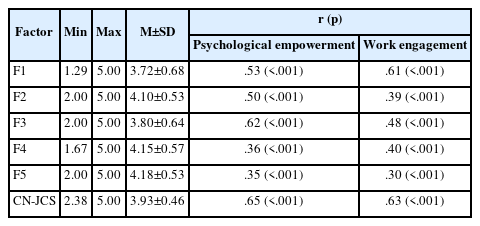
The study was to develop a Clinical Nurses' Job Crafting Scale (CN-JCS) and examines its validity and reliability. Methods: Data were collected from 423 clinical nurses working in general hospitals. The CN-JCS was developed according to DeVellis’s step sclae development guidelines. The CN-JCS was assessed for content validity, construct validity, item convergence/discrimination, convergent validity, and internal consistency. Results: In the exploratory factor analysis, five factors and 20 items were selected. Construct validity was examined using confirmatory factor analysis, and the model fit was good. The Conceptual reliability was greater than .70 and average variance extracted value was greater than .50, indicating discriminant validity. Convergent validity was confirmed through correlations between the CN-JCS, psychological empowerment and work engagement. The scale’s reliability was established with a Cronbach's alpha of .90. The CN-JCS employs a 5-point Likert scale across 20 questions, gauging aspects such as giving meaning to work, changing the structure of work, exploring and communicating, pursuing relationship change, and positive attitude toward change. Conclusion: The CN-JCS can be used to accurately assess the job craft of clinical nurses, and the measured level can be used as baseline data to improve awareness and education of nurses’ job craft.
  • 1,930 View
  • 73 Download
Role Transformation and Adaptation of Physician Assistants during the 2024 Medical Workforce Shortage: A Phenomenological Study
Tae Yeong Yang, Nahyun Lee
J Korean Acad Nurs Adm 2025;31(3):259-268.   Published online June 30, 2025
DOI: https://doi.org/10.11111/jkana.2025.0016
Purpose
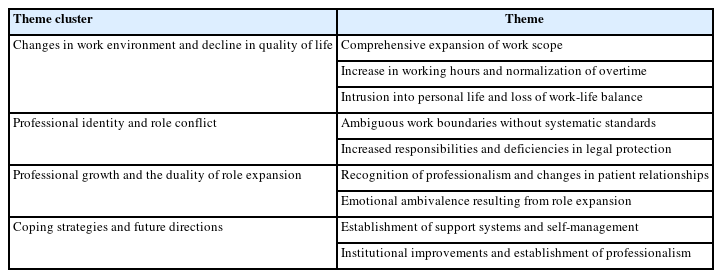
This study explored the lived experiences of physician assistants (PAs) in Korea during the 2024 medical workforce shortage, focusing on how they perceived and adapted to their rapidly changing roles. The study investigated both the challenges PAs faced and the professional growth they experienced throughout the adaptation process. Methods: A phenomenological qualitative design was applied using Colaizzi’s method. In-depth interviews were conducted with 15 PAs at a tertiary hospital in Seoul between September 25, 2024 and February 1, 2025. Data were analyzed thematically. Results: Four major theme clusters emerged: changes in work environment and quality of life, role conflict and ambiguity in professional identity, dual aspects of role expansion including autonomy and burnout, and coping strategies and structural policy demands. Participants reported physical and emotional strain, but also described greater involvement in care decisions, improved patient relationships, and a stronger sense of professional identity. Conclusion: Amid the medical staffing crisis, PAs adapted to their expanded responsibilities and became key healthcare providers. While facing substantial burdens, they simultaneously experienced personal and professional growth. Institutional and legal support is essential to stabilize their roles and improve long-term healthcare outcomes.
  • 2,343 View
  • 156 Download
Effects of Role Conflict, Work Environment, and Meaning of Work on Job Embeddedness among Physician Assistants
Kwang Hoon Seo, Tae Yeong Yang, Nam Gyu Park, Jung Eun Park
J Korean Acad Nurs Adm 2025;31(3):249-258.   Published online June 30, 2025
DOI: https://doi.org/10.11111/jkana.2025.0011
Purpose
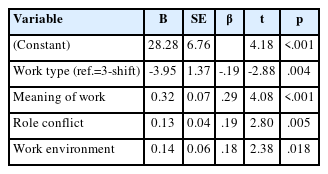
This study examined the effects of role conflict, work environment, and meaning of work on job embeddedness among physician assistants to provide foundational data for their retention and professional development. Methods: A descriptive survey was conducted with 180 physician assistants from six tertiary hospitals in Seoul and Chungcheong Province. Data were collected from July to November 2022. Role conflict, work environment, meaning of work, and job embeddedness were measured using validated scales. Data were analyzed using SAS Enterprise Guide 7.1 with descriptive statistics, the independent t-test, ANOVA, Pearson correlation coefficients, and multiple regression analysis. Results: Job embeddedness correlated positively with meaning of work (r=.28, p<.001) and work environment (r=.22, p=.002) and weakly with role conflict (r=.14, p=.045). Multiple regression identified meaning of work (B=0.32, p<.001), role conflict (B=0.13, p=.005), work environment (B=0.14, p=.018), and work type (B=-3.95, p=.004) as significant predictors (Adj. R²=19.8%). Meaning of work had the greatest impact. Conclusion: Enhancing job embeddedness among physician assistants requires improving the work environment, clarifying professional roles, and strengthening professional recognition and organizational support.
  • 1,673 View
  • 139 Download
The Effects of Presenteeism, Burnout, and Nursing Performance on Retention Intention among Nurses at an Intensive Care Unit
Na Rin Kim, Seung-Hee Lee
J Korean Acad Nurs Adm 2025;31(3):269-279.   Published online June 30, 2025
DOI: https://doi.org/10.11111/jkana.2024.0058
Purpose
This study aimed to explore the effects of presenteeism, burnout, and nursing performance on intention to retention among nurses of an intensive care unit in one tertiary hospital.
Method
The data were collected from from July 1 to July 31, 2023, from 172 nurses at intensive care units. Data were analyzed using the SPSS/WIN 26.0 program.
Results
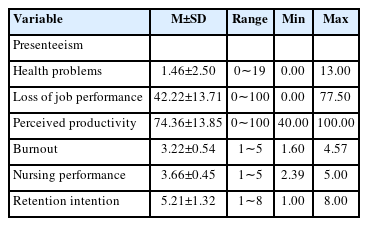
A four-step hierarchical regression model, including control variables, presenteeism, burnout, and nursing performance, accounted for 44.9% of the factors influencing intention to retention. Burnout (β=-.54, p<.001), nursing performance (β=.21, p=.002), health problem (β=-.07, p=.040), and experience of turnover (β=-.16, p=.008) were identified as the significant predictor of intention to retention. Model III, which adds burnout, has a significant 23.5%p increase in explanatory power over Model II, indicating that burnout has the strongest impact on intention to retention.
Conclusion
For enhancing the intention to retention of the intensive care nurses, it is necessary to provide a systematic strategy and support to increase the performance of nurses and to try to reduce the burnout and health problems of nurses.
  • 2,038 View
  • 137 Download
Influences of Generation Z Characteristics on Job Embeddedness and Turnover Intention
Su Hyun Kim, Chae Yeon Park, Seung Mok Shin, Seung Hun Shin, Grace Choe, Da Yeong Hwang, Young Hee Chae, Geun-Hee Kim
J Korean Acad Nurs Adm 2025;31(3):291-301.   Published online June 30, 2025
DOI: https://doi.org/10.11111/jkana.2024.0050
Purpose
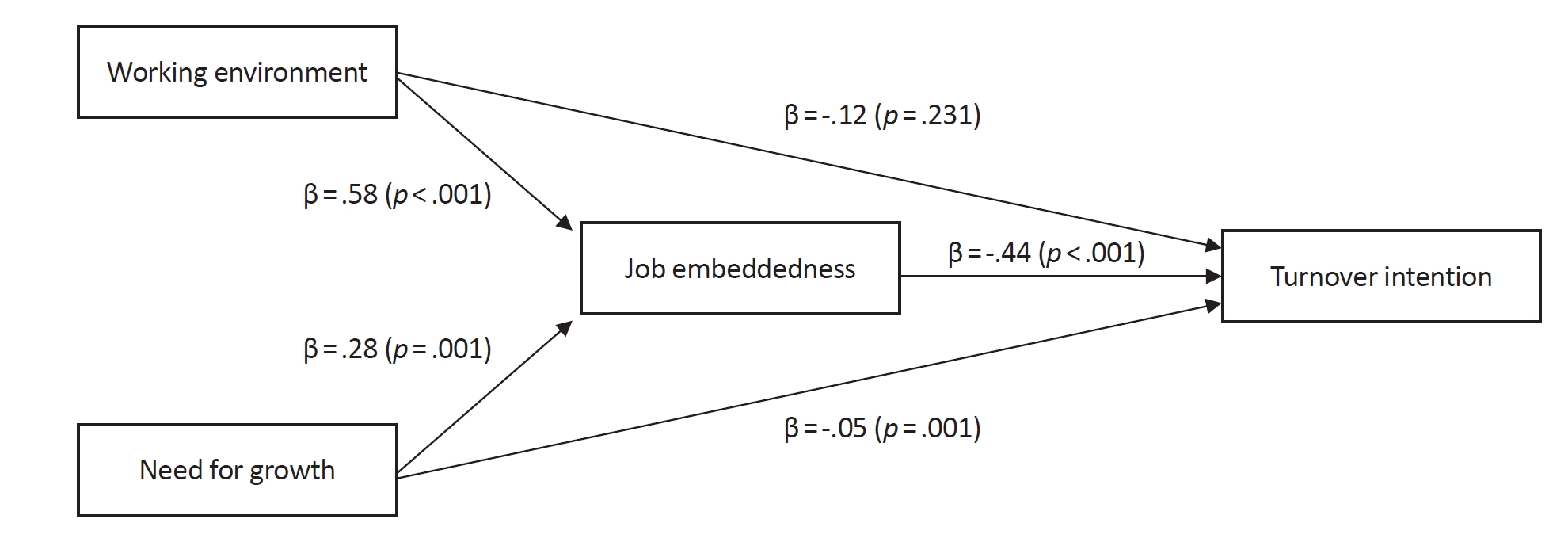
This study explored how Generation Z characteristics—specifically work–life balance, growth needs, and individualism—along with work environment, emotional labor, and interpersonal skills, affect job embeddedness among newly graduated nurses. It also examined whether job embeddedness mediates the relationship between these factors and turnover intention. Methods: A correlational descriptive study was conducted by analyzing survey data collected from 131 clinical nurses born between 1995 and 2000, who had less than three years of nursing work experience in South Korea. Hierarchical multiple regression analysis was employed to identify the independent effects of Generation Z characteristics on job embeddedness, over and above the effects of work environment, emotional labor, and interpersonal skills. Path analysis using bootstrapping method was conducted to examine the mediating role of job embeddedness in turnover intention. Results: Needs for growth and work environment were significant predictors of job embeddedness among newly graduated nurses. Furthermore, the effects of needs for growth and work environment on turnover intention were significantly mediated by job embeddedness. Conclusion: Understanding the characteristics of Generation Z, particularly their needs for growth, along with the work environment, is essential for enhancing job embeddedness among newly graduated nurses. Strengthening job embeddedness can effectively reduce their turnover intention.
  • 1,437 View
  • 117 Download
Effects of Grit and Nursing Work Environment on Work Engagement in Clinical Nurses
Young Ju Kim, Hye Young Cho
J Korean Acad Nurs Adm 2025;31(3):312-321.   Published online June 30, 2025
DOI: https://doi.org/10.11111/jkana.2024.0049
Purpose
This study aimed to identify the impact of clinical nurses’ grit and nursing work environment on job enthusiasm and provide basic data for system improvement to maintain and secure nursing personnel. Methods: Data were collected online from July to August 2022 targeting 210 clinical nurses at three general hospitals located in Jeollabuk-do. Data analysis was performed using the IBM SPSS 26.0 program. Results: Job enthusiasm exhibited statistically significant differences according to age (F=5.20, p=.006) and presence of children (F=0.95, p<.001). Furthermore, job enthusiasm showed statistically significant positive correlations with grit (r=.64, p<.001) and the nursing work environment (r=.49, p<.001). The following factors were found to affect job enthusiasm: having children (β=.26, p<.001), grit (β=.46, p<.001), nursing work environment (β=.33, p<.001), and age over 40 (β=.16, p<.001). Conclusion: Based on the results of this study, it is recommended that an internal motivation strengthening program that promotes grit should be developed and applied to increase work enthusiasm among clinical nurses. Additionally, hospital organizations should prepare various policies to improve the nursing work environment.
  • 2,046 View
  • 65 Download
Factors Influencing the Perception of Decent Work by Nurses
Chung Hee Woo, Yu Jin Lee
J Korean Acad Nurs Adm 2025;31(3):227-236.   Published online June 30, 2025
DOI: https://doi.org/10.11111/jkana.2024.0042
Purpose
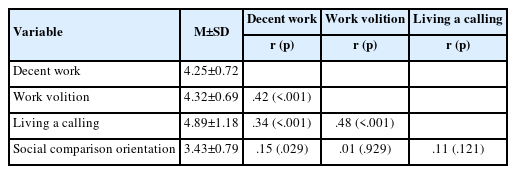
To identify the factors influencing the perception of “decent work” by nurses. Methods: Data were collected from 208 nurses who had worked in hospitals for over six months, from January 23 to February 11, 2024. The collected data were analyzed using descriptive statistics, t-tests, analysis of variance, Pearson's correlation, and hierarchical multiple regression analysis using IBM SPSS Statistics 29.0. Results: Statistically significant positive correlations were observed among “decent work,” “work volition,” “living a calling,” and “social comparison orientation.” The core factors that significantly affected the perception of “decent work” by nurses were ‘work volition” (β=.30, p<.001), shift type (β=-.28, p<.001), aged in their 40s (β=-.22, p=.003), “living a calling” (β=.18, p=.012), and “social comparison orientation” (β=.14, p=.021). These variables explained 32% of the variance in the perception of “decent work.” Conclusion: The study results confirmed that, in addition to “work volition” and “living a calling’,” “social comparison orientation” also plays a significant role in how nurses perceive “decent work.” To understand the “decent work” conditions in nursing, it is necessary to explore the relationship between these factors and the variables that reflect professionalism or social recognition.
  • 1,439 View
  • 165 Download
Purpose
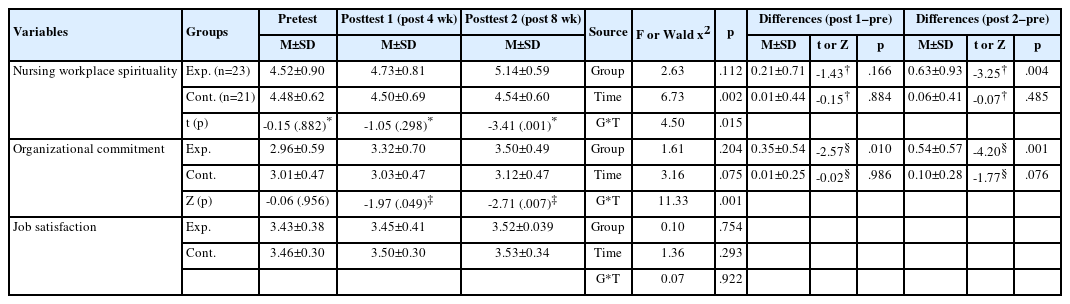
To examine the impact of reading the text of the Nightingale Pledge aloud at the beginning of the shift on nursing workplace spirituality, organizational commitment, and job satisfaction among hospital nurses.
Methods
We used a non-randomized controlled trial design. Forty-four nurses from four wards with similar work environments at M General Hospital in B City were enrolled. The data were analyzed using a x2 test, t-test, and generalized estimating equations.
Results
In both groups, we observed a significant group and time interaction effect for nursing workplace spirituality (Wald x2=4.50, p=.015) and organizational commitment (Wald x2=11.33, p=.001). Nursing workplace spirituality was significantly higher in the experimental group than in the control group at eight weeks after the intervention (t=-3.41, p=.001). Likewise, organizational commitment was significantly higher in the experimental group than in the control group at four and eight weeks after the intervention (Z=-1.97, p=.049; Z=-2.71, p=.007, respectively). Job satisfaction did not significantly before and after the intervention.
Conclusion
Despite the short time commitment, reading aloud the text of the Nightingale Pledge at the beginning of shift had positive effects on hospital nurses’ nursing workplace spirituality and organizational commitment.
  • 985 View
  • 36 Download
Structural Equation Model for Intent of Return to Nursing Practice among Inactive Korean Nurses
Ji-Yeon Yoo
J Korean Acad Nurs Adm 2025;31(1):87-98.   Published online January 31, 2025
DOI: https://doi.org/10.11111/jkana.2025.31.1.87
Purpose
This study aimed to predict and test a hypothetical model for the Intent of Return to Nursing Practice(IRNP) among inactive Korean nurses and to identify the interrelationships and influences of factors affecting IRNP.
Methods
The conceptual model was developed by integrating Ajzen’s Theory of Planned Behavior and Herzberg’s Two-Factor Theory. Data were collected from 224 Korean nurses who experienced a career disruption of more than one year through online or offline surveys. Data were analyzed using SPSS 20.0 and AMOS 22.0.
Results
The average nursing care length was seven years. The primary reason for leaving practice was rotating shifts, while the main barrier to reemployment was exhaustion. Among the variables, Career Commitment (β=.59, p<.001), Nursing Work Environment (β=.37, p<.001), and Attitude (β=.32, p<.001) had significant total effects on IRNP. Career Nursing Commitment, Subjective Norm, and Attitude showed direct effects, while the Nursing Work Environment had the second-largest total effect on IRNP, acting indirect by mediating Career Commitment.
Conclusion
The findings highlight the need for collaborative efforts among nurses, family, colleagues, hospitals, professional associations, and nursing policymakers to prevent the permanent loss of skilled nursing professionals.
  • 1,018 View
  • 24 Download
Purpose
The study aims to confirm the mediating effect of nursing professional pride in the relationship between nursing practice environment, nursing performance, and retention intention.
Methods
A descriptive cross-sectional survey was conducted from December 13 to 31, 2021, involving 127 nurses. The following statistical analysis was conducted: t-test, ANOVA, Scheffé test, Pearson's correlation coefficient analysis, and Hayes Process Macro Model 4 (to test the mediating effect).
Results
Nursing practice environment showed a significant positive correlation with nursing performance, retention intention, and nursing professional pride. Nursing practice performance showed a positive correlation with retention intention and nursing professional pride, and retention intention showed a significant positive correlation with nursing professional pride. The mediating effect of nursing professional pride was found in the effect of nurses' nursing practice environment on their retention intention. In addition, the mediating effect of nursing professional pride was found in the effect of nurses' nursing practice performance on their retention intention.
Conclusion
Through this study, it was confirmed that nursing professional pride is a major A factor affecting retention intention in the hospital. Therefore, in order to increase nurses' retention intention to remain in Hospital, the basis of basic data was presented for strategy development.

Citations

Citations to this article as recorded by  
  • A Grounded Theory Approach to Understanding Retention among Career Nurses in Clinical Practice
    Su Mi Choi, Ji Won Kim
    The Korean Journal of Health Service Management.2025; 19(2): 57.     CrossRef
  • Retention and Associated Factors among Nurses in Small- and Medium-Sized Hospitals across South Korea
    Eun Mi Kim, Su Jung Choi, mi sug Lee, Hyun Jin Park, Jeong Yun Park
    Journal of Korean Critical Care Nursing.2025; 18(3): 16.     CrossRef
  • 2,825 View
  • 161 Download
  • 2 Crossref
Purpose
This study aimed to explore the relationship between grit and work engagement among millennial and Generation Z (MZ generation) nurses, as well as the moderating effect of work friendships on this relationship.
Methods
The study included 191 MZ generation nurses with over six months of experience, surveyed via a self-administered questionnaire at four general hospitals in Daejeon and Seoul from December 2020 to February 2021. Descriptive statistics, t-tests, one-way analysis of variance, Pearson’s correlation analysis, and hierarchical multiple regression were used to analyze the collected data. The PROCESS macro program with bootstrapping was employed to evaluate the significance of mediating effects.
Results
Work friendships partially mediated the association between grit and work engagement, with an explanatory power of 29.9%. The significance of the indirect mediating effect using bootstrapping analysis indicated an effect size of 0.33, a lower limit confidence interval of 0.17, and an upper limit confidence interval of 0.52, which was significant as it did not include Zero.
Conclusion
Developing a program to improve grit is necessary to increase the work engagement of MZ generation nurses, and establishing and implementing a program to improve work friendships, along with education for individual nurses, is crucial.

Citations

Citations to this article as recorded by  
  • Impact of Superior's Ethical Leadership as Perceived by Nurses on Nursing Performance: Mediating Effect of Faith in Supervisor
    Miyoung Kim, Hyung-Eun Seo, Eun-Young Doo, Won-Jin Ju
    Journal of Korean Academy of Nursing Administration.2017; 23(5): 483.     CrossRef
  • Effects of Empowerment and Job Satisfaction on Nursing Performance of Clinical Nurses
    Ji-Yeon Choi, Eun-Kyung Kim, Se Young Kim
    Journal of Korean Academy of Nursing Administration.2014; 20(4): 426.     CrossRef
  • The Effect of Empowerment on Nursing Performance, Job Satisfaction, Organizational Commitment, and Turnover Intention in Hospital Nurses
    Eun Hee Oh, Bok Yae Chung
    Journal of Korean Academy of Nursing Administration.2011; 17(4): 391.     CrossRef
  • Relationship between Critical Thinking Disposition, Clinical Decision Making and Job Satisfaction of Cancer Center Nurses
    Sam Chul Jung, Dukyoo Jung
    Journal of Korean Academy of Nursing Administration.2011; 17(4): 443.     CrossRef
  • 3,278 View
  • 94 Download
  • 4 Crossref
Nurses' Hospital Selection within a Dual Labor Market Framework: The Dilemma of Professional Identity
Hyun-Ji Bae, Hyoung Suk Kim, Hwal Lan Bang
J Korean Acad Nurs Adm 2025;31(1):14-24.   Published online January 31, 2025
DOI: https://doi.org/10.11111/jkana.2025.31.1.14
Purpose
This qualitative study explored nurses' experiences in selecting hospitals within a dual labor market framework.
Methods
Focus group interviews were conducted with 18 general nurses, divided into three groups of six, each representing both large and medium-sized hospitals.
Results
The analysis revealed two themes, four categories, and nine subcategories, highlighting differences between large and medium-sized hospitals. Nurses who choose large hospitals prioritized "professional development" but faced "struggles to maintain professional identity" while those selecting medium-sized hospitals sought "stability and accessibility" but experienced "crisis of professional identity." Conclusion: This study highlights significant differences in the factors influencing nurses' hospital choices based on hospital size. These findings provide foundational data for establishing the Enforcement Decree and Rules of the Nursing Act, emphasizing the importance of developing legal measures to strengthen nurses' professional identity and promote a balanced and sustainable nursing labor market.
  • 1,668 View
  • 29 Download
Voice of Customer Analysis of Nursing Care in a Tertiary Hospital: Text Network Analysis and Topic Modeling
Hyunjung Ko, Nara Han, Seulki Jeong, Jeong A Jeong, Hye Ryoung Yun, Eun Sil Kim, Young Jun Jang, Eun Ju Choi, Chun Hoe Lim, Min Hee Jung, Jung Hee Kim, Dong Hyu Cho, Seok Hee Jeong
J Korean Acad Nurs Adm 2024;30(5):529-542.   Published online December 31, 2024
DOI: https://doi.org/10.11111/jkana.2024.30.5.529
Purpose
This study aimed to explore customer perspectives of nursing services in tertiary hospitals.
Methods
The data comprised mobile Voice Of Customer (VOC) data related to “nursing” or “nurses” generated from June 25, 2019, to December 31, 2022, in a tertiary hospital. A total of 44,727 VOC data points were collected, of which 4,040 were selected for the final analysis. Text network analysis and topic modeling were conducted using NetMiner 4.5.1.
Results
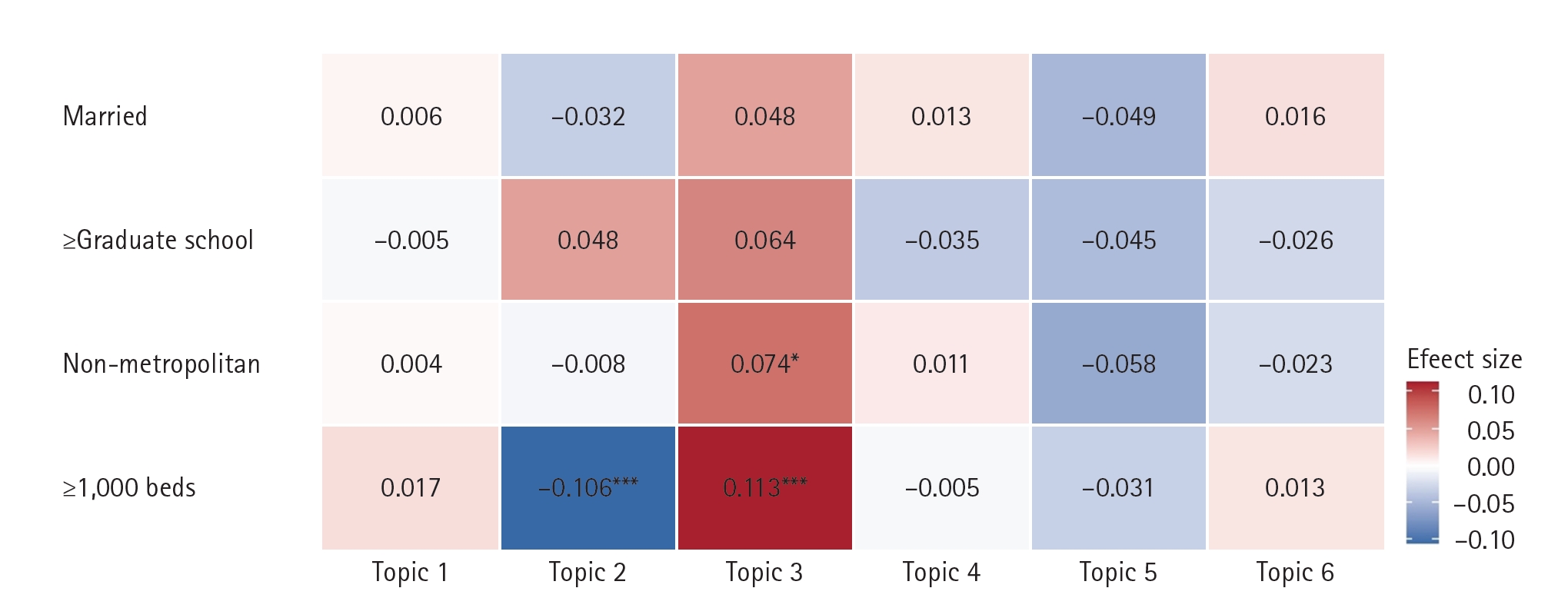
Topic modeling identified five topics for positive aspects and four topics for areas requiring improvement. The positive aspects were: 1) sincere nursing care; 2) rapid response from professional medical staff; 3) teamwork for delivering customer-centric services; 4) provision and coordination of system-based healthcare services; and 5) customer-focused responsiveness. The areas requiring improvement were: 1) demand for skilled nursing care tailored to customer expectations; 2) demand for enhanced communication and reduced mechanical responses; 3) demand for appropriate handling of diverse situations; and 4) demand for overall improvements to the healthcare system, including reservation systems.
Conclusion
These results may be used to enhance customer and patient experiences in tertiary hospitals and are necessary for utilization from a hospital management perspective.
  • 796 View
  • 47 Download
Purpose
This study aimed to compare and identify factors affecting delirium nursing stress among nurses in comprehensive nursing care service wards and general wards.
Methods
Using structured questionnaires, data were collected from 230 nurses working in two tertiary university hospitals. Data were analyzed using descriptive statistics, t-tests, ANOVA, Pearson's correlation coefficient, and multiple regression analysis using SPSS/WIN 27.0.
Results
The average delirium nursing stress score for nurses in comprehensive nursing care service wards was 2.98±0.30 out of 4 points, which was significantly higher than 2.89±0.29 points for nurses in general wards (t=2.17, p=.031). Factors influencing delirium nursing stress among comprehensive nursing care service ward nurses included nursing work environment (β=-.58, p<.001) and conflicts with medical staff and other departments related to delirium patients (β=.24, p=.006), explaining power of 44% (F=12.13, p<.001). For general ward nurses, the nursing work environment(β=-.39, p<.001) was the main influencing factor, explaining power of 17% (F=3.93, p<.001).
Conclusion
Both types of nurses require improvements in their work environment. Strategies to reduce conflict between medical staff and other departments are essential in comprehensive nursing care service wards.
  • 1,050 View
  • 31 Download
Effect of Work-Family Conflict on Turnover Intention among Married Female Nurses: The Mediating Effect of Nursing Work Environment
Min Gyeong Jeong, So Young Choi
J Korean Acad Nurs Adm 2024;30(5):451-461.   Published online December 31, 2024
DOI: https://doi.org/10.11111/jkana.2024.30.5.451
Purpose
This descriptive correlation study sought to evaluate the mediating effect of nursing work environment on the relationship between work-family conflict and turnover intention among married female nurses.
Methods
This study enrolled 149 married female nurses employed at a university hospital in G. province J City. For data analysis, the SPSS/WIN 25.0 program and SPSS PROCESS Macro version 4.2 was used.
Results
The mean score of work-family conflict among married female nurses was 2.99±72 out of 5 points, nursing work environment was 2.50±39 out of 4 points, and turnover intention was 3.96±69 out of 5 points. Turnover intention was positively correlated with work-family conflict (r=.34, p<.001), and negatively correlated with nursing work environment (r=-.34, p<.001). The nursing work environment had a parial mediating effect (β=.32, p<.001) on the relationship between work-family conflict and turnover intention.
Conclusion
Work-family conflict and turnover intention among married female nurses influenced each other, with the nursing work environment having a partial mediating effect. This study can serve as basis for addressing work-family conflict, improving the nursing work environment and reducing turnover among married female nurses.

Citations

Citations to this article as recorded by  
  • The mediating effects of nurses’ professional values on the relationship between work environment and organizational commitment among long-term care hospital nurses
    Won Hee Jun
    BMC Nursing.2025;[Epub]     CrossRef
  • A Grounded Theory Approach to Understanding Retention among Career Nurses in Clinical Practice
    Su Mi Choi, Ji Won Kim
    The Korean Journal of Health Service Management.2025; 19(2): 57.     CrossRef
  • 1,129 View
  • 50 Download
  • 2 Crossref
The Influences of Teamwork and Grit on Job Adaptation and Intention to Remain among Advanced Beginner Nurses
Seon Kyeong Jeong, Kyoung Ja Kim, Eun Ji Choi
J Korean Acad Nurs Adm 2024;30(4):379-391.   Published online September 30, 2024
DOI: https://doi.org/10.11111/jkana.2024.30.4.379
Purpose
This study aimed to explore the influence of teamwork and grit on job adaptation and intention to remain among advanced beginner nurses.
Methods
A cross-sectional descriptive research design employing a survey method was used. The study involved 203 advanced beginner nurses with 13~36 months of experience working at a tertiary hospital. Collected data were analyzed using descriptive statistics, independent t-tests, one-way ANOVA, Pearson's correlation coefficients, and hierarchical regression analysis.
Results
Job adaptation positively correlated with teamwork (r=.58, p<.001) and grit (r=.65, p<.001). Intention to remain was also positively correlated with teamwork (r=.32, p<.001) and grit (r=.59, p<.001). A hierarchical multiple regression model including control variables, teamwork, and grit accounted for 64% of the factors influencing job adaptation. Another hierarchical multiple regression model, incorporating control variables, teamwork, and grit, explained 44% of the factors influencing the intention to remain. Among the related factors, grit emerged as the most influential in regarding job adaption and intention to remain.
Conclusion
These findings underscore the importance of establishing a support system to bolster grit, enhancing adaptation to the job and fostering intention to remain among advanced beginner nurses.
  • 822 View
  • 53 Download
Purpose
The study was conducted to identify the influencing factors the quality of work life in emergency nurses during prolonged COVID-19.
Methods
Data was collected on 197 emergency nurses, from November 8 to December 8, 2022. Data were analyzed based on descriptive statistics, t-test, ANOVA, Scheffé test, Pearson's correlation, hierarchical multiple regression analysis.
Results
There was significant positive correlation between disaster nursing core competencies, coping flexibility, and quality of work life. The primary factors that significantly affected the quality of work life of emergency nurses were disaster nursing core competencies (β=.66, p<.001) and emergency department experience (β=.19, p=.030). The explanatory power of variable was 60%.
Conclusion
As a result of the study, it was confirmed that disaster nursing core competencies were the factor that had the greatest impact on the quality of work life of emergency nurses. Thus, it is expected that regular simulation training and education to improve the disaster nursing core competencies of emergency nurses.

Citations

Citations to this article as recorded by  
  • Factors Influencing the Mental Well-being of Shift Nurses
    Yu Jin Lee, Chung Hee Woo
    Journal of Korean Academy of psychiatric and Mental Health Nursing.2025; 34(1): 54.     CrossRef
  • 1,230 View
  • 41 Download
  • 1 Crossref
Influence of Work Environment, Missed Nursing Care, and Non-Nursing Tasks of Hospital Nurses on Job Stress
Ji Yeong Park, Kyoung Ja Kim
J Korean Acad Nurs Adm 2024;30(3):246-258.   Published online June 30, 2024
DOI: https://doi.org/10.11111/jkana.2024.30.3.246
Purpose
This study aimed to determine the impact of work environment, missed nursing care, and non-nursing tasks on the job stress of hospital nurses.
Methods
A descriptive, cross-sectional survey of 164 nurses working in three hospitals was conducted. Data were collected using structured questionnaires and analyzed using descriptive statistics, t-test, one-way analysis of variance, Pearson’s correlation coefficient, and multiple regression analysis using SPSS/WIN 26.0.
Results
Hospital Nurses' job stress was negatively correlated with the work environment (r=-.37, p<.001). Job stress had a statistically significant positive correlation with non-nursing tasks (r=.34, p<.001); however, it had no significant correlation with missed nursing care (r=.05, p=.552). Regression model analysis revealed that the variables associated with job stress were non-nursing tasks (β=.29, p<.001) and the foundation for quality nursing care (β=-.25, p=.034), which are subdomains of the work environment. In contrast, missed nursing care was not determined to be a significant factor.
Conclusion
To effectively manage nurses' job stress, nurse managers should provide higher quality care by reducing the number of non-nursing tasks and creating a positive work environment, especially by providing adequate nursing workforce and material support.

Citations

Citations to this article as recorded by  
  • Effects of Role Conflict, Work Environment, and Meaning of Work on Job Embeddedness among Physician Assistants
    Kwang Hoon Seo, Tae Yeong Yang, Nam Gyu Park, Jung Eun Park
    Journal of Korean Academy of Nursing Administration.2025; 31(3): 249.     CrossRef
  • Occupational Stress, Coping, and Outcomes among Korean Nurses: An Integrative Review Based on the Transactional Model of Stress and Coping
    Myungji Kim, Hyunkyung Choi
    STRESS.2025; 33(3): 127.     CrossRef
  • Comparison of Factors Affecting Delirium Nursing Stress between Nurses in Comprehensive Nursing Care Service Wards and General Wards
    Sumin Gwon, Gaeun Kim
    Journal of Korean Academy of Nursing Administration.2024; 30(5): 517.     CrossRef
  • 3,376 View
  • 175 Download
  • 3 Crossref
Purpose
The purpose of this study was to examine the influential factors on retention intention among nurses in small-medium sized hospitals.
Methods
This study was conducted with 185 nurses of 6 small-medium sized general hospitals located in B metropolitan city. Data were collected from July 10 to July 19, 2022 using on-line self-report questionnaires. A descriptive analysis and hierarchical multiple regression were used for data analysis utilizing IBM SPSS Statistics for Windows version 25.0.
Results
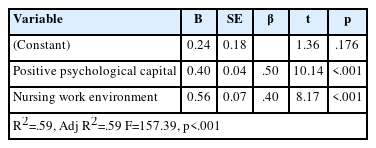
The variables influencing the retention intention of the subjects were perceived value of work (β=.36, p<.001), nurse manager ability, leadership, and support of nurses (β=.22, p=.024), positive psychological capital (β=.15, p=.042), and subjective health status (β=.14, p=.035), and the total explanatory power (R2 ) of these variables was 38.0% (F=12.24, p<.001).
Conclusion
Based on the results, in order to increase the retention intention for nurses in small and medium-sized hospitals, it is necessary to create an environment and culture as well as educational strategies for fostering a sense of work value and positive psychological capital. In addition, proactive organizational efforts are required to strengthen nurses’ subjective health and nurse managers’ supporting capabilities and leadership in small-medium sized hospitals.
  • 715 View
  • 15 Download
Purpose
To investigate the influence of violence experience and response of coping with violence on professional QoL among emergency department.
Methods
This cross-sectional study, included 179 subjects. Data were collected online from June 24 to July 31, 2022, and were analyzed using independent t-test, one-way ANOVA, Pearson’s correlation coefficient, and multiple regression.
Results
In the compassion satisfaction category, the problem focused coping (β=.328, p<.001) was a significant influencing factor (adj. R2 =.103) (F=21.36, p<.001). In the burnout category, violence response (β=.460, p<.001), problem focused coping (β=-.306, p<.001), and violence experience (β=.151, p=.030) were significant influencing factors (adj. R2 =.288) (F=24.99, p<.001). In the secondary traumatic stress category, violence response (β=.587, p<.001) and emergency department career (β=.177, p=.011) were significant influencing factors (adj. R2 =.383) (F=41.90, p<.001).
Conclusion
To improve professional QoL, it is necessary to understand the current situation related to violence and prepare a coping support system and intervention to prevent violence experiences and reduce negative consequences related to violence for a safe working environment for emergency department nurses.
  • 1,466 View
  • 74 Download
Purpose
This study used a structural model to identify organizational characteristics, such as work environment, nursing organizational culture, and manager leadership of general hospital nurses, and to examine the effect of organizational characteristics on turnover intention through organizational silence.
Methods
Data were collected from July 1, 2017 to August 30, 2017, using structured questionnaires. Participants were nurses in general hospitals with more than 250 beds and less than 500 beds in Busan City and Gyeongsangnam Province. The collected data were analyzed using IBM SPSS 23.0 and AMOS 23.0.
Results
The nursing work environment, external employment opportunities, relationship-oriented culture, and acquiescent and defensive silence directly impacted turnover intention. Additionally, the nursing work environment and external employment opportunities indirectly affected turnover intention through acquiescent silence.
Conclusion
To lower general hospital nurses’ turnover intention, the external environment should be reviewed and continuously compared to provide a better internal nursing work environment. In addition, it is necessary to find a way to lower the acquiescent silence, which can negatively affect the organization, by creating a relationship-oriented culture that emphasizes the relationship between members.
  • 1,203 View
  • 43 Download
Effect of the Nursing Work Environment on Turnover Intention: Serial Mediation Effects of Career Motivation and Job Satisfaction
Young Deok Park, Sun Ju You
J Korean Acad Nurs Adm 2023;29(5):529-539.   Published online December 31, 2023
DOI: https://doi.org/10.11111/jkana.2023.29.5.529
Purpose
This study investigated whether the work environment affects nurses' turnover intention with career motivation and job satisfaction acting as mediating factors.
Methods
Data were collected from January 6-25, 2022, using a cross-sectional design. The participants were 205 nurses who had worked for more than six months at four small-to-medium-sized general hospitals in South Korea. Data analysis consisted of descriptive statistics, Pearson's correlation coefficients, independent t-tests, one-way ANOVAs, Scheffé test, and mediation analysis using Hayes’ PROCESS Macro Model 6.
Results
The nursing work environment had a significant positive association with career motivation and job satisfaction and negative effects on nurses' turnover intention. The single mediating effect of job satisfaction and the serial mediation effects of career motivation and job satisfaction on the relationship between the nursing work environment and turnover intention were significant. Thus, nurses' positive perceptions of the work environment strengthened career motivation, which in turn increased job satisfaction and reduced turnover intention.
Conclusion
Providing a healthy work environment to nurses can help reduce their turnover intention. Therefore, the government and hospitals should implement human resource strategies to improve nursing work environments and take steps to enhance career motivation and job satisfaction to strengthen nurse retention.

Citations

Citations to this article as recorded by  
  • Association Between Nurse Turnover and Nurses’ Perception of Patient Outcomes in Acute Care Hospitals in South Korea
    Sung-Heui Bae
    Journal of Nursing Care Quality.2025; 40(4): E57.     CrossRef
  • 4,842 View
  • 131 Download
  • 1 Crossref
Structural Equation Modeling of Advanced Beginner-Stage Nurses' Intention to Continue Employment
Seung-Hee Lee, Hwasoon Kim
J Korean Acad Nurs Adm 2023;29(5):517-528.   Published online December 31, 2023
DOI: https://doi.org/10.11111/jkana.2023.29.5.517
Purpose
The purpose of this study was to establish a structural model explaining the factors affecting advanced beginner-stage nurses' intention to continue employment. This model was designed to provide basic data for improving the intention to continue employment among advanced beginner-stage nurses and to efficiently manage nurses as human resources.
Methods
In order to construct a hypothetical model, latent factors affecting nurses' intention to continue employment were identified through systematic review and meta-analysis. As a result of systematic review, hypothetical model was constructed with nursing professionalism, calling, work environment, positive psychological capital, and job satisfaction. Structural equation modeling was then conducted through SPSS 25.0, AMOS 22.0, and Mplus 6.12 statistics programs.
Results
First, none of the pathways affected by nursing professionalism were statistically significant. Second, the final structural model showed fit very well based on the fit indices RMSEA=.062, SRMR=.052, RMR=.048, CFI=0.95, and TLI=0.94.
Conclusion
This study’s results identified that job satisfaction, calling, work environment, and positive psychological capital affected advanced beginner-stage nurses' intention to continue employment. Among these, job satisfaction was the most powerful variable influencing the decision to continue employment for advanced beginner-stage nurses.

Citations

Citations to this article as recorded by  
  • Retention and Associated Factors among Nurses in Small- and Medium-Sized Hospitals across South Korea
    Eun Mi Kim, Su Jung Choi, mi sug Lee, Hyun Jin Park, Jeong Yun Park
    Journal of Korean Critical Care Nursing.2025; 18(3): 16.     CrossRef
  • The Influences of Teamwork and Grit on Job Adaptation and Intention to Remain among Advanced Beginner Nurses
    Seon Kyeong Jeong, Kyoung Ja Kim, Eun Ji Choi
    Journal of Korean Academy of Nursing Administration.2024; 30(4): 379.     CrossRef
  • 1,028 View
  • 65 Download
  • 2 Crossref
Impact of Job Rotation Stress on Nursing Work Performance among Clinical Nurses: Mediating Effects of Job Embeddedness and Moderated Mediating Effects of Resilience
Jeong A Jeong, Seok Hee Jeong, Hyun Kyung Kim, Hee Sun Kim
J Korean Acad Nurs Adm 2023;29(5):503-516.   Published online December 31, 2023
DOI: https://doi.org/10.11111/jkana.2023.29.5.503
Purpose
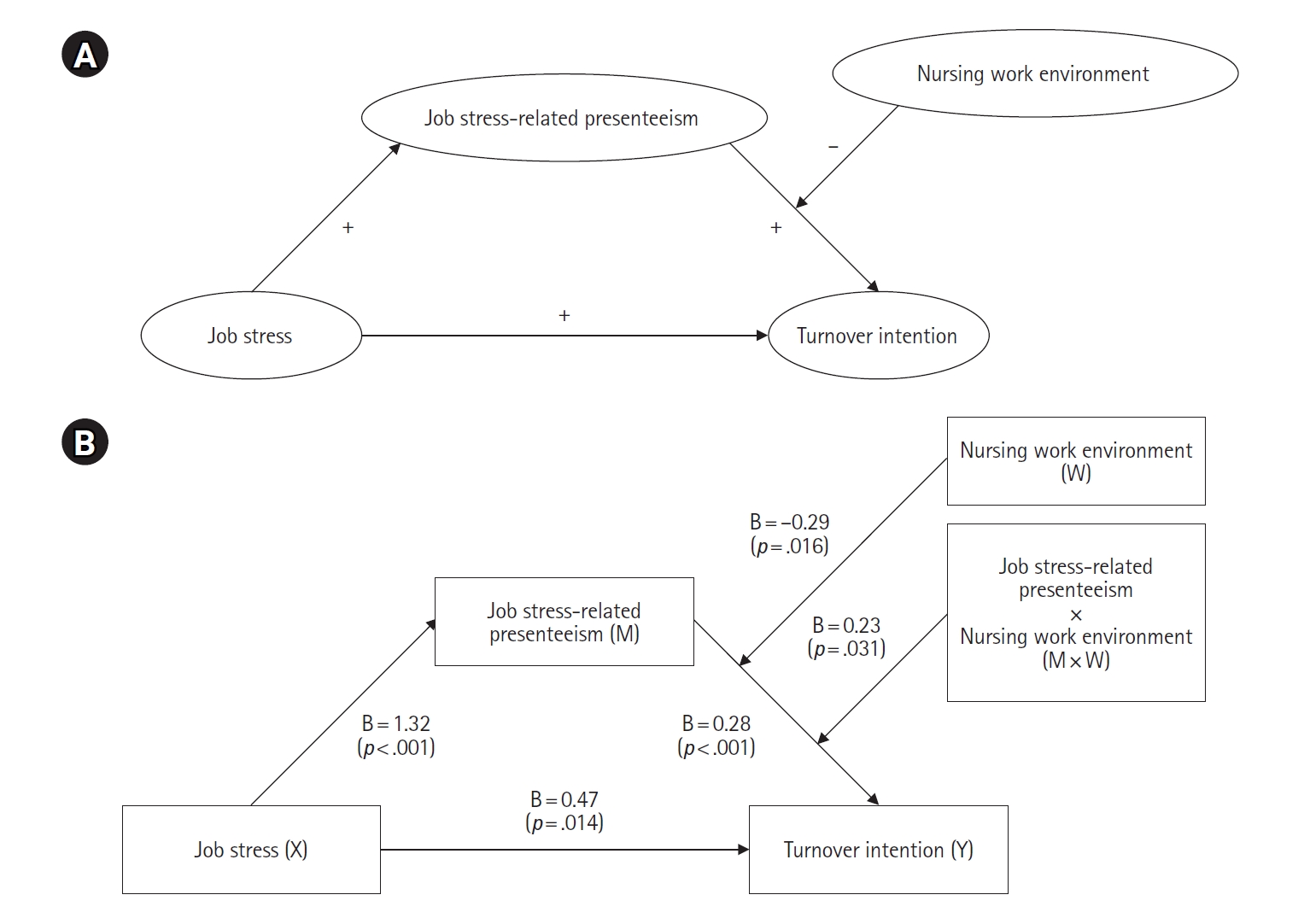
This study investigated the effects of job embeddedness and resilience on the relationship between job rotation stress and nursing work performance among clinical nurses. Methods: We conducted a nationwide online survey with 205 nurses employed at advanced general or general hospitals. Data were collected from August 17 to October 5, 2021. We analyzed the data using various descriptive statistics, independent t-tests, one-way analysis of variance, Scheffé test, Welch test, Games-Howell test, Pearson's correlation coefficients, multiple regression, and the PROCESS macro with a 95% bias-corrected bootstrap confidence interval. These analyses were conducted using SPSS Windows Software version 23.0 and SPSS PROCESS macro version 3.5.2. Results: Nurses' job embeddedness mediated the relationship between job rotation stress and nursing work performance (B=-0.02, p<.05). Furthermore, their resilience moderated this mediated relationship, also known as moderated mediation, with job embeddedness as the mediating factor (B=-0.02, p<.05). Conclusion: These findings imply that, when devising a strategy to improve the nursing work performance of nurses undergoing job rotation, their resilience levels should be considered. Reducing job rotation stress while concurrently enhancing job embeddedness is essential for enhancing the nursing work performance of nurses with high levels of resilience.
  • 3,006 View
  • 90 Download
Effects of Nurses' Grit on the Nursing Performance: Multiple Mediating Effects of Work Engagement and Job Crafting
Jeong-Lim Ryu, So-Hyoung Hong, Yoon Seo Yang
J Korean Acad Nurs Adm 2023;29(4):468-477.   Published online September 30, 2023
DOI: https://doi.org/10.11111/jkana.2023.29.4.468
Purpose
The purpose of this study was to identify the mediating effect of work engagement and job crafting on the relationship between nurses’ Grit on nursing performance.
Methods
The data were collected using structured questionnaires through online surveys from 142 clinical nurses in five hospitals. Data were analyzed using SPSS 24.0, Hayes’s SPSS Process Macro 4.0 version program.
Results
Nursing performance was significantly associated with Grit, work engagement and job crafting. The mediating effect of job crafting on the Grit on nursing performance was confirmed.
Conclusion
These results suggest that it is necessary to develop an intervention program that focuses on improving job crafting. Further, job crafting needs to be considered in developing nursing interventions to nurses' Grit and improve nursing performance for nurses.

Citations

Citations to this article as recorded by  
  • Mediating effect of grit on the influence of nurses’ silence behavior on medication safety competence: a cross-sectional study
    Haengsuk Kim, Wanju Park
    Journal of Korean Academy of Nursing.2025; 55(1): 81.     CrossRef
  • The impact of grit and job crafting on organizational commitment and job satisfaction among hospital nurses in Korea
    Mi-Suk Hyun
    Medicine.2025; 104(45): e45890.     CrossRef
  • 820 View
  • 51 Download
  • 2 Crossref
Changes in Working Hours and Labor Intensity and Their Effect on Sleep Difficulties of Shift Work Nurses in Hospitals
Ji Yun Lee, Kyung Jin Hong
J Korean Acad Nurs Adm 2023;29(4):446-456.   Published online September 30, 2023
DOI: https://doi.org/10.11111/jkana.2023.29.4.446
Purpose
This study aimed to not only examine the changes in working hours and labor intensity, but also investigate their effects on sleep difficulties of shift work nurses.
Methods
Data from the 3rd (2011) to the 6th (2020) Korean Working Condition Surveys were analyzed, and the final sample included data of 514 nurses. Working time was measured considering nurses’ weekly working hours, number of night shifts, and number of days in a month when they worked more than 10 hours a day. Labor intensity included labor density, emotional labor, and work interruption. Sleep difficulty was measured using three items in 5th and 6th surveys.
Results
Weekly working hours, and long working days tended to decrease with the flow of the year, while work density, emotional labor, and work interruption tended to increase. Number of long working days, work density, and work interruption were found to produce a sleep difficulty effect in nurses.
Conclusion
To avoid sleep difficulties in nurses, adequate nurse staffing is required to prevent long working hours, and work density and work interruption need to be considered when determining the nurses’ workload.

Citations

Citations to this article as recorded by  
  • Effects of Work Demands and Rewards of Nurses on Exhaustion and Sleep Disturbance: Focusing on Comparison With Other Shift Workers
    Kyung Jin Hong
    Nursing Open.2025;[Epub]     CrossRef
  • Impact of nurses’ health beliefs about caring for older adults on their own preparation for old age
    Se Jin Hwang, Minkyung Gu, Saekyae Shin, Sohyune Sok
    Frontiers in Public Health.2025;[Epub]     CrossRef
  • Dysmenorrhea and Occupational Factors
    Heeja Jung, Hyunju Dan, Chiyoung Cha, Yanghee Pang, Juan Manuel Carmona-Torres
    Journal of Nursing Management.2024;[Epub]     CrossRef
  • 2,364 View
  • 97 Download
  • 3 Crossref
Purpose
This study examined hospital nurses’ perception of work-life balance, nursing work environment, nursing organizational culture, and job satisfaction before turnover, and compared differences in variables between current clinical nurses and non-clinical nurses.
Methods
This descriptive study involved 172 nurses with over six months experience, who changed jobs within the last 5 years in G Province. Data were collected from September 5th-22nd, 2022, and analyzed through independent t-test, one-way ANOVA, and Pearson correlation coefficient using SPSS/WIN 25.0 program.
Results
Total work-life balance (t=3.85, p<.001), work-family balance (t=4.79, p<.001), work-leisure balance (t=2.96, p=.004), work-growth balance (t=3.01, p=.003), and overall work-life balance (t=2.95, p=.004) in work-life balance, the role of professionalism (r=2.05, p=.042) and interpersonal relationships (t=2.59, p=.011) in job satisfaction, the relationship-oriented nursing organizational culture (t=2.68, p=.008), and the nurse-doctor relationship within the nursing work environment (t=2.51, p=.013) were all significantly higher among current clinical nurses than non-clinical nurses.
Conclusion
Hospital-level interventions should be established and implemented to improve work-life balance, the relationship-oriented nursing organizational culture, and job satisfaction through interprofessional relationships to retain hospital nurses.
  • 1,296 View
  • 68 Download
Burnout among Nurses in COVID-19 Designated Units Compared with Those in General Units Caring for Both COVID-19 and Non-COVID-19 Patients
Kyung Ah Woo, Eun Kyoung Yun, JiSun Choi, Hye Min Byun
J Korean Acad Nurs Adm 2023;29(4):374-384.   Published online September 30, 2023
DOI: https://doi.org/10.11111/jkana.2023.29.4.374
Purpose
This study aimed to examine the differences in COVID-19 work-related characteristics, workload, anxiety, stress, and burnout between nurses working in the COVID-19 designated units and those in the general units caring for both COVID-19 and non-COVID-19 patients and to identify factors related to burnout in these two nurse groups.
Methods
The study was conducted using data from 192 nurses in the COVID-19 designated units and 340 nurses in the general units from two general hospitals. The data were collected using self-report, structured questionnaires. Independent t-test, chi-squared test, and logistic regression analysis were performed.
Results
There were no significant differences observed in workload and burnout between the two groups. For nurses in the general units, workload, stress, adequacy of the number of patients assigned, and the experience of temporary, floating staff were significant factors associated with burnout, while only clinical experience in the current unit was a significant factor among those in the COVID-19 units.
Conclusion
Findings indicate significant differences in factors related to burnout between the two nurse groups. Thus, substantial support and strategies tailored to the working environments of each nursing unit are required to prevent burnout among nurses caring for COVID-19 patients.

Citations

Citations to this article as recorded by  
  • Nurses’ ethical competence during the COVID-19 pandemic: Qualitative perspectives
    Hye Min Byun, Eun Kyoung Yun
    Nursing Ethics.2025; 32(5): 1644.     CrossRef
  • Experiences of COVID-19 dedicated ward nurse managers in South Korea: a qualitative study
    Rosa Yoon, Minkyung Gu, Mira Park, Sohyune Sok
    Frontiers in Public Health.2025;[Epub]     CrossRef
  • User Interface Design and Usability Evaluation of a Mental Health Mobile Application for Healthcare Workers: A Nursing Informatics Perspective
    Yewon Lee, Eunju Kwak, Mijin Park, Jiyeon Park, Jungjae Kim, Jisan Lee
    Journal of Health Informatics and Statistics.2024; 49(3): 248.     CrossRef
  • 732 View
  • 23 Download
  • 3 Crossref
Effects of Job Embeddedness, Professional Self-concept, and Work-life Balance on Clinical Nurses’ Intention to Stay
Ae-ri Choi, Jee-In Hwang
J Korean Acad Nurs Adm 2023;29(4):353-362.   Published online September 30, 2023
DOI: https://doi.org/10.11111/jkana.2023.29.4.353
Purpose
This study aimed to assess the influence of job embeddedness, professional self-concept, and work-life balance on clinical nurses’ workplace retention intention.
Methods
A descriptive cross-sectional survey was conducted from July 27 to August 2, 2022, involving 296 nurses at a university hospital in Seoul. The questionnaire-based data collected were analyzed using t-tests, one-way ANOVA, Pearson's correlation coefficients, and multiple regression.
Results
The mean score for intention to stay is 4.92±1.05 out of 8. The mean scores for job embeddedness, professional self-concept, and work-life balance were 2.91±0.48 out of 5, 2.61±0.28 out of 4, and 3.10±0.71 out of 5, respectively. Job embeddedness (β=.17, p=.002) and professional self-concept (β=.42, p<.001) were significantly associated with clinical nurses’ intention to stay in their workplace. Specifically, the “community suitability” subfactor of job embeddedness (β=.16, p=.003) and the “satisfaction” subfactor of professional self-concept (β=.58, p<.001) were significantly related to nurses’ intention to stay. No significant relationship was found between work-life balance and intention to stay.
Conclusion
Nurses’ job embeddedness and professional self-concept significantly affected their intention to stay. Therefore, fostering community bonding outside the organization and increasing professional satisfaction are suggested to increase clinical nurses’ intentions to stay.

Citations

Citations to this article as recorded by  
  • The Influence of Work-Life Balance and Job Embeddedness on Turnover Intention among Nurses Caring for Cancer Patients
    Jin-young Park, Yeunhee Kwak, Jiwoo Jung, Seoung-Wha Lim
    Journal of Korean Critical Care Nursing.2025; 18(3): 28.     CrossRef
  • The effect of dental hygienist work cooperation and compensation satisfaction on job embeddedness: mediating effect of positive psychological capital
    Ju-Eon Kim, Seon-Yeong Kim
    Journal of Korean Society of Dental Hygiene.2024; 24(3): 263.     CrossRef
  • A Study on the Effect of the Quality of the Relationship between Nail Shop Workers and Consumers on the Balance of Work and Life: Focusing on the Mediating Effect of Burnout
    Hyun-Jeong Lee, Hye-Young Kim
    Journal of the Korean Society of Cosmetology.2024; 30(2): 415.     CrossRef
  • 954 View
  • 63 Download
  • 3 Crossref
Purpose
This study was conducted to understand the factors influencing the performance of nurses to identify interventions to promote nursing performance. The study focused on workplace bullying, social interaction anxiety, and positive psychological capital.
Methods
Data were collected from 148 nurses who had been working for over six months at four hospitals and analyzed using the SPSS/WIN 21.0 program.
Results
Significant differences were found in nursing performance grades by age (F=3.93, p=.010), marital status (t=-2.52, p=.013), current department experience (F=3.72, p=.013). Nursing performance had a negative correlation with social interaction anxiety (r=-.27, p=.001) and positive psychological capital (r=.61, p<.001). Factors affecting nursing performance were positive psychological capital and age, such that the 40~49-year-old group had a relatively higher influence on nursing performance than the 29-year-old group. The explanatory power of regression analysis was 3% (F=47.65, p<.001).
Conclusion
The results suggest that to improve nursing performance, positive psychological capital based coaching and educational programs would be suitable for nurses and should be applied to the nursing education curriculum.

Citations

Citations to this article as recorded by  
  • The Impact of Nursing Organizational Culture and Workplace Bullying on Nursing Performance
    Naeyoung LEE
    THE JOURNAL OF FISHERIES AND MARINE SCIENCES EDUCATION.2025; 37(5): 1272.     CrossRef
  • The Influence of Positive Psychological Capital and Mindset on Grit among Nursing Students: A Cross-sectional Survey
    Jinjoo Chang, Eun Jung Bae, Jaewon Joung
    Journal of Korean Academy of psychiatric and Mental Health Nursing.2024; 33(3): 296.     CrossRef
  • Effects of Nurse-Nurse Collaboration and Nurse-Physician Collaboration on Nursing Performance in Nurses: The Mediating Effect of Patient Safety Management Activities
    JaHyun Kim, Seok Hee Jeong, Hee Sun Kim, Sunmi Kim
    Journal of Korean Academy of Nursing Administration.2024; 30(4): 343.     CrossRef
  • 757 View
  • 25 Download
  • 3 Crossref
A Study on the Outflow Intention of Nursing Students in Non-Metropolitan Area: Honam Region
Purum Kang, A Young Han
J Korean Acad Nurs Adm 2023;29(3):234-245.   Published online June 30, 2023
DOI: https://doi.org/10.11111/jkana.2023.29.3.234
Purpose
Nursing colleges are continuously being expanded to solve the problem of imbalance among regions, but the outflow of the provincial brain-drain to metropolitan regions continues. Therefore, this study aimed to identify the influencing factors on the regional outflow intention of nursing students.
Methods
This study employed a mixedmethod design, and 214 nursing students in the Honam region filled out a self-administered questionnaire. Eight participants recruited through random sampling were interviewed in depth. Data were analyzed using a t-test, x2 test and logistic regression.
Results
Among the total respondents, 161 students (75.2%) had intent to regional outflow. Influencing factors were significantly correlated with employment in tertiary general hospitals (OR=3.32, 95% CI=1.35~8.16), perception of job opportunities in the province (OR=0.52, 95% CI=0.31~0.87), intrinsic job values (OR=2.43, 95% CI=1.14~5.22), and voluntary employment preparation behaviors (OR=2.75, 95% CI=1.05~ 7.19). Through the interviews, themes related to regional outflow intentions were drawn into the following three categories: “recognition of working environment by region”, “aspiration for professional growth”, and “expectation for self-development and rich experience”.
Conclusion
This study’s results are expected to be used as strategic data for establishing plans for nurturing regional human resources and improving the local nursing workforce in non-metropolitan areas.

Citations

Citations to this article as recorded by  
  • Factors Affecting Non-response in a Cohort Study of Female Participants: The Korea Nurses' Health Study (Preprint)
    Young Taek Kim, Chiyoung Prof. Cha, Gumhee Baek, Bohye Kim, Bo Mi Song, Joong-Yeon Lim, Hyun-Young Park, Juhyun Shin
    JMIR Public Health and Surveillance.2024;[Epub]     CrossRef
  • 622 View
  • 14 Download
  • 1 Crossref
A Phenomenological Study on the Work Experience of Explanation Nurse
A-Yeon Kim, Yeojin Yi
J Korean Acad Nurs Adm 2023;29(3):191-202.   Published online June 30, 2023
DOI: https://doi.org/10.11111/jkana.2023.29.3.191
Purpose
This study aims to provide essential data for measures to enhance the professionalism of nursing experts and improve understanding of the explanationnurse's identity by examining their working experience in depth.
Methods
Data were collected from August 12 through October 07, 2021. Participants were 13 explanation nurses with more than five years of nursing experience. Verbatim transcripts were analyzed using Colaizzi's phenomenological analysis.
Results
Three theme clusters emerged from the data analysis: “Confusion from work that does not affect the identity of an explanation nurse”, “Entirely fulfilling role as a nursing professional”, and “Crave for the organization's support system for independent job performance”.
Conclusion
Earlier in the department change, nurses had difficulty establishing their identity regarding the explanation duties they must perform. Still, they wanted to continue their explanation work after struggling to pioneer and carry out their duties with expertise . Therefore, hospitals must support explanation nurses with a structural system as they begin their role to adapt to their work and strengthen their professionalism so that these nurses may provide a higher level of explanation nursing and patient-centered care.

Citations

Citations to this article as recorded by  
  • Effects of Shared Decision-Making, Health Literacy, and Self-Care Knowledge on Self-Care Behavior Among Hemodialysis Patients in Korea: A Cross-Sectional Survey
    Hyohjung Lee, Mi-Kyoung Cho
    Healthcare.2025; 13(2): 175.     CrossRef
  • Exploring the Difficulties and Educational Needs of Surgical Unit Nurses in Caring for Surgical Patients: A Qualitative Content Analysis
    Ki Nam Kwon, Seon Young Hwang
    Journal of Korean Academy of Fundamentals of Nursing.2025; 32(1): 24.     CrossRef
  • Examining the experiences of mid-career nurses in hospitals: a phenomenological study
    Yukyung Ko, Soyoung Yu, Bohyun Park
    Contemporary Nurse.2024; 60(4): 333.     CrossRef
  • 1,181 View
  • 20 Download
  • 3 Crossref
Influence of Work Environment, Job Engagement, and Positive Psychological Capital on Job Embeddedness of Hospital Nurses
Hee Jung Kwag, Nam Young Yang
J Korean Acad Nurs Adm 2023;29(2):109-118.   Published online March 31, 2023
DOI: https://doi.org/10.11111/jkana.2023.29.2.109
Purpose
This study examined the effects of work environment, job engagement, and positive psychological capital on hospital nurses’ job embeddedness.
Methods
Participants were 118 hospital nurses. Data were analyzed using descriptive statistics, independent t-test, One-way ANOVA, Pearson correlation coefficients, and multiple regression analysis using SPSS/Win 25.0.
Results
Mean work environment was 2.70±0.14, mean job engagement was 3.03±0.42, positive psychological capital was 4.05±0.27, and job embeddedness was 3.24±0.31. There were significant differences in job embeddedness by turnover experience and current working hospital type. The factors influencing the job embeddedness of the hospital nurses were turnover experience, current working hospital type, and nurse manager ability, leadership, and nueses’ support in the work environment. It was found that 23% could explain job embeddedness.
Conclusion
Implementing a nurse support program related to turnover experience and type of hospital is necessary to enhance job embeddedness. The results indicate a need to develop a coaching program for cultivating leadership and supporting nurses to improve job embeddedness.

Citations

Citations to this article as recorded by  
  • The Influence of Work-Life Balance and Job Embeddedness on Turnover Intention among Nurses Caring for Cancer Patients
    Jin-young Park, Yeunhee Kwak, Jiwoo Jung, Seoung-Wha Lim
    Journal of Korean Critical Care Nursing.2025; 18(3): 28.     CrossRef
  • 1,076 View
  • 60 Download
  • 1 Crossref
Purpose
This study aimed to identify the effects of empowering leadership and job crafting on work engagement among nurses. Methods: Data were collected from 161 hospital nurses. Data were analyzed using the independent t-test, Mann-Whitney U test, one-way ANOVA, Pearson correlation coefficient and Hayes's PROCESS macro method for the mediation effect. Results: Empowering leadership and job crafting showed a significantly positive correlation with work engagement. Furthermore, job crafting had a mediating effect on the relationship between empowering leadership and work engagement. Conclusion: A strategy that enhances task job crafting and cognitive job crafting of members by strengthening manager's empowering leadership can lead to work engagement and have a positive effect on organizational performance.

Citations

Citations to this article as recorded by  
  • Team job crafting as a mediator between sparking leadership and work engagement among nurses: a structural equation modeling approach
    Gamze Tuncer Unver, Oya Celebi Cakiroglu, Naile Boduc
    Journal of Health Organization and Management.2025; : 1.     CrossRef
  • Nurses’ job crafting, work engagement, and well-being: a path analysis
    Sujeong Han
    BMC Nursing.2023;[Epub]     CrossRef
  • Influence of Job Crafting on Evidence-Based Practical Skills of Dental Hygienists
    Min-ji Kim, Kyu-ri Kim, Yun-ji Kim, Seo-yeon Im, You-bin Cho, Ru-by Choi, Hee-jung Lim
    Journal of Dental Hygiene Science.2023; 23(4): 330.     CrossRef
  • 1,102 View
  • 47 Download
  • 3 Crossref
Influences of Teamwork and Job Burnout on Patient Safety Management Activities among Operating Room Nurses
Ayoung Kim, Haein Lee
J Korean Acad Nurs Adm 2022;28(5):605-615.   Published online December 31, 2022
DOI: https://doi.org/10.11111/jkana.2022.28.5.605
Purpose
This study aimed to investigate the influences of teamwork and job burnout on patient safety management activities (PSMA) among operating room nurses. Methods: We collected cross-sectional data from 144 operating room nurses with at least 1 year of clinical experience. Teamwork had five subscales (team structure, leadership, situation monitoring, mutual support, and communication) and burnout had two subscales (exhaustion and disengagement). We used descriptive statistics, t-tests, analysis of variance, Pearson’s correlation coefficients, and multiple linear regression. Results: PSMA had significant positive correlations with all subscales of teamwork and had a significant negative correlation with disengagement. Multiple regression analysis revealed that gender, clinical career in operating room, number of patient safety education, accreditation evaluation experience, team structure, and situation monitoring were associated with PSMA. Specifically, we found significant positive associations of team structure (β=.31, p<.001) and situation monitoring (β=.23, p=.039) with PSMA. Disengagement was not associated with PSMA after adjusting for confounders despite a significant correlation. Conclusion: To improve operating room nurses’ PSMA, it is important to improve their awareness of the team structure and their ability to monitor the operating room situation.

Citations

Citations to this article as recorded by  
  • Putting Patients at Risk: The Effect of Health Care Provider Burnout on Patient Care in the Operating Room—A Narrative Review
    Juan Antonio Hueto Madrid, Judith Hargreaves, Beata Buchelt
    Journal of Patient Safety.2025; 21(6): 424.     CrossRef
  • The Effects of Presenteeism, Burnout, and Nursing Performance on Retention Intention among Nurses at an Intensive Care Unit
    Seung-Hee Lee, Na Rin Kim
    Journal of Korean Academy of Nursing Administration.2025; 31(3): 269.     CrossRef
  • THE PERCEIVED INFLUENCE OF BURNOUT ON QUALITY OF PERIOPERATIVE CARE AMONG SURGICAL TEAM IN TEACHING HOSPITALS IN A PERI-URBAN CITY IN SOUTHWESTERN NIGERIA
    Rafiat Omotayo ISHOLA, Olufemi Oyebanji OYEDIRAN, Iyanuoluwa Oreofe OJO, Johnson Adewale AKINOSO, Emmanuel Olufemi AYANDIRAN
    Perioperative Care and Operating Room Management.2025; : 100567.     CrossRef
  • Importance-Performance Analysis of Patient-Safety Nursing in the Operating Room: A Cross-Sectional Study
    Jieun Shin, Nam-Yi Kim
    Risk Management and Healthcare Policy.2024; Volume 17: 715.     CrossRef
  • Effects of Nurse-Nurse Collaboration and Nurse-Physician Collaboration on Nursing Performance in Nurses: The Mediating Effect of Patient Safety Management Activities
    JaHyun Kim, Seok Hee Jeong, Hee Sun Kim, Sunmi Kim
    Journal of Korean Academy of Nursing Administration.2024; 30(4): 343.     CrossRef
  • The Effects of a Simulation-Based Patient Safety Education Program on Compliance with Patient Safety, Perception of Patient Safety Culture, and Educational Satisfaction of Operating Room Nurses
    OkBun Park, MiYang Jeon, MiSeon Kim, ByeolAh Kim, HyeonCheol Jeong
    Healthcare.2023; 11(21): 2824.     CrossRef
  • 1,712 View
  • 90 Download
  • 6 Crossref
Changes in Dietary Behavior of Shift Work Nurses: A Longitudinal Study
Soyeon Kim, Smi Choi-Kwon, Jison Ki, Jae Geum Ryu, Jihyun Baek, Kyeongsug Kim
J Korean Acad Nurs Adm 2022;28(5):596-604.   Published online December 31, 2022
DOI: https://doi.org/10.11111/jkana.2022.28.5.596
Purpose
This study aimed to identify the changes in dietary behavior of shift work nurses and its influencing factors over time. Methods: This was a secondary data analysis study based on the Shift Work Nurses’ Health and Turnover study. Data of 165 shift work nurses, who were followed for three-time points [before shift work (T0), after 6 months (T1), and after 18 months(T2) of shift work], were analyzed. Dietary behavior, level of stress, fatigue, depressive symptoms, and the amount of physical activity were measured. SPSS 28.0 was used to analyze the data to acquire descriptive statistics, repeated-measures ANOVA, and multiple linear regression with generalized estimating equations (GEE). Results: Dietary behavior of shift work nurses was poorer at T1 and T2 as compared to T0. As a result of GEE, shift work duration, level of stress, fatigue, and depressive symptoms were found to have negative impacts on dietary behavior. Conclusion: Dietary behavior deteriorated and remained poor over time since shift work began. Shift work, along with stress, fatigue, and depressive symptoms, were the factors influencing their dietary behavior. Thus, to improve shift work nurses’ dietary behavior, efforts to decrease stress, and alleviate fatigue and depressive symptoms are urgently required.

Citations

Citations to this article as recorded by  
  • Factors Associated With Insomnia in Shift-Working Airline Mechanics
    Da-In Park, Jung-Ha Kim
    Workplace Health & Safety.2025; 73(11): 562.     CrossRef
  • Eating behaviors, home meal replacement consumption, and nutrition quotient: a comparative study of male shift and non-shift workers in Chungcheong, Korea
    Yeon Jin Lee, Munkyong Pae
    Nutrition Research and Practice.2025; 19(5): 758.     CrossRef
  • Dietary behavior and its influencing factors among experienced shiftwork nurses: a secondary analysis
    Soyeon Kim, Jison Ki, Ji Yun Choi, Woan Heui Choi, Smi Choi-Kwon
    Korean Journal of Women Health Nursing.2023; 29(1): 32.     CrossRef
  • 661 View
  • 13 Download
  • 3 Crossref
Development and Evaluation of Nursing Work Environment Scale of Clinical Nurses
Yeong Ju Ko, Gwi-Ryung Son Hong
J Korean Acad Nurs Adm 2022;28(5):576-585.   Published online December 31, 2022
DOI: https://doi.org/10.11111/jkana.2022.28.5.576
Purpose
This study aimed to develop a nursing work environment scale for clinical nurses and to verify its validity and reliability. Methods: The initial items comprised individual interviews with eleven clinical nurses. The content validity of the initial items was evaluated twice by nine experts, while 37 preliminary items were reviewed through pilot tests with 20 nurses and cognitive interviews with five nurses. The survey data were collected from 353 clinical nurses working at general hospitals. Results: In the exploratory factor analysis, the number of factors was determined through parallel analysis, scree test, and cumulative variance ratio. Consequently, 23 items and three factors were thus composed, yielding a total cumulative variance ratio of 91.3%. The finalized 20 items of the final three factors were subjected to a confirmatory factor analysis, which led to the validation of the three subscales model. The three sub-factors were composed of nurse manager competency, nurse safety management system, and a nurse support system. Conclusion: This scale is expected to be useful for evaluating the nursing work environment of clinical nurses by verifying its reliability and validity through various methods.

Citations

Citations to this article as recorded by  
  • Development and Validation of the Patient-Centered Communication Competency Scale for Dental Hygienists
    Da-Eun Kim, Jong-Hwa Jang
    Healthcare.2025; 13(11): 1241.     CrossRef
  • Influence of Critical Thinking Disposition, Clinical Reasoning Competence, and Nursing Practice Environment on Medication Safety Competence of Hospital Nurses
    Jeong An Oh, Eun A Kim, Hae Ran Kim
    Healthcare.2025; 13(5): 542.     CrossRef
  • Factors Influencing Person-Centered Care Among Psychiatric Nurses in Hospitals
    Ji Su Lee, Mi Heui Jang, Min Jung Sun
    Healthcare.2024; 12(22): 2269.     CrossRef
  • Influence of Clinical Nursing Competency and Nursing Working Environment of Psychiatric Nurses on Person-Centered Care
    Pan Heui Kim
    Journal of Korean Academy of psychiatric and Mental Health Nursing.2024; 33(3): 229.     CrossRef
  • Structural Equation Modeling of Advanced Beginner-Stage Nurses' Intention to Continue Employment
    Seung-Hee Lee, Hwasoon Kim
    Journal of Korean Academy of Nursing Administration.2023; 29(5): 517.     CrossRef
  • 2,238 View
  • 107 Download
  • 5 Crossref
Purpose
This study was explored the current nursing issues in the COVID-19 era by analyzing newspaper articles. Methods: The search term “nurse” was used to collect newspaper articles from 2020. Pre-processing and semantic network analysis and topic group clustering were conducted using the NetMiner program to analyze the collected articles. Results: A total of 256 articles were identified, and four topics were extracted. The core keywords were “medical care”, “hospital”, “COVID-19” and “medical workforce”. The extracted topics were “work environment related to response to infectious diseases”, “utilization of nursing resources”, “excessive nursing work”, and “shortage of nursing workforce”. Conclusion: Our findings provide useful information for understanding social perspectives of critical nursing issues in the COVID-19 era. Most of the extracted topics are the actual problems that nurses have faced for a long time. Now, nurses must proactively address current nursing issues to respond to national disasters and provide quality nursing care.

Citations

Citations to this article as recorded by  
  • Analysis of Headline News about Nurses Before and After the COVID-19 Pandemic
    Su-Mi Baek, Myonghwa Park
    Journal of Korean Academy of Nursing Administration.2022; 28(4): 319.     CrossRef
  • 819 View
  • 1 Download
  • 1 Crossref
Purpose
This study aimed to identify the mediating effect of organizational commitment on the relationship between nurses’ clinical characters and retention intention in small-and medium-sized hospitals. Methods: This descriptive study included 177 nurses frome three small-and medium-sized hospitals in B metropolitan city. Data were collected from August 27 to September 30, 2020 using self-report questionnaires and were analyzed using IBM SPSS Statistics for Windows version 22.0. Results: The significant predictors of retention intention were organizational commitment (β=.43, p<.001), age (β=.21, p=.001), nurses’ clinical characters (β=.16, p=.011), work satisfaction (β=.15, p=.022), and whether they worked in the desired department (β=.13, p=.025). These variables explained 48% of the variance in retention intentions. Additionally, organizational commitment had a mediating effect on the relationship between nurses’ clinical characters and retention intention. Conclusion: According to the results, institutional efforts should be made to strengthen organizational commitment and develop educational programs to enhance nurses’ clinical characters among small-and medium-sized hospitals to promote retention intention.

Citations

Citations to this article as recorded by  
  • Influence of Nurses' Moral Distress and Ethical Nursing Competence on Retention Intention
    Ji-Hyun Choi, Mi-Jin Byun, Thi Ninh Do
    Journal of Korean Academy of Nursing Administration.2025; 31(1): 36.     CrossRef
  • Factors Affecting Retention Intention Among Married Nurses With Preschool-Aged Children
    Hyeseon Shin, Minjeong Jo
    Advances in Nursing Science.2025; 48(2): 177.     CrossRef
  • The Influence of Positive Psychological Capital, Perceived Value of Work, and Nurse Practice Environment on Retention Intention in Small-Medium Sized Hospital Nurses
    Su Hye Kwon, Miseon Bang, Young Kyoung Kim
    Journal of Korean Academy of Nursing Administration.2024; 30(3): 189.     CrossRef
  • Role of Organizational Commitment in Mediating Relationship between Professional Autonomy and Retention Intention among Public Hospital Nurses
    Maria Choi, Hye Young Cho
    Journal of Korean Academy of Nursing Administration.2024; 30(3): 224.     CrossRef
  • The Effects of Compassion Competence, Clinical Nursing Character, and Nursing Professionalism on Nursing Service Quality of Long-term Care Hospital Nurses
    Young Moon Cho, Hyun O We
    The Korean Journal of Rehabilitation Nursing.2024; 27(1): 11.     CrossRef
  • Influences of Organizational Culture, Nursing Workplace Spirituality, and Nurses’ Perceived Health Status on Quality of Nursing Work Life according to Nursing Clinical Ladder
    Hyun Sook Lee, Ju Hyun Jin, Ju Ri Lee, Hye Jin Kim, Yeon Jae Jung
    Journal of Korean Academy of Nursing Administration.2024; 30(1): 31.     CrossRef
  • The Mediating Effect of Grit on the Relationship between Work Environment and Intention to Stay at Work among Regional Trauma Center Nurses: A Cross-Sectional Study
    Ji Sun Yang, Myung Jin Jang
    Korean Journal of Adult Nursing.2023; 35(2): 107.     CrossRef
  • 703 View
  • 23 Download
  • 7 Crossref
Purpose
The purpose of this study was to identify the influence of emotional labor and work-life balance on the organizational commitment of nurses in comprehensive nursing care service wards. Methods: A cross-sectional descriptive study was designed. Data collection was conducted for a total of 171 nurses in comprehensive nursing care service wards in two H university hospitals in Gyeonggi-do. Data were collected from March 5 to 30, 2021 using questionnaires on topics including emotional labor, work-life balance, organizational commitment, and general characteristics. Data were analyzed using descriptive statistics, independent t-test, One-way ANOVA, Pearson’s correlation analysis, and hierarchical regression analysis. Results: Organizational commitment was influenced by working experience in current unit, future work plan, emotional modulation efforts in profession, patient-focused emotional suppression, and work-life balance. Conclusion: The findings of this study suggest that in order to increase organizational commitment, it is important to support organizational efforts and systems such as an emotional management program that can strengthen the positive aspects of emotional labor, and leisure activities and childcare support programs that can improve work-life balance.

Citations

Citations to this article as recorded by  
  • Impact of Emotional Labor and Positive Psychological Capital on the Turnover Intention of Nurses Caring for Patients with COVID-19: A Descriptive Survey Study
    Mira Kwon, Yeoungsuk Song, Majd T. Mrayyan
    Journal of Nursing Management.2024; 2024: 1.     CrossRef
  • 579 View
  • 19 Download
  • 1 Crossref
Purpose
This study was conducted to identify the effects of nursing work environment, job crafting and organizational commitment on nurses’ job satisfaction perceived by nurses Methods: The research model was designed based on Hayes’s PROCESS macro model 6. Participants were 122 nurses from general hospitals. A survey was conducted and data were collected in March 2019. Data were analyzed using descriptive statistics, correlations and Hayes's PROCESS macro method for mediation. Results: Job satisfaction showed a significant positive correlation with the nursing work environment, job crafting and organizational commitment. Furthermore, job crafting and organizational commitment had a mediating effect on the relationship between the nursing work environment and job satisfaction. Conclusion: The impact of the nursing work environment on job satisfaction among general hospital nurses was mediated by job crafting and organizational commitment. Considering the mediating effects of job crafting and organizational commitment on the relationship between nursing work environment and job satisfaction, a strategy should be developed for enhancing job crafting and organizational commitment to improve nurses’ working environments and, thus, their job satisfaction.

Citations

Citations to this article as recorded by  
  • Effect of a Nursing Practice Environment, Nursing Performance on Retention Intention: Focused on the Mediating Effects of Nursing Professional Pride
    Shin Hee Kim, Mi Sook Oh, Yun Bok Kwak
    Journal of Korean Academy of Nursing Administration.2025; 31(1): 64.     CrossRef
  • Impact of Resilience, Emotional Exhaustion, and Communication Competency on Organizational Commitment Among Nurses in a Tertiary Hospital Setting in South Korea: A Cross-Sectional Study
    Ho Young Kim, Hee Jeong Kim, Eun Ja Yeun
    Sage Open.2025;[Epub]     CrossRef
  • The impact of grit and job crafting on organizational commitment and job satisfaction among hospital nurses in Korea
    Mi-Suk Hyun
    Medicine.2025; 104(45): e45890.     CrossRef
  • Hemşireler İçin Ekip İş Becerikliliği Ölçeğinin Türkçeye Uyarlanması
    Oya Çelebi Çakıroğlu, Gamze Tunçer Ünver, Naile Boduç
    Celal Bayar Üniversitesi Sağlık Bilimleri Enstitüsü Dergisi.2024; 11(2): 260.     CrossRef
  • Affecting factors of clinical dental hygienists’ intention on retention
    Hye-Jin Lee, Hee-Hong Min
    Journal of Korean Society of Dental Hygiene.2024; 24(1): 27.     CrossRef
  • Nurses Job Crafting
    Sabrein Mahmoud Ali Khalifa Khattab, Marwa Samir Sorour, Sally Mohammed Farghaly Abdelaliem
    JONA: The Journal of Nursing Administration.2023; 53(12): 641.     CrossRef
  • Effects of Clinical Nurses’ Job Crafting on Organizational Effectiveness Based on Job Demands-Resource Model
    Eun Young Lee, Eungyung Kim
    Journal of Korean Academy of Nursing.2023; 53(1): 129.     CrossRef
  • Effects of Job Crafting, Burnout, and Job Satisfaction on Nurses' Turnover Intention: A Path Analysis
    Mihee Chung, Sujeong Han
    Journal of Korean Academy of Fundamentals of Nursing.2023; 30(2): 281.     CrossRef
  • Concept Analysis of Nurses’ Job Crafting
    Sujeong Han, Eunha Jeong
    Journal of Korean Academy of Fundamentals of Nursing.2022; 29(3): 375.     CrossRef
  • Association of Job Crafting and Perception of Patient Safety Culture with Patient Safety Management Activities among Hospital Nurses
    Jung Sook Kim, Ji-Soo Kim
    Journal of Korean Academy of Nursing Administration.2022; 28(4): 382.     CrossRef
  • 756 View
  • 51 Download
  • 10 Crossref
Purpose
This study aimed to confirm the association between job crafting and quality of nursing services among Korean clinical nurses, as well as the mediating effect of work engagement. Methods: Data from 194 hospital nurses were surveyed in this descriptive cross-sectional study. They were collected from May 17 to May 28, 2021, using self-report questionnaires. The collected data were analyzed using descriptive statistics, independent t-test, one-way analysis of variance, Scheffé test, Pearson's correlation coefficient analysis, and multiple regression using the SPSS/WIN 24.0. Results: Job crafting was positively associated with work engagement (r=.55, p<.001) and quality of nursing services (r=.66, p<.001). Furthermore, work engagement had a mediating effect on the relationship between job crafting and quality of nursing services (Sobel test: Z=2.58, p=.010). These variables explained 45.0% of the variance in the quality of nursing services. Conclusion: The impact of job crafting on the quality of nursing services among clinical nurses was mediated by work engagement. Therefore, to improve the quality of nursing services, it is necessary to develop an educational program to increase job crafting and work engagement.

Citations

Citations to this article as recorded by  
  • The Mediating Effect of Work Friendship on the Relationship between Grit and Work Engagement among Millennial and Generation Z Nurses in Korea
    Dain Park, Hyunjin Lee
    Journal of Korean Academy of Nursing Administration.2025; 31(1): 45.     CrossRef
  • Effects of Grit and Nursing Work Environment on Work Engagement in Clinical Nurses
    Young Ju Kim, Hye Young Cho
    Journal of Korean Academy of Nursing Administration.2025; 31(3): 312.     CrossRef
  • Effects of Nurses' Grit on the Nursing Performance: Multiple Mediating Effects of Work Engagement and Job Crafting
    Jeong-Lim Ryu, So-Hyoung Hong, Yoon Seo Yang
    Journal of Korean Academy of Nursing Administration.2023; 29(4): 468.     CrossRef
  • Effects of Job Crafting and Job Engagement on Career Management Behavior among Public Institution Nurses: Mediating Effect of Job Engagement
    Seohyun Kwon, Taewha Lee
    Journal of Korean Academy of Nursing Administration.2022; 28(3): 261.     CrossRef
  • 600 View
  • 33 Download
  • 4 Crossref
Compare Value Congruence of Nurse-Patient Assignment with Work Performance in Neonatal Intensive Care Unit
Hye Mim Kim, Dong Yeon Kim, Ji Young Kim, Ga Young Kim, Seol Hee Moon
J Korean Acad Nurs Adm 2021;27(5):355-365.   Published online December 31, 2021
DOI: https://doi.org/10.11111/jkana.2021.27.5.355
Purpose
This study aimed to compare the value congruence of nurse-patient assignment (NPA) with work performance in the neonatal intensive care unit (NICU). Methods: Data were collected with 30-items on factors that affect NPA and 17-items on work performance. Two questionnaire surveys each were conducted with 79 nurses from the NICU. The difference between expectations and actual experience on NPA were analyzed, and the effects of NPA on work performance and overtimes were investigated. The collected data were analyzed with a paired t-test, analysis of variance, and Pearson’s correlation coefficients using the SPSS software version 20.0. Results: The NPA criteria were surveyed with 30 items, with 13 patient-related, and 17 nurse-related. The validity of the tool was S-CVI .95 and the reliability (Cronbach’s ⍺) was .942. There were significant differences based on age (F=3.69, p=.029) and caring for patients on an artificial ventilator (t=2.55, p=.013). The higher the patient-related actual assignment score, the higher the nurse-related actual assignment score (r=.68, p<.001) and work performance (r=.48, p<.001). As the nurse-related actual assignment score increased, work performance also increased significantly (r=.36, p=.001). Conclusion: It was confirmed that the value congruence of NPA is positively correlated with work performance.

Citations

Citations to this article as recorded by  
  • Perceived Needs and Current Practices of Family-Centered Care Among Health Care Providers in Korean Neonatal Intensive Care Units
    Eunhye Lee, Min Sohn, Juyoung Lee
    Journal of Korean Maternal and Child Health.2025; 29(3): 120.     CrossRef
  • Clinical decision support system for clinical nurses’ decision-making on nurse-to-patient assignment: a scoping review protocol
    Hyunjeong Kwon, Dayeon Lee
    BMJ Open.2024; 14(1): e080208.     CrossRef
  • A comparative analysis of nurses' reported number of patients and perceived appropriate number of patients in integrated nursing care services
    Hyunjeong Kwon, Jinhyun Kim
    Nursing & Health Sciences.2024;[Epub]     CrossRef
  • 558 View
  • 22 Download
  • 3 Crossref
Effects of Professional Autonomy and Teamwork on Clinical Performance of Nurses in Tertiary Hospitals
Sooin Hyun, Taewha Lee
J Korean Acad Nurs Adm 2021;27(5):301-310.   Published online December 31, 2021
DOI: https://doi.org/10.11111/jkana.2021.27.5.301
Purpose
This study was aimed to identify the effects of professional autonomy and teamwork on clinical performance to improve the clinical performance of tertiary hospital nurses. Methods: Data were collected from June 1 to June 30, 2017 and a total of 172 nurses from three tertiary hospitals participated in this study. The collected data were analyzed with descriptive statistics, t-test, ANOVA, Scheffé test, Pearson’s correlation and stepwise multiple regression analysis using SPSS 25.0. Results: Clinical performance showed a statistical difference depending on the number of education session for competency, and it showed a positive correlation with professional autonomy and teamwork. The factors affecting the clinical performance of the tertiary hospital nurses included in teamwork (β=.40, p<.001), professional autonomy (β=.27, p<.001). These factors accounted for 31% of clinical performance (p<.001). Conclusion: It is important to find ways to improve clinical performance of tertiary hospital nurses. Furthermore, there is a need to include continuous and systemic education programs for professional autonomy and suitable programs to elevate teamwork.

Citations

Citations to this article as recorded by  
  • Impact of Work–Life Balance and Nursing Reflection on the Nursing Performance of Nurses in a Tertiary Hospital
    Yoo Jin Hwang, Won Hee Jun
    International Journal of Nursing Practice.2025;[Epub]     CrossRef
  • The Influences of Teamwork and Grit on Job Adaptation and Intention to Remain among Advanced Beginner Nurses
    Seon Kyeong Jeong, Kyoung Ja Kim, Eun Ji Choi
    Journal of Korean Academy of Nursing Administration.2024; 30(4): 379.     CrossRef
  • Factors Influencing Person-Centered Care among Nurses in COVID-19 Special Care Units at Tertiary General Hospitals: A Cross-Sectional Descriptive Study
    Kisook Kim, Sunmi Kwon
    Korean Journal of Adult Nursing.2023; 35(2): 127.     CrossRef
  • Development of Nursing Clinical Judgment Scale
    Shi Nae Kwon, Hyojung Park
    Journal of Korean Academy of Nursing.2023; 53(6): 652.     CrossRef
  • Development and Effects of Pre-clinical Research Nurse Programs of Nursing Students
    Eun Hee Kim
    Journal of Health Informatics and Statistics.2022; 47(4): 322.     CrossRef
  • 1,002 View
  • 47 Download
  • 5 Crossref
Purpose
The purpose of this study was to identify the effects of self-efficacy, resilience, and nursing work environment on intent to stay among newly graduated nurses. Methods: The participants were 204 newly graduated nurses working in one of three general hospitals in U city, South Korea. Data were collected from August 1 to 31 2018. A self-report questionnaire was used. Data were analyzed using descriptive statistics, t-test, ANOVA, Pearson correlation coefficients and multiple regression analysis. Results: Factors significantly affecting intent to stay included nurse manager ability, leadership, support of nurses (β=.18, p=.016), nursing foundations for quality of care (β=.18, p=.032), and unwanted department assignment (β=-.194,p.001), and these variables explained 38.4% of intent to stay (F=12.49, p<.001). Conclusion: To increase the retention of newly graduated nurses, hospital and nurse leaders should improve the work environment for nurses, particularly in relation to nurse manager ability, leadership, and support of nurses, and nursing foundations for quality of care. Additionally, nurse leaders can facilitate intent to stay by placing nurses in the department of their choice.

Citations

Citations to this article as recorded by  
  • Factors Affecting Retention Intention Among Married Nurses With Preschool-Aged Children
    Hyeseon Shin, Minjeong Jo
    Advances in Nursing Science.2025; 48(2): 177.     CrossRef
  • Mediating Effects of Transition Shock on the Relationships among Grit, Social Support, and Retention Intention for New Graduate Nurses
    Hye Yeong Ji, Haeyoung Min
    Journal of Korean Academy of Nursing Administration.2025; 31(1): 99.     CrossRef
  • Effects of Grit and Nursing Work Environment on Work Engagement in Clinical Nurses
    Young Ju Kim, Hye Young Cho
    Journal of Korean Academy of Nursing Administration.2025; 31(3): 312.     CrossRef
  • Effects of Gratitude Journaling on Patients with Breast Cancer: A Randomized Controlled Trial
    Minjeong You, Eunjung Kim
    Current Oncology.2025; 32(7): 400.     CrossRef
  • Factors Associated with Female Nurses’ Intention to Stay after Returning from Parental Leave in South Korea: A Cross Sectional Study
    Mihae Im, Jihyun Kim
    Journal of Korean Academy of Nursing Administration.2024; 30(1): 1.     CrossRef
  • Mediating Influences of the Exchange Relationship with a Preceptor on the Relationship between Burnout and Job Retention Intention among New Nurses in Korea
    Jihyun Kim, Yaki Yang
    Healthcare.2023; 11(18): 2575.     CrossRef
  • Factors Influencing Nursing Practice for Physical Restraints among Nurses in the Intensive Care Unit
    Da Eun Kim, Hye Sook Min
    Journal of Korean Critical Care Nursing.2022; 15(3): 62.     CrossRef
  • 1,116 View
  • 66 Download
  • 7 Crossref
Effects of Meaning of Work, Job Embeddedness, and Workplace Bullying on Turnover Intention of Nurses in a University Hospital
Young Suk Sim, Gui Sook Shim, Bong Hi Sim, Joo Hyun Sung
J Korean Acad Nurs Adm 2021;27(4):227-235.   Published online September 30, 2021
DOI: https://doi.org/10.11111/jkana.2021.27.4.227
Purpose
The purpose of this study was to explore the effect of meaning of work, job embeddedness, and workplace bullying on turnover intention in university hospital nurses. Methods: Data were collected from 126 nurses in a university hospital with more than 500 beds in C-city. Data analysis was performed using multiple linear regression with the SPSS 25.0 program. Results: Significant factors influencing the turnover intention of hospital nurses were meaning of work, job embeddedness and workplace bullying. Conclusion: Negative significant factors influencing the turnover intention of university hospital nurses were meaning of work and job embeddedness. Workplace bullying was the only positive significant factor influencing turnover intention of university hospital nurses. In order to reduce turnover intention, it is necessary to find an alternative that strengthens the meaning of work and job embeddedness and prevents the workplace bullying.

Citations

Citations to this article as recorded by  
  • The effects of communication competence, meaning of work, and work-life balance on turnover intention in Generation Z nurses in South Korea: A cross-sectional study
    Kyu-Yeon Jeong, MiRa Yun, Eun-Hi Choi
    Applied Nursing Research.2025; 83: 151952.     CrossRef
  • Effects of Role Conflict, Work Environment, and Meaning of Work on Job Embeddedness among Physician Assistants
    Kwang Hoon Seo, Tae Yeong Yang, Nam Gyu Park, Jung Eun Park
    Journal of Korean Academy of Nursing Administration.2025; 31(3): 249.     CrossRef
  • Nurses’ job embeddedness and turnover intention: A systematic review and meta-analysis
    Xin Wang, Ming Liu, Angela Y.M. Leung, Xiaoyan Jin, Hongxia Dai, Shaomei Shang
    International Journal of Nursing Sciences.2024; 11(5): 563.     CrossRef
  • Development of a Nurse Turnover Prediction Model in Korea Using Machine Learning
    Seong-Kwang Kim, Eun-Joo Kim, Hye-Kyeong Kim, Sung-Sook Song, Bit-Na Park, Kyoung-Won Jo
    Healthcare.2023; 11(11): 1583.     CrossRef
  • Impact of workplace bullying and resilience on new nurses' turnover intention in tertiary hospitals
    Gyu Li Baek, EunJu Lee
    Nursing & Health Sciences.2022; 24(4): 801.     CrossRef
  • 775 View
  • 30 Download
  • 5 Crossref
Exploring Nurses’ Experience and Grievance: Network Analysis and Topic Modeling using a Social Networking Service
Hyunju Ji, Arum Lim, Seung Eun Lee
J Korean Acad Nurs Adm 2021;27(3):169-180.   Published online June 30, 2021
DOI: https://doi.org/10.11111/jkana.2021.27.3.169
Purpose
To describe clinical nurses’ experience and grievance in an online community using a co-occurrence network and topic modeling. Methods: We analyzed posts from Nurscape, which is the largest online community for nurses in Korea. After extracting posts using web scrapping, text preprocessing was done to detect nouns. In a visualization phase, co-occurrence network analysis and latent dirichlet allocation-based topic modeling were applied. Results: A total of 13,200 posts were analyzed. The co-occurrence network’s core keywords were newly graduate nurse, general ward, career, turnover, and grievance. The topic modeling showed four topics: (1) ‘Clinical practice-related difficulties’ described clinical hardships, such as the heavy workload of nurses; (2) ‘Concerns about resignation’ incorporated keywords asking for advice on resignation; (3) ‘Searching for information on employment/reemployment’ focused on the working conditions or working climate of a specific hospital; and (4) ‘Organizational action call’ captured the voices urging organized actions to improve nurses’ work environment. Conclusion: Clinical nurses share experiences through the online community and seek advice or information and urge organizational action. Professional nursing organizations should identify and deal with problems that nurses are currently facing. The results of this study can contribute to establishing the policy direction of nursing organizations.

Citations

Citations to this article as recorded by  
  • National Petition Analysis Related to Nursing: Text Network Analysis and Topic Modeling
    HyunJung Ko, Seok Hee Jeong, Eun Jee Lee, Hee Sun Kim
    Journal of Korean Academy of Nursing.2023; 53(6): 635.     CrossRef
  • Perspectives of Frontline Nurses Working in South Korea during the COVID-19 Pandemic: A Combined Method of Text Network Analysis and Summative Content Analysis
    SangA Lee, Tae Wha Lee, Seung Eun Lee
    Journal of Korean Academy of Nursing.2023; 53(6): 584.     CrossRef
  • An Exploratory Study on Current Nursing Issues in the COVID-19 era through Newspaper Articles: The Application of Text Network Analysis
    Young Joo Lee
    Journal of Korean Academy of Nursing Administration.2022; 28(3): 307.     CrossRef
  • Analysis of Online Community Data on Industrial Engineering
    Juhee Han, Jinyi Yu, Younghoon Lee
    Journal of the Korean Institute of Industrial Engineers.2022; 48(3): 280.     CrossRef
  • 736 View
  • 13 Download
  • 4 Crossref
Nurses' Work-Life Balance on Organizational Socialization: Mediating Effect of Self-Leadership and Shared Leadership
Nam Yi Kim, Jung Hee Park
J Korean Acad Nurs Adm 2021;27(2):118-126.   Published online March 31, 2021
DOI: https://doi.org/10.11111/jkana.2021.27.2.118
Purpose
The purpose of this study was to identify the mediating effect of self-leadership and shared leadership in the relationship between work-life balance and organizational socialization among hospital nurses. Methods: Survey data from 159 nurses in 5 general hospitals were analyzed. The independent variable was work-life balance, the dependent variable, organizational socialization, and the leadership parameters were self-leadership and shared leadership. The hypothesis was tested using the maximum likelihood method (ML) to analyze the covariate structure. For statistical significance of the direct and indirect effects of the hypothetical model, bootstrapping was used. Results: In the relationship between work-life balance and organizational socialization, self-leadership had no mediating effect, but shared leadership showed complete mediation. Conclusion: Individuals should strive to maintain work-life balance through health management and role-sharing, and organizations should analyze factors that hinder work-life balance and present policies to reduce them. In addition, to improve shared leadership, positive interactions are required, such as sharing problems, collecting opinions, and functioning as a positive role model among members of the organization.

Citations

Citations to this article as recorded by  
  • Effects of Shared Leadership and Communication Competence on Nursing Team Effectiveness in Comprehensive Nursing Service Units: Focusing on the Team Nursing System
    Hye Jin Kim, Eunjoo Lee
    Journal of Korean Academy of Nursing Administration.2025; 31(2): 143.     CrossRef
  • Impact of positive psychological capital and shared leadership on nurses’ organizational well-being: a descriptive survey study
    HyunJoo Lee, Dong-Hee Kim, Yujin Kim
    BMC Nursing.2025;[Epub]     CrossRef
  • 678 View
  • 15 Download
  • 2 Crossref
TOP